

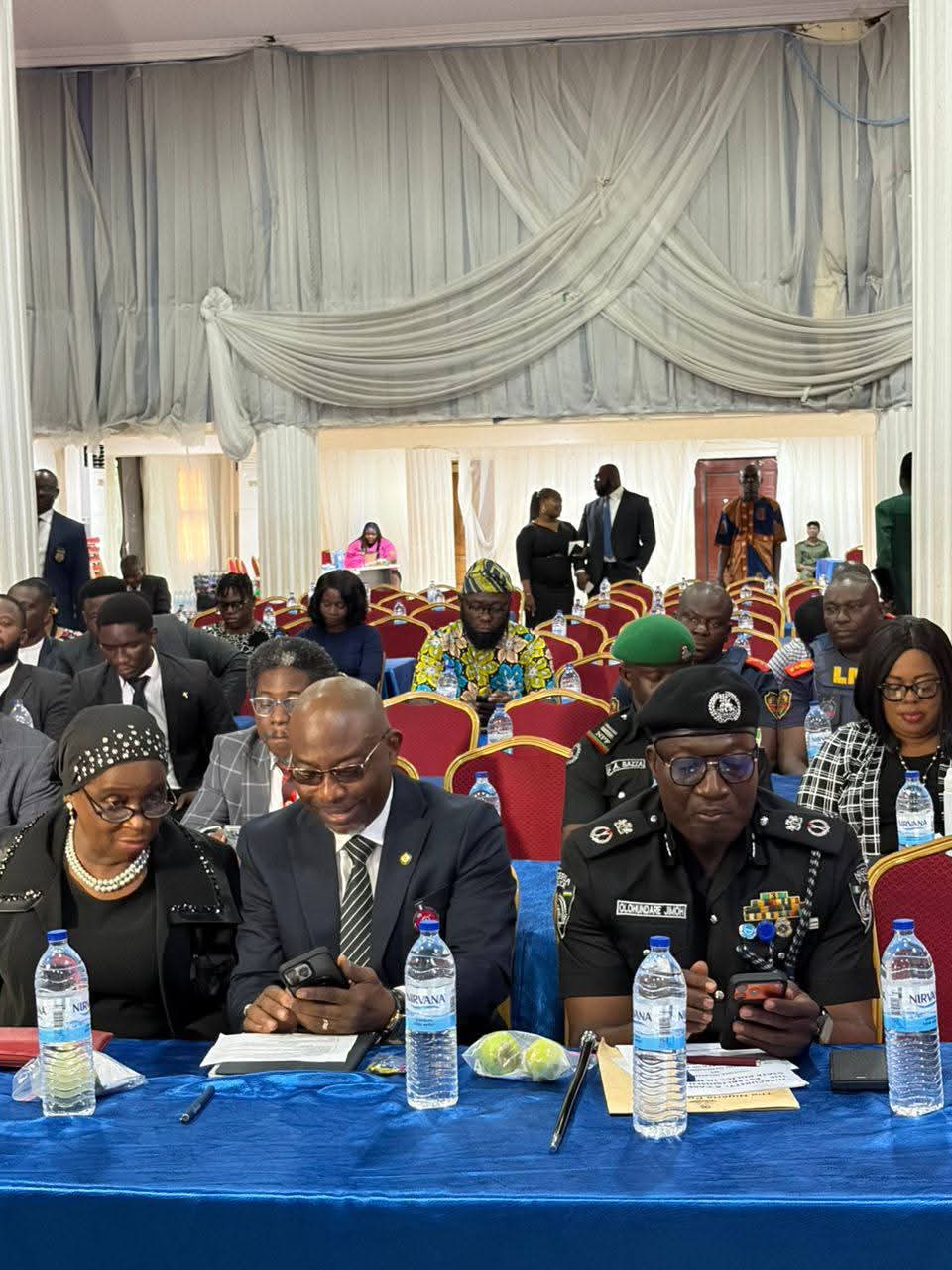
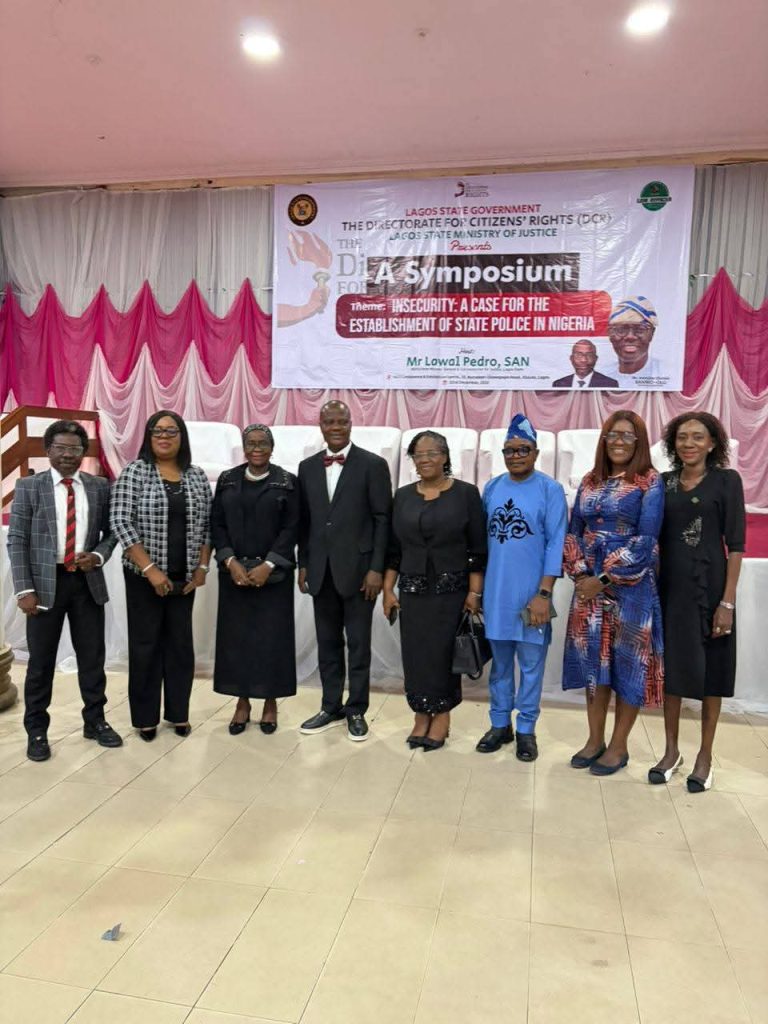
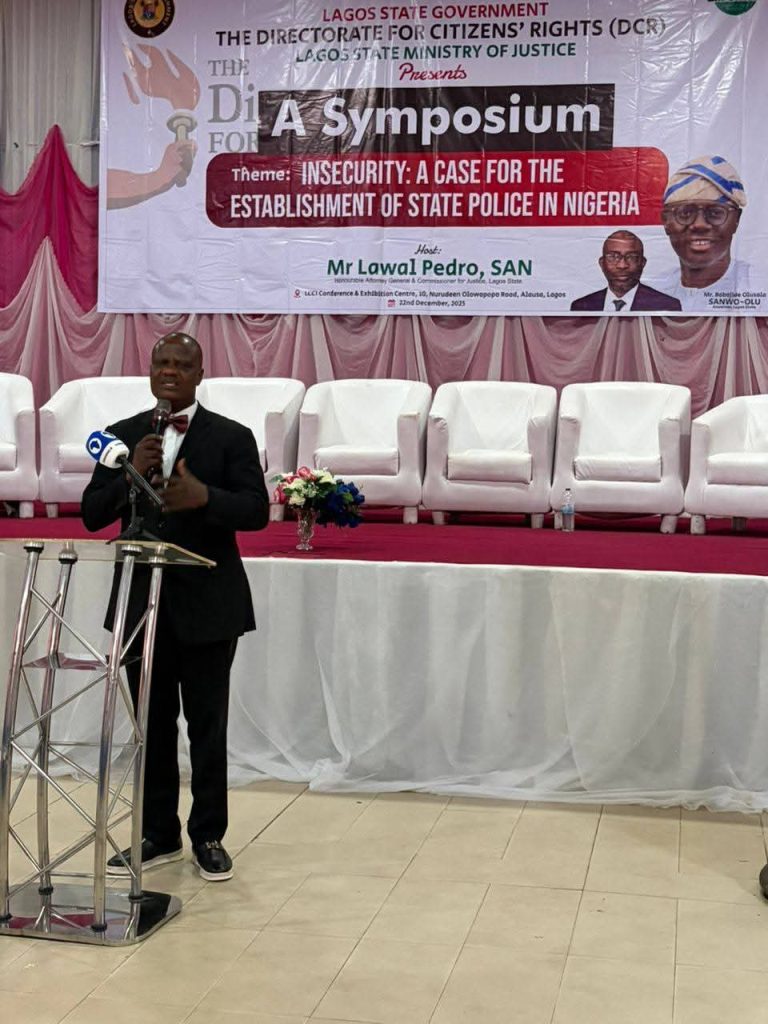
Lagos State’s Directorate for Citizens Rights (DCR) marked World Human Rights Day on December 10 with a compelling five-hour grand finale event themed “Insecurity: A Case for the Creation of State Police in Nigeria.” Attendees hailed the programme as a timely intervention into Nigeria’s escalating security woes, spotlighting threats to citizens’ welfare, safety, and overall well-being.
As chief host, Honourable Attorney General and Commissioner for Justice, Mr. Lawal Pedro (SAN), opened the discourse by outlining the pervasive insecurity plaguing regions across the country—from banditry in the North-West to kidnappings and cult clashes in the South. He advocated for an independent Police Council to oversee operations, alongside revitalizing the Police Service Commission with robust regulations to track officer conduct and ensure accountability.
Expert Calls for National Legislation
Keynote speaker Mr. Jiti Ogunye, a prominent human rights activist and CEO of Jiti Ogunye & Co., urged lawmakers to fast-track a State Policing Bill at the National Assembly. His proposal envisions a standardized national template that states could adapt locally, fostering uniformity while addressing Nigeria’s diverse security needs. “This isn’t just reform; it’s a constitutional imperative for true federalism,” Ogunye asserted, drawing applause from the audience.
The event’s panel discussion, moderated by Director of Public Prosecutions Dr. Babajide Martins, featured heavyweights Dr. Segun Awosanya (founder of @SegunAwosanya on X, a leading security commentator), Dr. Lucas Koyejo, and Joseph Opute. They dissected the pros and cons of state policing: enhanced local responsiveness and community trust versus risks of abuse by politically influenced forces.
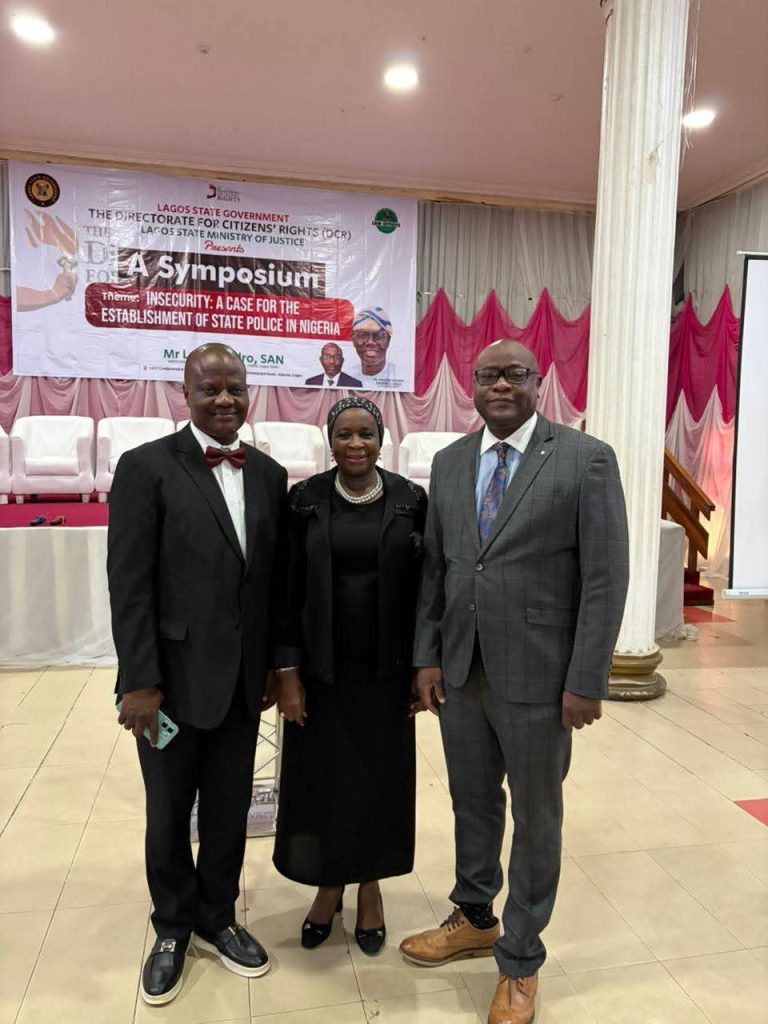
Panelists converged on a key critique—Nigeria’s unitary policing model under federal control is an “incongruity” in a federal republic. Dr. Awosanya highlighted how centralized command stifles agility, citing recent data from the Nigeria Police Force showing over 100,000 officers stretched thin across 36 states and the FCT. Dr. Koyejo pushed for tech integration like community surveillance apps, while Opute emphasized training reforms. The group nodded to ongoing changes, including the Supreme Court’s July 2024 ruling reallocating local government funds directly from the federation account, signaling grassroots empowerment.
Broader Context and Ongoing Reforms
This DCR event aligns with Nigeria’s heated national debate on policing. Proponents argue state police would mirror successful models in the U.S. and India, tailoring responses to local threats like farmer-herder conflicts or urban crime. Recent reports from Premium Times and Vanguard indicate over 70% public support in polls, with governors from Lagos to Rivers voicing readiness to fund community-based forces.
Yet challenges persist: the 1999 Constitution (Section 214) mandates a single police force, requiring amendments. President Bola Tinubu’s administration has hinted at openness, with the Nigeria Governors’ Forum reviving talks post-2023 elections. Critics, including civil society groups like the Rule of Law and Accountability Advocacy Centre (RULAAC), warn of potential ethnic militias without federal safeguards—echoed in the panel’s call for an oversight Police Council.

The consensus? Decentralization is inevitable, but it demands efficiency at every governance tier. As Lagos pushes this agenda, the event underscores a pivotal moment: reforming policing could restore trust and curb the insecurity that claimed over 5,000 lives in 2024, per the Armed Conflict Location & Event Data Project (ACLED).
DCR’s initiative not only amplified voices but ignited calls for action, positioning Lagos as a frontrunner in Nigeria’s security renaissance.
Do you want to advertise with us?
Do you need publicity for a product, service, or event?
Contact us on WhatsApp +2348033617468, +234 816 612 1513, +234 703 010 7174
or Email: validviewnetwork@gmail.com
CLICK TO JOIN OUR WHATSAPP GROUP