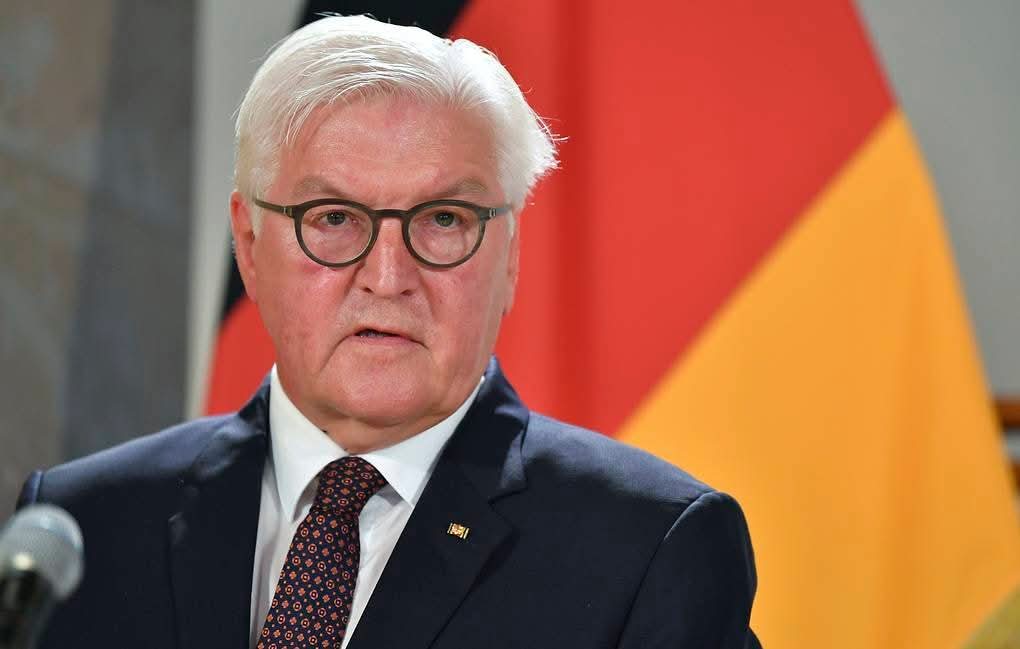
BERLIN — In a rare and pointed rebuke, German President Frank-Walter Steinmeier has accused the United States and Israel of violating international law through their military campaign against Iran, describing it as a “politically disastrous mistake” that has shattered trust with America’s oldest European ally.
Speaking at a ceremony marking the 75th anniversary of Germany’s Foreign Ministry on Tuesday, Steinmeier lamented a “deep rift” with Washington, drawing parallels to the irreversible damage from Russia’s 2022 invasion of Ukraine. “There will be no going back to before January 20, 2025,” he said, referencing Donald Trump’s return to the White House and the subsequent escalation of US support for Israeli operations targeting Iranian nuclear facilities and proxy militias.
The comments mark an unusually bold intervention from Steinmeier, whose role is largely ceremonial but whose voice—as a former foreign minister—commands respect in Berlin’s policy circles. “Our foreign policy does not become any more convincing simply because we do not call a breach of international law a breach of international law,” he declared. He dismissed US justifications for the strikes, which intensified after Iran’s October 2025 missile attacks on Israel, as lacking credibility: “There is little doubt that the justification of an imminent attack on the US does not hold water.”
Germany has refrained from outright condemnation of the campaign, which US officials frame as preemptive defense against Iran’s nuclear ambitions and regional aggression. However, Chancellor Friedrich Merz, leading a CDU-led coalition since late 2025, has threaded a careful line. Merz has condemned Tehran’s “terror-sponsoring” regime and endorsed goals like neutralizing Iran’s nuclear threat but insisted Berlin would have “advised against” the strikes had it been consulted. “Germany shares the objective that Iran should no longer pose a threat in the future,” Merz said last week, while ruling out direct involvement.
Steinmeier urged pragmatic realism toward the Trump administration’s “world view” that disregards “established rules, partnership, or hard-won trust.” Yet he insisted Berlin must uphold its principles: “We cannot change that. We must deal with it. But we have no reason to align ourselves with this world view.”
The rift highlights Europe’s unease with Trump’s “America First” revival, which has seen reduced US commitments to NATO and unilateral Middle East moves. Analysts note Germany’s vulnerability—reliant on stable Gulf oil flows amid its post-Russia energy pivot—makes the conflict particularly alarming. Oil prices have surged 15% since January, hitting Nigerian importers hard and fueling inflation fears.

Steinmeier’s remarks echo broader EU skepticism. French President Emmanuel Macron called the strikes “disproportionate” last month, while the UK under Prime Minister Keir Starmer has offered muted support. In Tehran, Iranian officials hailed the speech as validation of their narrative, vowing retaliation.
Do you want to advertise with us?
Do you need publicity for a product, service, or event?
Contact us on WhatsApp +2348033617468, +234 816 612 1513, +234 703 010 7174
or Email: validviewnetwork@gmail.com
CLICK TO JOIN OUR WHATSAPP GROUP
As the conflict drags into its third month with no ceasefire in sight, Berlin’s stance underscores a fracturing Western alliance, with implications rippling from the Persian Gulf to global markets.