

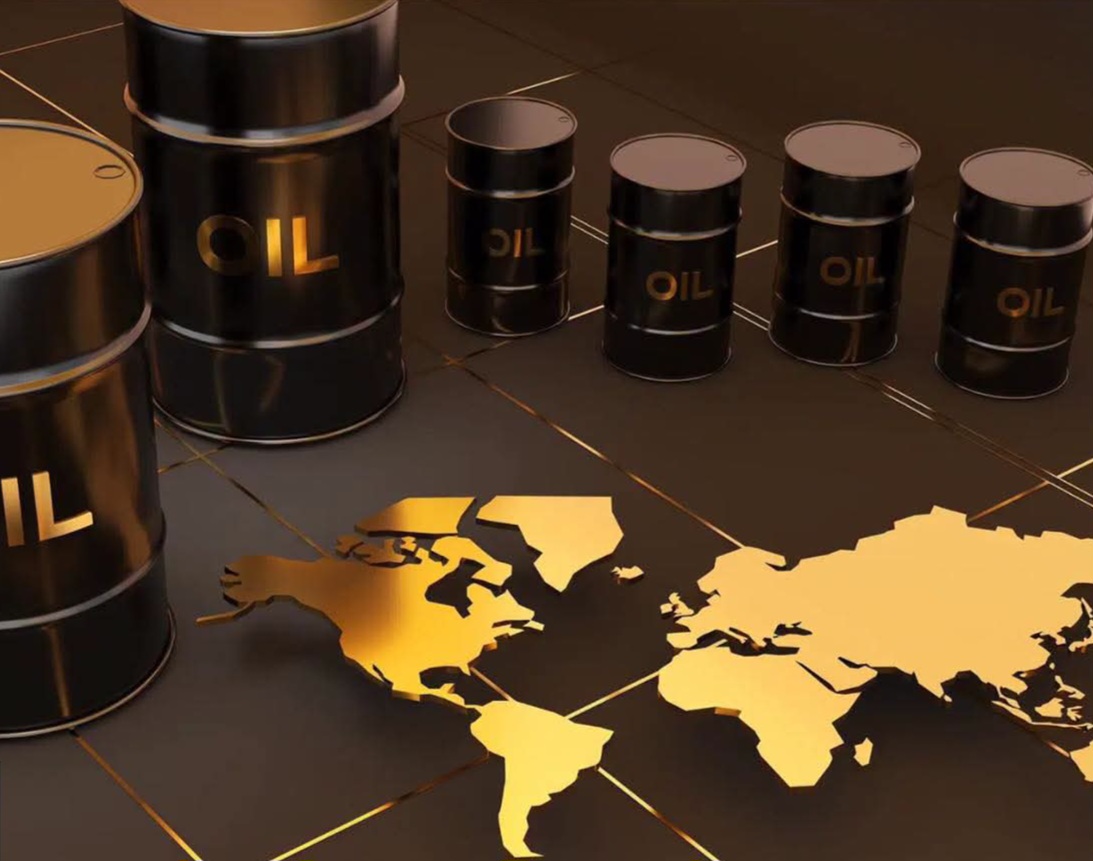
Global energy markets plunged into turmoil today as a dramatic military escalation between the United States and Iran shattered months of fragile relative calm, sending international crude benchmarks surging past critical psychological thresholds.
Brent crude, the international benchmark, jumped roughly 5 percent to settle at $95.49 per barrel, while U.S. West Texas Intermediate (WTI) climbed to $90.71 per barrel. The sharp upward trajectory reflects mounting panic across global trading floors as the six-month-old conflict threatens to choke off vital petroleum flows through the strategic Strait of Hormuz.
The latest market shockwaves follow a heavy wave of airstrikes launched by the United States Central Command (CENTCOM) against strategic Iranian military infrastructure. According to U.S. military reports, the targeted sites included air defense networks, radar installations, maritime facilities, and critical communications hubs. Washington stated that the offensive was a direct retaliation for recent aggressive actions by the Islamic Revolutionary Guard Corps (IRGC), including attempted mine-laying operations, assaults on commercial shipping in the Gulf, and missile volleys targeting U.S. military personnel stationed in the region.
The military friction has severely disrupted maritime transit in the Persian Gulf. Shipping intelligence reports revealed that multiple supertankers sustained damage from projectiles while navigating outbound routes near the Strait of Hormuz. In response to the growing security threat, Washington has increasingly leaned into a high-stakes “tanker-for-tanker” interdiction strategy, escorting vessels through contested waters while Treasury officials prepare a sweeping suite of new financial sanctions targeting entities tied to the IRGC.

Tehran has met the U.S. escalation with fierce defiance. Senior Iranian officials warned that any attempt by Western powers to completely blockade Iranian oil exports would trigger a total regional cutoff, declaring that if the Islamic Republic is prevented from selling its crude, no other nation will be permitted to move oil through the Gulf. Explosions have rocked multiple coastal sectors, including Qeshm Island, Bandar Abbas, and Jask, as regional proxies and military units trade direct missile exchanges.
The geopolitical shock is already translating into severe domestic economic pain across consumer nations. In the United States, retail diesel prices spiked by nearly 7 percent to $4.71 per gallon, triggering intense inflationary anxiety. The spiraling costs forced U.S. President Donald Trump to convene an emergency closed-door summit at the White House with leading energy sector executives to strategize containment measures against a resurgence of domestic price hikes.
Economists warn that if military actions persist and paralyze maritime transport in the Hormuz corridor—through which a fifth of the world’s petroleum typically flows—global energy markets could face unprecedented supply shocks, forcing central banks worldwide to reevaluate aggressive monetary tightening paths to combat runaway inflation.
Do you want to advertise with us?
Do you need publicity for a product, service, or event?
Contact us on WhatsApp +2348033617468, +234 816 612 1513, +234 703 010 7174
or Email: validviewnetwork@gmail.com
CLICK TO JOIN OUR WHATSAPP GROUP