Kúlè kúlè, ogbóni ara ilé
The gong has fallen silent.Who will call the people now?
There are deaths that make you sad. There are deaths that make you cry.
And there are deaths that force you to sit down and ask yourself questions about life, death, faith, family, legacy and the strange permanence of human absence.
The death of Alhaji Taiwo Hassan, popularly known as Ogogo, belongs to the last category.I did not know him personally.
I never sat with him. I never shook his hand. I was not part of his inner circle.
Yet, somehow, his death has touched a place in me that I did not know was so exposed.
Perhaps that is what happens when an actor ceases to be merely an actor and becomes part of the emotional architecture of your childhood.
Perhaps that is what happens when a man spends more than four decades telling stories, playing fathers, husbands, kings, villains, heroes, elders and ordinary men, until his face becomes familiar even to people who have never met him.
And perhaps that is what happens when an entire generation suddenly realises that one of the voices, faces and personalities that helped narrate its childhood has gone home.
Ó dùn mi o. It hurts.
I. THE WEIGHT OF THE UNKNOWN
I have always been fascinated by the afterlife. Ever since I was a child, taking Islamic and Arabic lessons at home from a patient and loving teacher, may the Almighty Allah perfect all that pertains to Alhaji, the question of what happens after death has lingered somewhere in my mind.
Death therefore has never been completely abstract to me.
Islam speaks explicitly about the afterlife.
It teaches us about Barzakh, the intermediate existence between this world and the Hereafter, and the Janazah prayer itself reminds the living that the dead have entered a journey from which none of us can return to give a report.
When my late dad died, the night before the burial, I was overwhelmed with grief.
I cried. I prayed. I supplicated for him.
He was an open book, very open and pious.
He saw himself as the everyday man. He never believed anyone could envy him or deliberately do him harm.
His life was about family, children and people. Even at 80 years, daddy was still observing Ramadan fast.
He never took with levity anything that pertains to us, his children. To him, we remain kids. Lol.
He would tell us never to say we were no longer children while we were before him.
Yet whenever my mom did or said something to any of us, daddy would be the first to intervene.
“Agbalagba ni ooo, ma soro si bee yen now.”
Lol.
He was a very good man. He spent and dedicated his life to Islam and mankind.
In the area and surrounding where we grew up, my late dad started living beginning in the 1970s until his death two years ago, you could hardly tell the story or history of Islam in that community without mentioning his name.
He was honest throughout his service, retirement and afterwards.
He would tell me:
“Lekan, if anyone knocks my gate, I would ask, welcome, what do you want? And anywhere you have cause to mention my name, no one would go against you. They would even go out of their ways to assist you.”
That was the kind of confidence he had in the life he lived.
With all these things, I was supposed to be calm that he was going to be in a good place.
But Islam also teaches humility before the mystery of divine judgement.
Only the Almighty knows the ultimate condition of His creation.
That uncertainty about Barzakh is frightening. You can live a good life. People can praise you. People can speak beautifully about you after death. Hundreds can pray for you.
But the final judgement belongs to Allah.
Still, there was comfort in the outpouring of love and support that followed my father’s death.
People said good things about him that even we, his children, did not know.
Sometimes, therefore, the living discover the full weight of a person’s goodness only after the person has died.
Kúlè kúlè, eni tó kú á kú.
Every soul shall taste death. The Qur’an tells us so.And we believe.
II. THE MAN CALLED OGOGO
I have to state all of that because of what I saw and witnessed in the reports, videos and footage from the burial of late Alhaji Taiwo Hassan Ogogo. Permit me to say it plainly.
He was an akanda. A special person. Correct me if I am wrong, but I genuinely struggle to remember an artiste, dead or alive, whose burial generated such an extraordinary combination of grief, celebration, cultural memory and communal affection.
People came. Actors came. Fans came. Traditional figures came. Community members came. Politicians came. Friends came. Old colleagues came.
People who had never met him came.
And perhaps that is the first great lesson in the Ogogo story.
A man can become a part of people’s lives without ever knowing their names.
Taiwo Babatunde Hassan was born on October 31, 1959, in Ilaro, Ogun State. He came from a remarkable family of twins. His father and grandfather were twins, and his mother reportedly had four sets of twins.
Ogogo was himself a twin, and he later described himself as the surviving member of the last set.
He attended Christ Church School in Ilaro before moving to Lagos for further education. Financial difficulties affected his secondary education, after which he trained as an automobile mechanic.
Then came the Lagos State Water Corporation.
He worked there as an automobile mechanic for about thirteen years while pursuing theatre and acting. He began acting in 1981 and eventually left the government job in 1994 to pursue acting full-time.
That correction matters because history matters.
Before Ogogo became Ogogo, he was a mechanic. Before he became a household name, he was a worker. Before the cameras, there was labour. Before the fame, there was uncertainty. Before the applause, there was the grind.
He learnt through practical theatre experience and was associated with veteran theatre practitioner Awo Ademola Fagbemi during the formative period of his acting career.
He did not simply wake up famous. He worked his way into history.
His breakthrough came with Tade Ogidan’s Owo Blow, where he played the adult Wole Owolabi, a role that helped establish him as a household name and earned him the Best Actor award at the 1997 THEMA Awards.
For many people of my generation, Owo Blow was not just another film.
It was cinema.It was morality.It was pain.It was family.It was survival. It was the question of what happens when circumstances push a person towards the very darkness he once resisted.
Ogogo’s career would eventually stretch beyond four decades. He acted, produced, directed and wrote. He became one of the defining faces of Yoruba-language cinema and featured in more than 300 films, according to multiple reports.
Then came Aníkúlápó.
In Kunle Afolayan’s 2022 epic, Ogogo played Alaafin Ademuyiwa. The performance introduced his work to another generation and earned him a nomination for Best Supporting Actor at the 2023 Africa Magic Viewers’ Choice Awards.
Four decades into a career, he was still relevant. Still acting. Still commanding the screen. Still being discovered by younger audiences.
That is not ordinary longevity. That is legacy.
Ìgbà tí a bá kú, a kò mọ ibi tí a ó lọ. When we die, we know not where we go.
But we pray for Al-Jannah Firdaus/Paradise.
III. THE HOME HE BUILT
Perhaps one of the most remarkable things about Ogogo was not the house he lived in.
It was the home he built.
His family life has attracted attention because he was married to two women of different religious backgrounds.
His first wife, Ajoke Taiwo, was a Christian and became popularly associated with the name “Iya Jesu”. Ogogo himself remained a Muslim.
Yet the religious difference did not become the defining story of the household. Love did. Family did. Children did. Unity did.
Public accounts identify six children from the two marriages, including Rasheedat Ololade Sulaiman, Jubril Olorunwa Taiwo, Shakirat Taiwo, Halimat Taiwo, Khalid Taiwo and Fuad Taiwo.
When Ogogo died, something beautiful emerged, especially during the burial service this week Monday.
His wives were united.
His children were united.
There was grief, but there was also an unmistakable sense of family.
Prior to his death, I had seen posts from Kira, the daughter of Ogogo who became one of the family’s public voices during his illness, eulogising her father and saying beautiful things about her family.
At the burial, his first wife spoke about the man she had lost. She described him as a good man, husband and father who would not denigrate her at home or outside.
“He was like a father and mother to me,” she said. “He stood by me during the times of trial. He was my everything.”
Those words were not merely the words of a widow at a burial.
They were the words of someone remembering a life shared.
The love among the children was even more striking. I know the eldest sister Ololade. I followed her Nikkah ceremony in 2011 at the Federal Polytechnic, Ilaro campus.
So when I watched the burial footage, I was not watching strangers. Despite following the corpse of her late father to Ilaro on Sunday midnight, she was up and doing on Monday.
She was with her sisters and brothers.
She was suppressing her own grief. She was holding everyone.
At the burial site, she comforted her father’s wives.
When the last child was crying, she pulled him towards herself. When the last boy became overwhelmed with grief at the graveside, she quickly held him.
The other elder sister was also doing the same for the others. That was powerful.
Because that was not something that started at the burial. It was something their father had helped cultivate while alive.
Despite being a polygamist, there was love.
There was unity. There was a visible sense of responsibility among the children.
Do you want to advertise with us?
Do you need publicity for a product, service, or event?
Contact us on WhatsApp +2348033617468, +234 816 612 1513, +234 703 010 7174
or Email: validviewnetwork@gmail.com
CLICK TO JOIN OUR WHATSAPP GROUP
To be honest, Ogogo is blessed.
I was genuinely happy to see elders being elders, irrespective of maternal association.
No competition.No public performance of rivalry. No attempt to turn grief into a family contest. Just children holding one another because their father had gone.
Mo rí ìfẹ́ nínú ilé rẹ.I saw love in his house.
The kind that outlives the man.
IV. THE PILGRIMAGE OF SOULS
Kúlè kúlè, ará ìlú.
The journey home begins.
Barzakh awaits, and we know not what we shall find.
When Ogogo’s daughters, Kira and Lima Taiwo, came out publicly to reveal that their father was battling stage-four cancer, the family did something important.
They did not come online to solicit money.They sought medical help.
They appealed for doctors, specialists, hospitals and anyone with the expertise to review their father’s condition and possibly find another avenue of treatment.
The family’s appeal came in August, only days before his death.
Reports said hospitals had reportedly stopped continuing his chemotherapy because of the seriousness of his condition.
Lima spoke through tears. Kira also made an emotional appeal.
The public suddenly heard about a side of Ogogo that the films had never shown.
The strong man was now vulnerable.
The commanding voice was now struggling.
The man who had spent decades portraying people who faced impossible circumstances was now himself facing one.
Kira’s words were heartbreaking.
She said she had never seen her father in that kind of pain.
She said he did not want to die.
That sentence is perhaps one of the most human things anyone can say about death.
Nobody wants to die.
Not the rich. Not the poor. Not the famous. Not the unknown.
Not the actor who has played death a thousand times.
We all want more time.
Reports also indicated that Senator Solomon Adeola, popularly known as Yayi, had been assisting the family and supporting the actor’s medical care.
Then colleagues gathered.
On Friday, August 21, members of the Yoruba movie industry came together for special prayers for their colleague. They prayed for mercy. They prayed for divine intervention. They prayed for healing. They prayed for recovery.
They prayed because human beings have always prayed when medicine reaches the edge of what it can do.
But Allah had other plans.
On Sunday, August 23, 2026, at 3:00 p.m., Alhaji Taiwo Hassan Ogogo died at the age of 66.
His death was announced amid an outpouring of grief, and his daughter Kira was visibly devastated as she struggled to process the reality that her father was gone.
The next day, Monday, August 24, 2026, Ogogo was buried in his hometown, Ilaro, in accordance with Islamic rites.
Funeral prayers were held at the Asade Agunloye Pavilion Ground. His remains were received at the Central Mosque in Ilaro before the funeral procession moved through the town.
People followed him. They walked with him. They cried. They prayed.
The man who had spent his life entering people’s homes through television screens was now being carried through the streets of his own town.
Then came the grave.
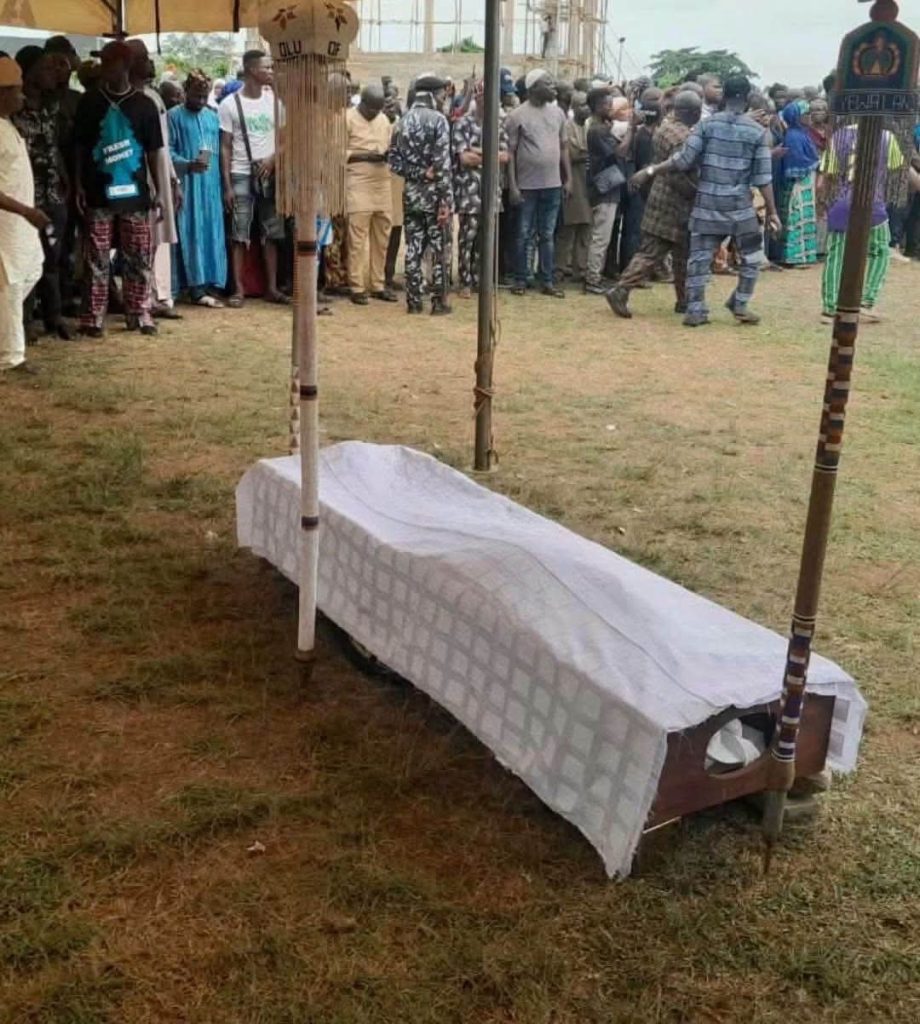
The white cloth was wrapped around him.
He was lowered into the earth.
Fresh plantain leaves were used to cover him before sand was poured over the body.
And just like that, the man called Ogogo became a memory.
Kúlè kúlè, ilé ayé ló fi sílẹ̀. He has left the world behind. To meet his Lord.
V. THE OUTPOURING
The crowd was massive.
People from all walks of life, colleagues in the film industry, family members, friends, community leaders and well-wishers, thronged the Asade Agunloye Pavilion in Ilaro to pay their final respects.
Nollywood veterans including Yinka Quadri, Jide Kosoko, Fathia Balogun, Mr Latin, Dele Odule, Olaiya Igwe, Femi Adebayo, Ireti Osayemi and Kolawole Ajeyemi converged on Ilaro.
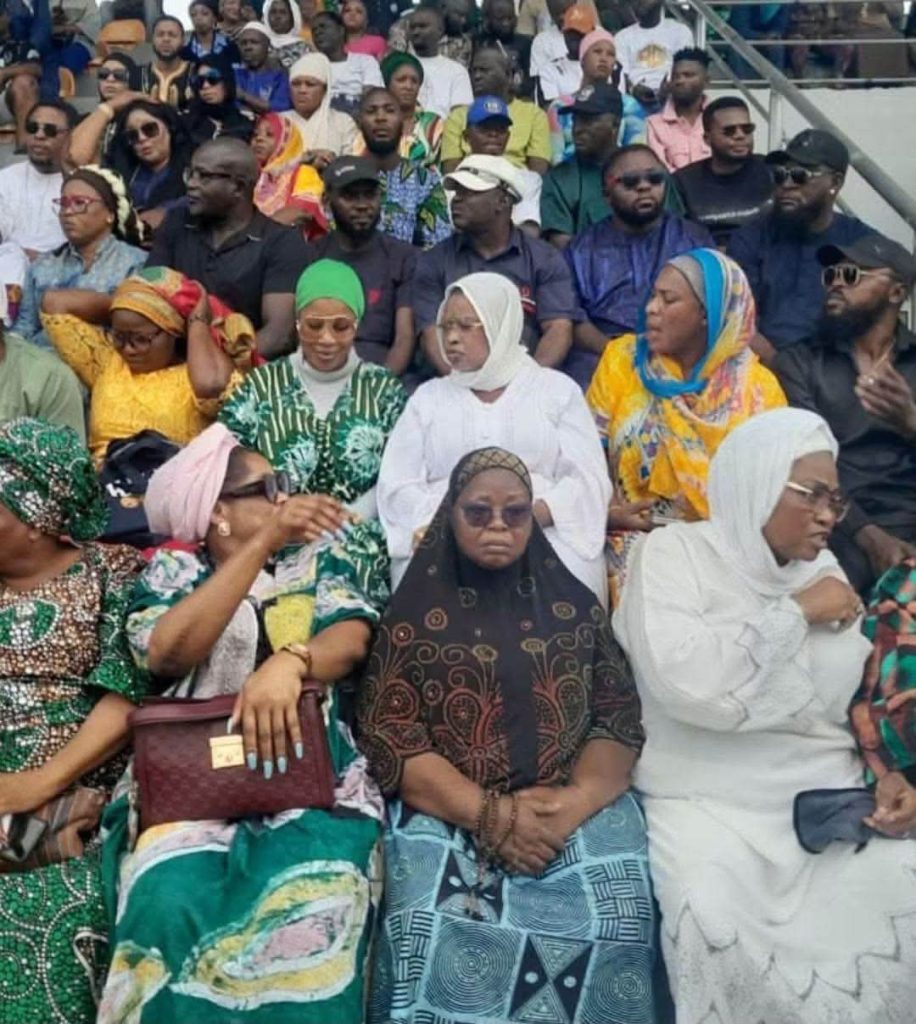
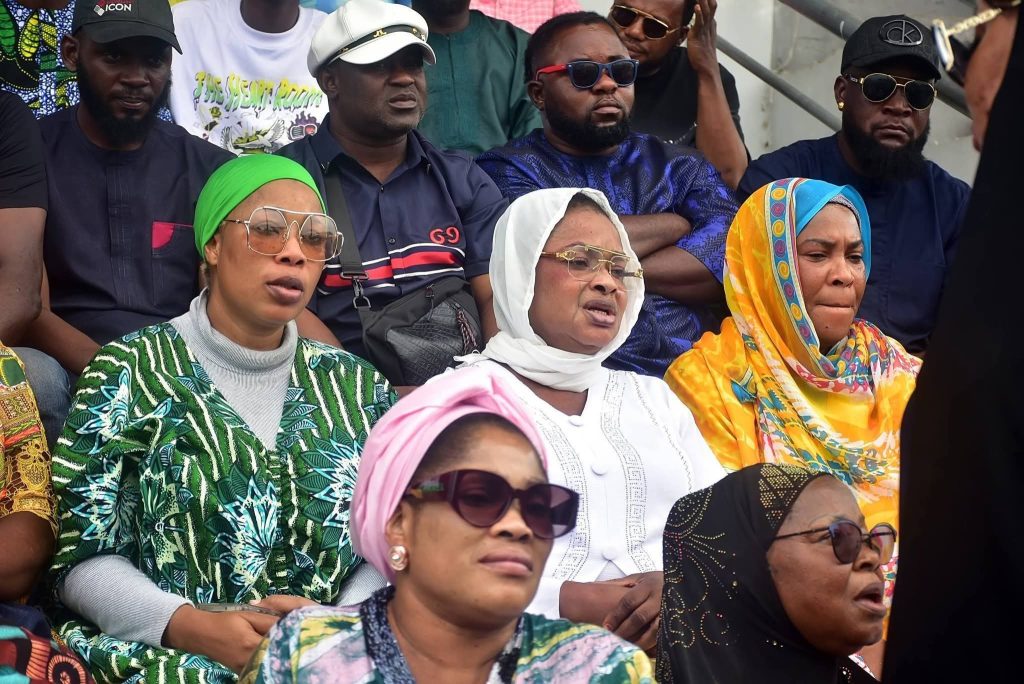
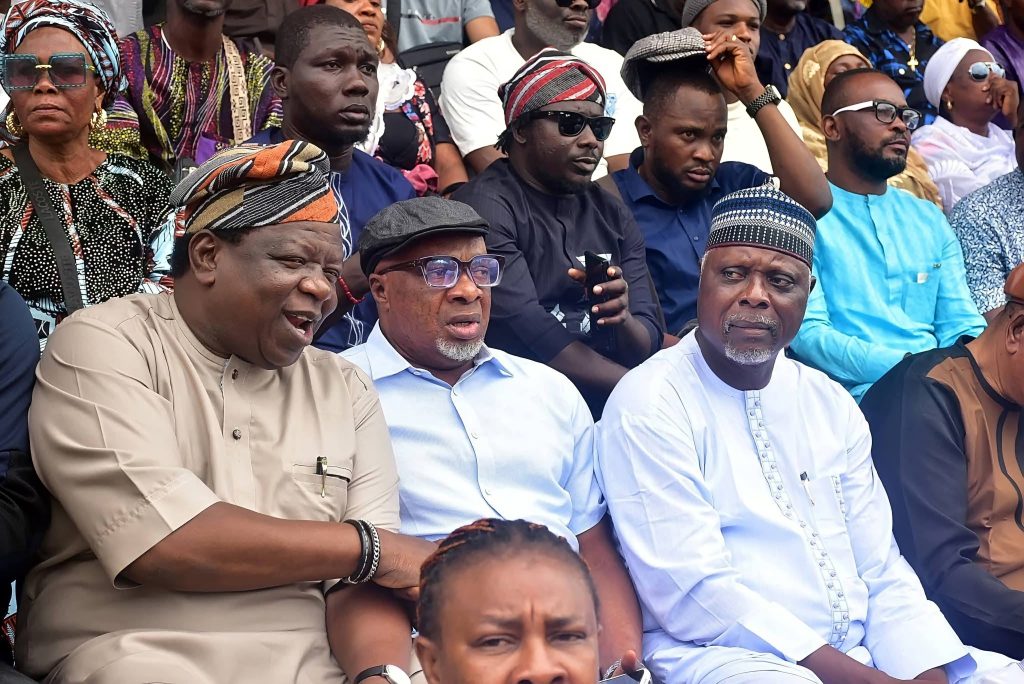
But among all the images from that burial, one remains particularly painful.Yinka Quadri.

The tears.
The man who had shared decades with Ogogo could not hide his grief. Their friendship reportedly began in 1984 and continued for more than four decades.
Quadri later described Ogogo as a twin brother from heaven.
And now he was standing beside his grave. Quadri has since revealed what happened during their final meeting in hospital.
He said he broke down when he saw Ogogo on the sickbed.
Ogogo, despite his own condition, tried to comfort him. “Yinka, don’t cry. Nothing bad will happen to me.”
Those were among the final words Quadri remembers from his friend.
There is something haunting about that.
The dying man comforting the man who came to see him.
The sick man telling his friend not to cry.
The actor still playing the role of the strong man.
Then, days later, he was gone.
President Bola Tinubu mourned Ogogo, describing him as a distinguished artiste whose career contributed to the growth of Yoruba-language theatre and Nigerian cinema.
He said Ogogo’s work helped preserve Nigerian culture and entertain generations at home and abroad.
Former Vice-President Atiku Abubakar also mourned him, describing him as more than a gifted actor and praising the way his career brought laughter into homes while reflecting society and encouraging social rebirth.
The Alaafin of Oyo described him as a giant whose cultural contribution would continue to nourish generations.
Femi Adebayo called him a true pillar of Yoruba cinema and thanked him for the years, stories, lessons and moments that made audiences fall in love with the craft.
The Ogun State Government also described him as a shining light whose talent helped project Yoruba culture beyond Nigeria.
But perhaps the most beautiful tribute did not come from a president.
It came from people who cried.
Because sometimes tears are the most honest obituary.
I am just getting reports of another tribute that I find deeply fitting.
Some Muslims reportedly coordinated a water project in Ilaro as sadaqah jariyah in honour of Ogogo, particularly around the Central Mosque area.
According to the organisers’ public updates via facebook, contributions reached ₦5.3 million. The project will be presented as a charitable work in Ogogo’s memory.
This is fitting because Ogogo himself had done something similar years earlier.
At his 60th birthday celebration in 2019, he returned to Christ Church School, Ilaro, where he had received his primary education.
He asked the school authorities what they needed. They said they needed a borehole.
He provided one.
Ogogo himself explained that he preferred water because, unlike books that might benefit one generation, water could outlive generations if properly maintained.
Reports from the time said the project cost more than ₦500,000.
That is the kind of symmetry that life sometimes produces. The man gave water.
After his death, people gathered to give water in his name.
He who has gone home has left footsteps for us to follow.
VI. THE GIFT OF GOD
One thing I give kudos to the family over is the fact that, at the most vulnerable moment of their late father’s illness, they preserved his dignity.
They did not turn his sickbed into entertainment. They did not put his frailty on social media for public consumption. They did not expose every moment of his suffering.
The Almighty Allah likes Ogogo.
I have my reasons for saying that.
The representative of the Chief Imam of Ilaro while speaking at the mosque during the process of preparing Ogogo’s corpse for Janazah prayers and interment stated that Ogogo, while on his sickbed, had expressed a desire to support the renovation of the Central Mosque.
According to the account, the actor made a donation of #25,000,000. He reportedly told the Imam that he would have done much more, but that he was on a sickbed and could not predict what his medical expenses would eventually become.
There is something deeply moving about that.
A man who knew he was sick still thought about the house of Allah.
A man facing his own mortality still thought about what he could leave behind.
A man who could have spent every remaining moment thinking about himself still thought about a community project.
May Allah accept whatever he gave.
May He turn it into sadaqah jariyah for him.
May the reward continue long after the man himself has gone.
And regarding the family’s decision not to put his vulnerable condition online, I believe Allah was merciful to him.
He had resources.
He had people around him.
He had people willing to assist.
Yayi was reportedly helping.
His family had options.
Therefore, his children did not have to reduce their father to a public appeal for money simply to keep him alive.
That, too, is a blessing.
Had circumstances been different, perhaps they might have had no alternative.
But they were able to protect his dignity.
I thank the Almighty Allah for him.
And perhaps that is where Niniola’s O Dun Mi becomes an unexpected soundtrack to grief.
“It’s raining, raining.”
Sometimes grief really does feel like rain. It falls. It soaks everything. And there is no umbrella large enough.
VII. THE LESSONS FROM OWO BLOW
Ogogo’s role in Owo Blow taught me something that has remained with me.
If you start well and end well, there is a reward.
If you start badly and end well, the past may still demand accountability.
There is cause and effect.
There are consequences.
Until today, I skip the part where Jeje comes around and unknowingly provides information that helps reopen the case against Owo Blow.
I don’t like watching that part.
Because in the movie, I saw how a young boy took on the responsibility of caring for his family after circumstances led to his father, the breadwinner, going to prison.
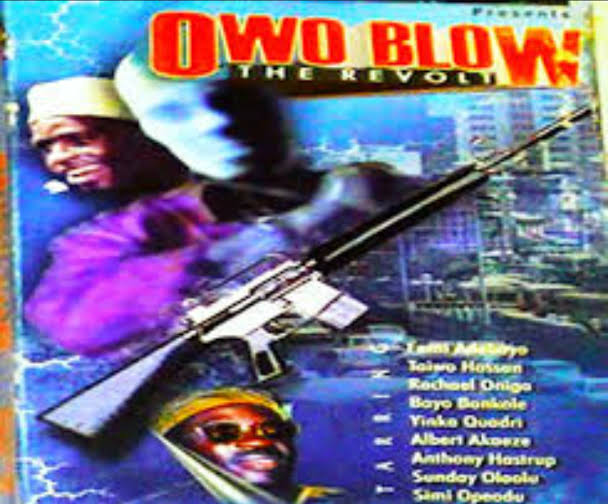
I saw him struggle. I saw him try to remain upright. I saw him become hardened by survival.
And eventually, I saw him go bad.
But the brilliance of Tade Ogidan’s storytelling was that the film did not give us an easy justification for wrongdoing.
Owo Blow had reasons.
But reasons were not the same as justification.
The consequences still came.
That is the lesson.
Life can explain why you became who you are.
It does not always excuse what you become.
There was also the story of a woman (during the burial service of Ogogo in Ilaro) who claimed to be Ogogo’s sister and spoke about a supposed generational curse that prevented members of the family from growing old.
I laughed.
Not because the idea of generational curses is something I consider impossible.
But because even within the story she was telling, there was an obvious contradiction.
Ogogo’s older surviving sibling is reportedly close to 80.
That alone should make us cautious about turning every death into evidence of a supernatural pattern.
Regarding infant mortality in Ogogo’s mother’s history, we should also be careful.
Some pregnancy and infant losses can have medical explanations, including genetic disorders, pregnancy complications and blood-group or Rh incompatibility in some circumstances.
We do not know enough about his family’s medical history to diagnose the causes of those losses retrospectively.
And I am not against the possibility that people may believe in generational curses. Faith and culture are complicated things.
But there is also power in the tongue.
As Tope Alabi sang in Oruko Tuntun, some people have unfortunately accepted negative circumstances as part of their identity.
Do not do that.
Do not allow someone else’s prophecy to become your personal prison.
If somebody tells you that you will die young, rebuke it.
If someone tells you that your family is cursed, do not make the declaration your identity.
Pray. Seek counsel. Seek medical help when necessary.
Do what you can. And move forward. Do not spend your entire life announcing a negative prophecy to everybody you meet.
You may be giving fear a home.
You may also be giving malicious people information they do not deserve.
There are things you should take to Allah or the almighty God or Jesus Christ privately.
There are things you should take to your doctor.
There are things you should take to a trusted counsellor.
Not everything needs a microphone.
A person dies when their appointed time arrives. That is the belief.
And until that time comes, live.
Kúlè kúlè, ọjọ́ kan ló dé. The day will come. When we all must go.
VIII. HE SURVIVED BECAUSE HE HADN’T FULFILLED HIS MANDATE
Ogogo himself spoke about how Tade Ogidan contacted him for Owo Blow while he was on a sickbed circa 1995/96.
He could not play the role immediately.
Ogidan reportedly told him he would wait until he recovered. And he did.
Ogogo eventually recovered sufficiently to play the role that became one of the defining performances of his career.
There is something about that story that fascinates me.
Ogogo had already experienced serious illness before the cancer that eventually took his life.
He survived. He returned. He continued. He acted. He produced. He directed. He mentored. He entertained. He lived.
One may therefore say, from the standpoint of faith, that perhaps he survived those earlier battles because his earthly mandate was not yet complete.
I cannot prove that.
None of us can.
But it is a beautiful way of thinking about purpose.
Perhaps every human being carries something unfinished.
Perhaps there are people we must meet.
Children we must raise.
Lessons we must teach.
Mistakes we must correct.
Acts of kindness we must perform.
Stories we must tell.
People we must forgive.
Places we must reach.
Prayers we must answer.
A person may survive something that should have killed them and spend the rest of their life wondering why.
Maybe the answer is simply that their story was not finished.
And when the story is complete, the Author calls the writer home.
Someone once said we are God’s fowl, “Adiye Olohun”. He chooses and picks us to Himself whenever the time is right, whether we and our loved ones feel ready or not.
That is one of the hardest truths about death.
We are never ready.
The dying person may be ready. The family is not.
The old person may be ready. The children are not.
The sick person may be exhausted. The spouse still wants another year.
The friend still wants another conversation.
The fan still wants another movie. The colleague still wants another joke.
But death does not negotiate with the emotional readiness of the living.
What matters, ultimately, is the legacy.
Every day, we hear Ogogo’s legacy, lessons he taught, careers he help kickstart, nurture and support, etc.
What will be your own legacy when you die?
Have you thought about it?
What will your neighbours say?
What will your friends say?
What will your colleagues say?
What will your children say?
How did you treat people who disagreed with you?
How did you treat people who could do nothing for you?
How did you treat family?
How did you treat friends?
How did you treat strangers?
What did you leave behind?
Ogogo has come and gone. His life gave us lessons. His movies did.
I shall continue to remember him through the messages contained in his films. You can hardly go wrong with some of the advice his characters delivered. He was, in many ways, an apostle whose ministry was theatre and cinema. His pulpit was the screen. His sermon was storytelling. His congregation was the public.
And now the preacher has returned to his Creator. Kúlè kúlè, a ó rí ara wa. We shall meet again. In the gardens of Al-Jannah/Paradise.
IX. THE PERMANENCE OF ABSENCE
There is a permanence of absence about death that shakes the living.
We say: “He was not sick ooo. He just slept and didn’t wake up.”
Perhaps. But often, if the person’s body were examined carefully, there would be a medical explanation for the death, even if the family never knew about the illness.
Death rarely arrives without a biological process behind it.
Sometimes the process is obvious. Sometimes it is hidden. Sometimes it is sudden. Sometimes it is prolonged. Sometimes it comes after years of illness. Sometimes it comes when everyone believes the person is perfectly fine.
But the destination remains the same.
Kullu nafsin dha’iqatul mawt, meaning Every soul shall taste death.
It is saddening. But death is certain. The hour is uncertain. The manner is uncertain. The place is uncertain. The circumstances are uncertain.
That uncertainty should not make us live in fear. It should make us live deliberately.
We should prepare our families and loved ones, subtly and responsibly, for the certainty of death.
We should make wills where appropriate.
We should settle disputes. We should reconcile. We should apologise. We should forgive.
We should teach our children what to do when we die. We should not leave families to discover everything about us only after our death.
And above all, we should live in such a way that our absence does not become the first time people realise our value.
May we meet death, terrifying as the Qur’an describes it, with the faith and preparation of old friends meeting again.
Kúlè kúlè, ilé ayé kì í pẹ́. The world is not forever. Prepare for the journey home.
X. TEN LIFE LESSONS FROM ALHAJI TAIWO HASSAN OGOGO
1. Legacy is not measured by wealth but by impact. Ogogo came from humble beginnings.He was a mechanic. He worked for years before becoming a full-time actor.
Yet he eventually became one of the most celebrated figures in Yoruba cinema. His impact was not limited to the films he made. It was in the people he influenced. The younger actors he mentored. The stories he helped preserve. The cultural memory he carried. The more than four decades he gave to the craft. The hundreds of films associated with his career.
That is impact.
2. Your faith is your anchor. Ogogo was a Muslim who publicly maintained his connection to Islam. His burial was conducted according to Islamic rites. Even during his illness, accounts from the Ilaro Muslim Community indicated that he remained interested in supporting the Central Mosque.
He left this world as a Muslim.
May Allah receive him with mercy.
3. Build bridges, not walls. Ogogo’s family brought together different religious backgrounds. A Christian wife. A Muslim wife. Children raised within the same extended family.
Whatever complexities existed privately, what Nigerians saw at his death was unity. That is worth celebrating. Religion should not always be a wall. Sometimes, love can build a bridge.
4. Prepare your family for the inevitable. Ogogo’s family was visibly united at his burial. His children held one another. They comforted their father’s wives. They stood together. They cried together. They carried one another. That kind of family strength does not magically appear at a burial.
It is cultivated over years. The family we want to see at our funeral is the family we must build while alive.
5. Be generous while you can. Ogogo donated a borehole to Christ Church School in Ilaro, his former primary school. He did not merely celebrate his birthday with parties. He gave something that could serve people beyond his own lifetime. He chose water because he believed its usefulness could outlive generations.
Now, after his death, people are raising money for another water project in his honour.
That is how generosity becomes legacy.
6. The power of the tongue is real. Ogogo’s daughter Kira shared moments from her father’s final days. Yinka Quadri also recalled how Ogogo reassured him from his hospital bed.
His final words to his friend were words of encouragement. “Yinka, don’t cry. Nothing bad will happen to me. “What words are you leaving behind? Are people remembering your encouragement or your insults? Your wisdom or your bitterness? Your prayers or your curses?Your words may outlive you.
Choose them carefully.
7. Your circle matters. Yinka Quadri’s tears at Ogogo’s burial were not the tears of a casual colleague. They were the tears of a friend who had shared decades with another man.
Their friendship reportedly began in 1984. More than forty years later, the bond remained.When it mattered, people came. That is the kind of circle worth building. Not a crowd. A circle. People who will pray for you. People who will tell you the truth.
People who will stand beside you when the applause stops.
8. The uncertainty of Barzakh should drive us to good deeds. We cannot see Barzakh. We cannot report from it. We cannot know the final judgement of another human being.
Only Allah knows. That uncertainty should not lead us into despair. It should lead us towards good deeds. Prayer. Charity. Kindness. Forgiveness. Service. Faith.
We should live in hope and humility.
9. Death may have a medical explanation, even when we do not see it coming. Ogogo battled stage-four cancer. His illness became publicly known only days before his death. That should remind us that appearances are deceptive.
A person can look strong and still be sick.
A person can laugh and still be in pain.
A person can tell you they are fine and still be fighting something you know nothing about.
Take your health seriously. Encourage those around you to do the same. Do not romanticise suffering. Do not turn every illness into spirituality alone. Pray, but also seek medical care.
10. Start well. End well. Owo Blow taught us that circumstances can shape a person’s choices without completely removing responsibility. Ogogo’s own life gives us another version of the lesson. He began from humble circumstances. He worked as a mechanic. He entered theatre. He struggled. He grew. He became a star. He remained relevant. He continued working across generations. He died as a Muslim. He was buried according to Islamic rites.
And now his name is being remembered by people who never met him. Start well. If you stumble, recover. If you fall, rise.If you make mistakes, correct them.
And when the final curtain comes, let your ending be worthy of the journey.
KÚLÈ KÚLÈ, ÒGÓGÓ TI LỌ Ogogo has gone.
But his stories remain. There is something almost poetic about the fact that a man whose entire life was spent telling stories has now become a story himself.
His name will now be spoken in the past tense. “Ogogo was…”
That is one of the cruelest grammatical changes death makes. Was. Not is. Was.
But perhaps that is why legacy matters. Because the body changes the tense. Memory does not. His movies remain. His voice remains. His characters remain. His advice remains. His oríkì remains. His jokes remain. His family remains. His friends remain. The people he mentored remain. The children who watched him remain. The people who discovered him through Owo Blow remain. The younger generation that met him again through Aníkúlápó remains.
The people who watched his burial remain.
And the people who are reading this remain. For now.
To Ilaro and the Taiwo family, thank you for giving us Alhaji Taiwo Hassan Ogogo. Thank you for the man. Thank you for the actor. Thank you for the storyteller. Thank you for the memories.
May the Almighty Allah be pleased with his soul. May Allah widen and illuminate his grave. May Allah make his grave one of the gardens of Al-Jannah. May Allah forgive his shortcomings.May Allah accept his good deeds. May Allah accept every charity he gave. May Allah accept the water he provided for his old school. May Allah accept whatever he contributed to the Central Mosque. May Allah make those acts sadaqah jariyah for him.
May Allah bless and uphold his wives and children. They need love now. They need prayers now. They need privacy now. They need strength now.
May Allah grant them the wisdom and knowledge to preserve the unity their patriarch cultivated.
May they never have cause to come online to settle family rifts while some mofohs put ring lights over them.
May the Almighty Allah protect them from those who feed on family conflict.
May the children continue to love one another. May they continue to hold one another. May they continue to protect the legacy of their father.

May they become a source of sadaqah jariyah for their late dad and patriarch.
And may Ogogo’s legacy never grow dim.
To us, his fans, may the Almighty preserve us. May He comfort us. May He protect our parents. May He protect our children. May He give us long lives filled with meaning. May He allow us to leave this world after fulfilling whatever mandate He has given us.
And when our own final curtain comes, may we have people who will remember us with love.
Ire ooo.
Kúlè kúlè, mo ti rí i. Kúlè kúlè, mo ti mọ̀. Kúlè kúlè, Ògógó ti lọ sí ilé. Kúlè kúlè, a ó pàdé l’Ọjọ́ Ìkẹyìn.
AND THEN, THE RAIN
Perhaps this is where Niniola’s O Dun Mi belongs.
Not because Ogogo’s death should be reduced to a song. But because music sometimes finds the words that grief cannot.
There is rain in grief. There is heartbreak. There is the longing for someone who has gone.
There is the strange sentence people keep repeating: “They say he’s in a better place.”
But even when faith tells us that the dead have returned to their Creator, the living still hurt.
Because knowing that someone is with God does not mean you stop missing them. It does not mean you stop crying. It does not mean the chair suddenly stops looking empty. It does not mean the voice in your memory disappears.
It simply means that grief and faith must learn to live in the same heart.
Ó dùn mi o.It hurts. It hurts deeply.
But beneath the pain is gratitude.
We were here when Ogogo was here. We watched him. We listened to him. We laughed with him. We argued about his characters. We learnt from his stories.
We watched him grow old. And then we watched him go home.
That is the strange privilege of being alive. We lose people. We remember them. Then one day, someone else remembers us.
THE FINAL CURTAIN
Ogogo’s curtain has fallen. The theatre is quiet. The lights have gone down. The audience is still seated. Some are crying. Some are clapping. Some are remembering. Some are asking why.
But the actor has left the stage.
And perhaps that is the most important thing his death can teach us. The performance ends for everyone. No one stays on stage forever.
The question is not whether the curtain will fall. It will.
The question is what we did while the lights were on. Who did we help? Who did we love? Who did we forgive? Who did we encourage? What did we build? What did we teach? What did we leave?
What will remain after the applause stops?
Ogogo left films. He left characters. He left memories. He left children. He left friends. He left culture. He left stories. He left water. He left prayers.
He left a family that, in its most painful hour, showed us the possibility of unity.
And now he has left the world.
Kúlè kúlè, Ògógó ti lọ. The gong has fallen silent. The actor has gone home. But the stories remain.
And perhaps that is why the final curtain is not truly the end.
Because somewhere tonight, someone will press play on Owo Blow.
Someone will watch Aníkúlápó.
Someone will hear that commanding voice.
Someone will laugh at an old scene. Someone will repeat one of his famous lines.
Someone will tell a child: “That was Ogogo.”
And for that moment, the man who has gone home will live again.
Kullu nafsin zā’iqatul mawt. Every soul shall taste death.
Prepare for it. Live for it. Die for it. And may we all meet again in Al-Jannah. Ameen.