

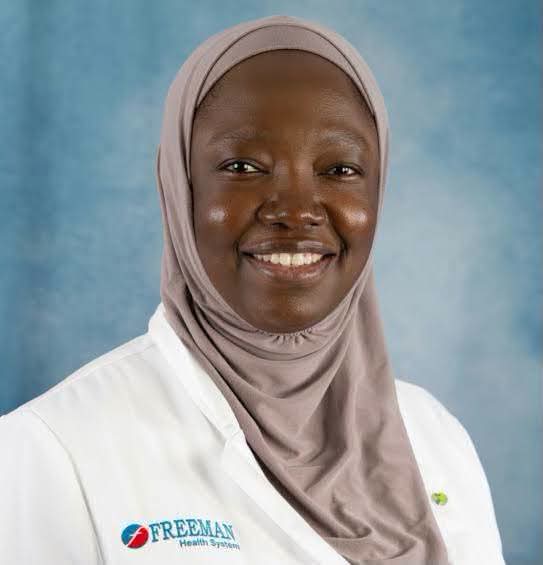
The recent appointment of Dr. Salamat Ahuoiza Aliu-Ibrahim—Nigeria’s first indigenous female neurosurgeon—as Medical Director at the Freeman Children’s Clinic in Joplin, Missouri, United States, has once again brought the nation’s lingering “japa” wave to the front burner.
Dr. Aliu-Ibrahim, whose remarkable career broke historical barriers when she became certified by the West African College of Surgeons (WACS) and served as a senior consultant at the University of Ilorin Teaching Hospital (UITH), now coordinates pediatric care under the Freeman Health System. Her transition from high-end neurosurgical practice in Nigeria to active medical administration abroad has exposed deep-seated anxieties regarding the systemic flight of top-tier medical experts.
A Legacy of Pioneering Excellence
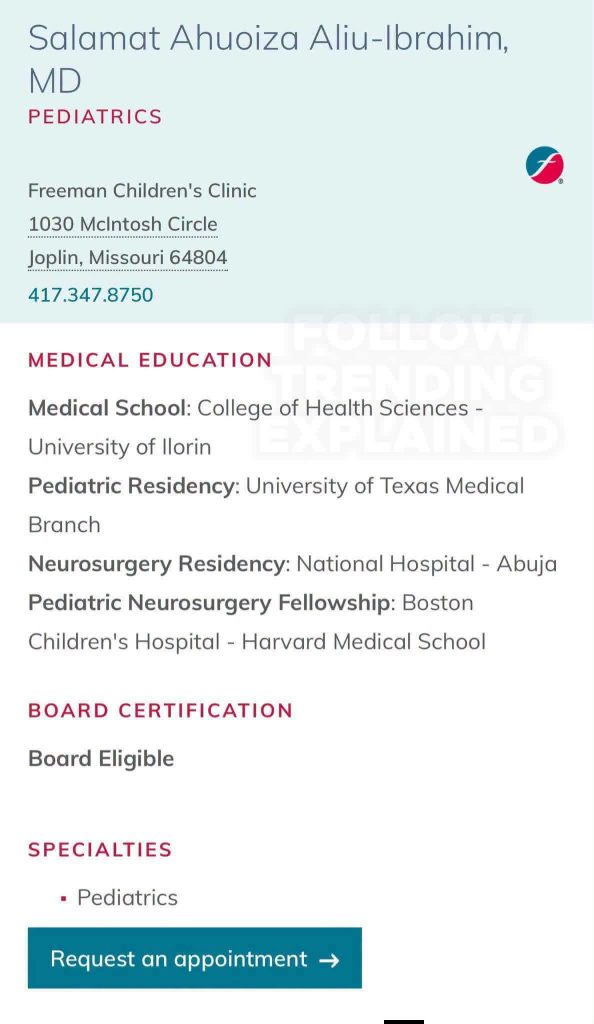
Dr. Aliu-Ibrahim’s journey to international recognition is nothing short of inspirational. Graduating at the top of her class from the University of Ilorin in 2004, she pursued rigorous specialist training across the National Hospital, Abuja, and Usmanu Danfodiyo University Teaching Hospital, Sokoto. By 2014, she cemented her place in medical history as Nigeria’s pioneer female neurosurgeon, earning numerous accolades, including an excellence award from the Medical Women Association of Nigeria.

Following a prestigious subspecialty fellowship in pediatric neurosurgery at Boston Children’s Hospital, Harvard Medical School, she initially returned to Nigeria to impart knowledge and render critical services. However, constraints on professional growth and subsequent administrative hurdles shifted her trajectory. Finding herself unable to immediately match into a competitive US neurosurgery residency program, she demonstrated remarkable resilience by completing a general pediatrics residency at the University of Texas Medical Branch at Galveston. This path ultimately led her to Southwest Missouri, where she now oversees clinical operations at the Freeman Children’s Clinic.

The Brain Drain Dilemma: Loss Versus Individual Choice
The news of her new leadership role has triggered sharp ideological divides across public forums and professional circles.
For many medical stakeholders in Nigeria, her departure represents an irreplaceable structural loss. Critics argue that training a specialist of her caliber demands massive investments of time, institutional resources, and taxpayer-subsidized infrastructure. Losing such rare clinical capital to foreign jurisdictions, observers note, directly impoverishes local healthcare delivery, leaving critical departments understaffed and demoralized.
Conversely, defenders of her career choice emphasize the fundamental right of professionals to seek environments that offer structural stability, security, and optimal avenues for career progression. Some commentators have noted that navigating foreign licensing hurdles often requires professionals to accept humbling readjustments, underscoring the frustrating realities that drive brilliant minds away from domestic shores.
A Wake-Up Call for Policymakers
As Nigeria grapples with a steady exodus of doctors, pharmacists, and nurses, Dr. Aliu-Ibrahim’s case serves as a poignant metaphor for a broader national malaise. While her international success reflects the exceptional brilliance and global competitiveness of Nigerian-trained professionals, it simultaneously serves as a stark reminder of the urgent work required to revamp the domestic healthcare architecture.
Unless systemic reforms—focusing on better remuneration, advanced technological infrastructure, and enhanced institutional support—are prioritized, the nation risks continuing to nurture world-class talents primarily for export.
Do you want to advertise with us?
Do you need publicity for a product, service, or event?
Contact us on WhatsApp +2348033617468, +234 816 612 1513, +234 703 010 7174
or Email: validviewnetwork@gmail.com
CLICK TO JOIN OUR WHATSAPP GROUP