



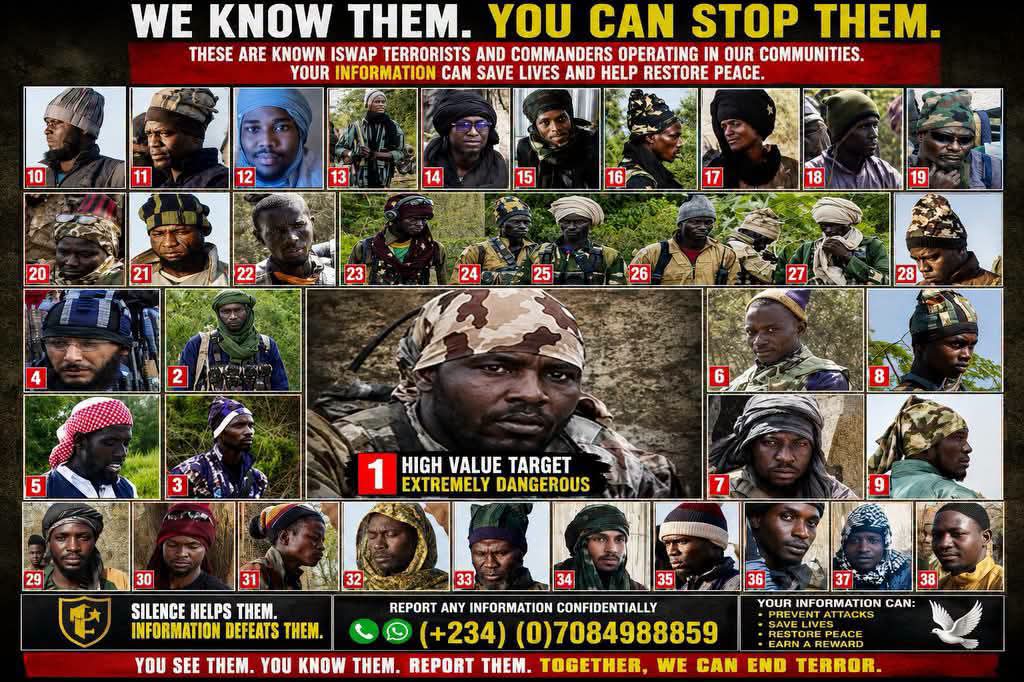
MAIDUGURI — Troops of Operation HADIN KAI have dealt a severe intelligence blow to the Islamic State West Africa Province (ISWAP), unmasking the network’s top-tier leadership following a forensic breakthrough in the Lake Chad Basin.
Military authorities disclosed that recent offensive operations in Northern Borno yielded high-value electronic assets, notably a propaganda camcorder utilized by the terror group. Subsequent digital forensics by security experts unlocked critical operational blueprints, pinpointing active terrorist hideouts along the Mangari–Metele–Dogon Chukun axis within the Abadam and Kukawa Local Government Areas.
The intelligence windfall has officially exposed the central command structure steering insurgent operations across the fringes of the Lake Chad region. Headlining the military’s most-wanted roster is Abu Musa Al-Mangawi Baa Shuwa, designated as the Wali (Governor) of ISIS West Africa Province.

Operating alongside Al-Mangawi are key commanders identified as his deputy and Amirul Jaish, Muhammad Jidda—widely known as “The One-Handed Man”—and Hamad Abu Hanifa, serving as the Amirul-Fiya of ISWAP.
In a direct appeal to the citizenry, the Joint Task Force has announced a substantial financial reward for actionable intelligence culminating in the apprehension of the primary target, Abu Musa Al-Mangawi Baa Shuwa. Headquarters has assured the public of absolute confidentiality and robust protection protocols for informants.
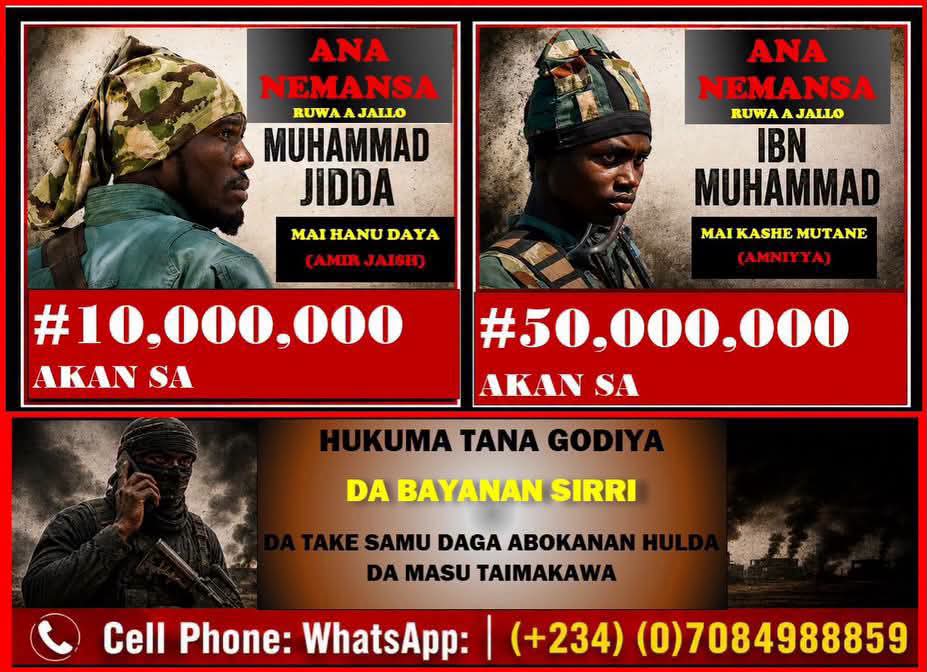
Citizens possessing relevant details regarding the movement or whereabouts of the suspects are urged to utilize official security channels or contact the dedicated hotline at 0708 498 8859. Emphasizing the extreme volatility of the targets, the military strongly cautioned the public against attempting direct confrontations or citizen arrests.
Do you want to advertise with us?
Do you need publicity for a product, service, or event?
Contact us on WhatsApp +2348033617468, +234 816 612 1513, +234 703 010 7174
or Email: validviewnetwork@gmail.com
CLICK TO JOIN OUR WHATSAPP GROUP