

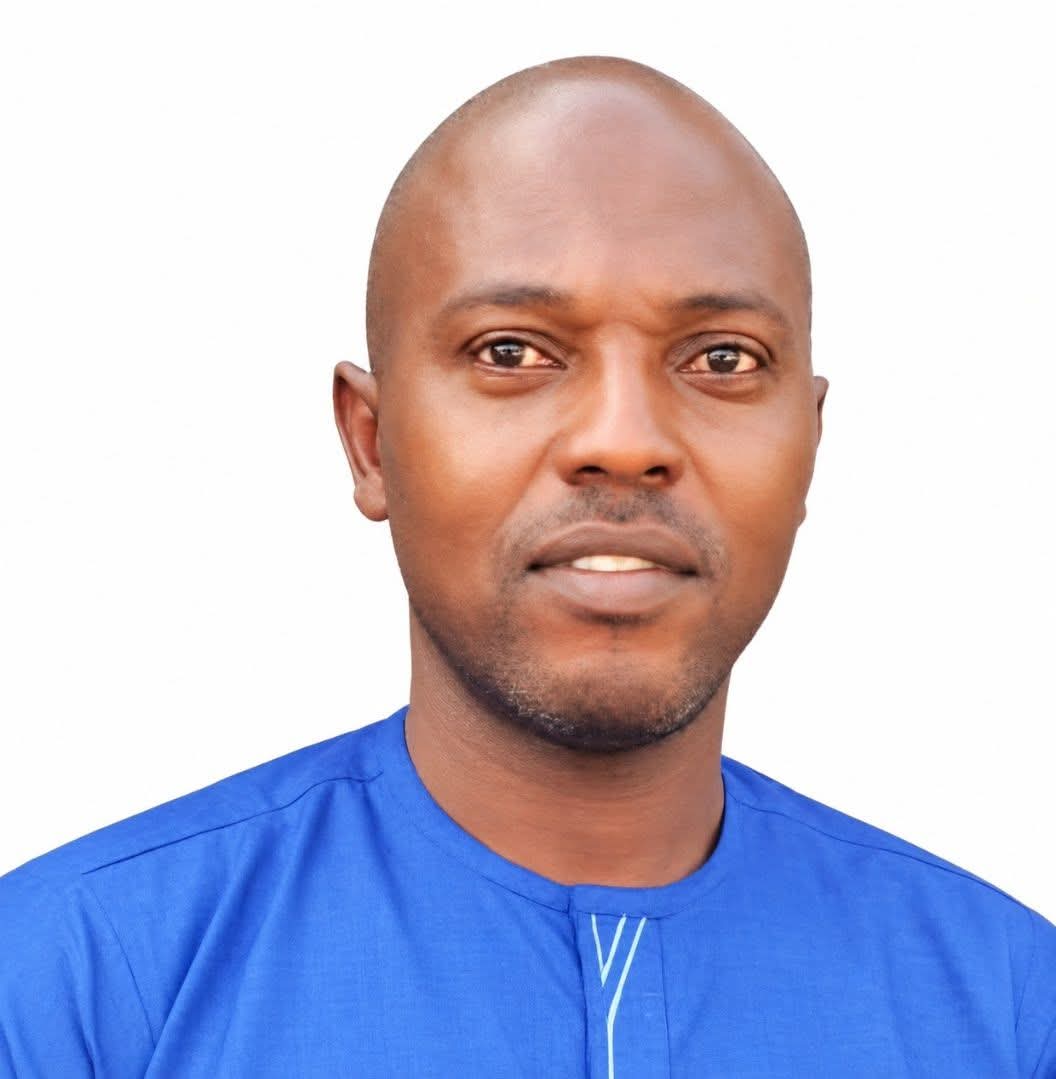
On the morning of Sunday, 6 September 2026, Olatunde Joseph Ojelabi set out from home with his family to give thanks in church. It was the first Sunday of the month, when congregants whose birthdays fell in September came before the Lord. His own birthday was the next day. He would have turned 46 on 7 September.
He never made it to the service. Driving along Ijegun Road in Ikotun, Lagos, he swerved to avoid a commercial tricycle that suddenly turned to pick up passengers. His vehicle slammed into a stationary car. Airbags deployed. The steering wheel struck the right side of his face with devastating force.
He was rushed first to a nearby private hospital, then referred to the Lagos State University Teaching Hospital (LASUTH). According to his family, he arrived at the Medical Emergency Unit before 9 a.m.—alive, conscious enough to be moved, and in urgent need of specialist trauma care.
What followed, his brother has written in a searing personal account, is a sequence of delays and indignities that the family will struggle to understand for the rest of their lives.
Olatunde was reportedly left outside the emergency ward for more than six hours because “there was no bed.” His condition deteriorated. He convulsed and suffered cardiac arrest. Only then did the medical team intervene with resuscitation. A tracheostomy was performed to secure an airway. He was later moved to the Intensive Care Unit—but only after the family was told to locate a free bed themselves and to buy a plastic bucket, towel and detergent so staff could clean the blood that had spilled heavily on the floor.
In the ICU, communication was sparse. Medications costing millions of naira were prescribed with little explanation of purpose or strategy. A senior doctor eventually briefed the family: Olatunde remained critically ill. He died on 12 September 2026, five days after his 46th birthday, which he spent unconscious and fighting for life.
“He was alive when he arrived at LASUTH,” his brother wrote. “He left the hospital six days later in death. His family deserves answers. Lagos deserves answers. And Nigerians deserve a healthcare system in which an emergency patient is treated first as a human life to be saved—not as a number waiting for a bed.”
A familiar tragedy in Lagos hospitals
Olatunde’s case is not an isolated horror. Chronic shortages of beds, especially in emergency and critical-care units, have repeatedly cost lives at LASUTH and other major Lagos public hospitals. In early 2025, 42-year-old Ifelola Abiona was turned away from LASUTH’s surgical emergency unit with the same refrain—“no bed”—despite being a surgical emergency. She was directed elsewhere, returned later, and died after further delays.
Relatives of other patients have described waiting hours in cars outside emergency departments while critically ill loved ones deteriorated.
Investigations have repeatedly documented the pattern: LASUTH, with roughly 800 beds, and the larger Lagos University Teaching Hospital (LUTH) operate near or beyond capacity for long stretches. Critically ill patients are sometimes stabilised outside or referred onward while staff scramble for space. The hospital has expanded some ICU capacity through public-private partnerships, yet demand continues to outstrip supply, particularly in medical and paediatric emergency units.
Strikes, staffing collapse and the brain drain
The human resource crisis compounds the infrastructure gaps. Resident doctors at LASUTH have repeatedly downed tools over unpaid specialist allowances, salary shortfalls and advancement arrears. In mid-September 2026, an indefinite strike by the Association of Resident Doctors (LASUTH-ARD), backed by the national body NARD, left clinics empty and emergency admissions restricted. Patients were turned away or given new appointment dates; some nurses described the atmosphere as unbearable as frustrated families blamed those still on duty.
These industrial actions sit atop a deeper haemorrhage. Nigeria has lost tens of thousands of doctors, nurses, pharmacists and laboratory scientists in recent years. In 2024 alone, more than 4,000 doctors and dentists formally emigrated; between 2023 and 2024 the total across cadres exceeded 43,000. The doctor-to-population ratio has deteriorated to roughly one doctor for every 9,000–10,000 people—far below the World Health Organization’s recommended one to 600. Many remaining doctors work under crushing patient loads, long hours and inadequate support.
Push factors are well documented: low and irregular pay, unpaid allowances, insecurity, limited career progression, and workplaces short of functioning equipment. The result is a vicious cycle—fewer hands, longer waits, higher burnout, more departures.
Weak emergency response and underfunding
Beyond hospital doors, Nigeria’s pre-hospital emergency system remains fragile. Organised ambulance coverage is limited; many road-traffic victims reach hospitals via private vehicles, commercial transport or bystanders.
The “golden hour”—the critical window after severe trauma—is routinely missed. Studies and frontline accounts show that formal pre-hospital care reaches only a small fraction of crash victims. Traffic congestion, poor road conditions and fragmented coordination between rescue agencies and hospitals further delay care.
Government funding has not closed the gaps. Capital budget releases for health infrastructure and equipment have frequently fallen far short of appropriations. Primary healthcare centres across multiple states fail basic staffing and equipment standards. Tertiary facilities report shortages of essential consumables, delayed maintenance and overstretched theatres and ICUs. Health workers continue to protest unpaid welfare packages even as patient volumes rise—Lagos public hospitals have seen outpatient numbers double in recent periods as private care becomes unaffordable for many.
Payment bottlenecks inside hospitals have also delayed emergency treatment, with families sometimes required to settle bills or navigate single-provider systems before care proceeds fully.
Accountability and the value of a life
Olatunde Joseph Ojelabi was a son, husband, father, brother and community member. He arrived at a major teaching hospital alive and in need of the urgent intervention that emergency medicine is designed to provide. His family’s account raises specific questions that demand transparent answers: What triage and assessment protocols were applied on arrival? What interventions, if any, occurred during those first critical hours? Did the absence of an available bed contribute to the cardiac arrest and the ultimate outcome? Why was communication with the family so limited, and why were relatives required to perform tasks such as locating ICU space and arranging floor cleaning amid a life-threatening emergency?
These are not merely private grievances. They speak to the value placed on Nigerian lives when the system is tested. Similar stories have surfaced repeatedly—patients dying while waiting for beds, families navigating bureaucracy under extreme stress, health workers themselves stretched beyond sustainable limits by migration, strikes and under-resourcing.
Do you want to advertise with us?
Do you need publicity for a product, service, or event?
Contact us on WhatsApp +2348033617468, +234 816 612 1513, +234 703 010 7174
or Email: validviewnetwork@gmail.com
CLICK TO JOIN OUR WHATSAPP GROUP
The Lagos State Government, LASUTH management, health regulators and relevant professional bodies have a duty to investigate this case thoroughly, establish the facts without defensiveness, and publish findings. Where individual or systemic failures are identified, they must be acknowledged and corrected.

Where the system itself is inadequate—insufficient critical-care capacity, weak pre-hospital services, poor staff retention, chronic under-equipment—those deficiencies must be fixed with urgency and measurable targets.
No family should leave a teaching hospital asking whether their loved one might still be alive if the emergency department had been ready. Olatunde Joseph Ojelabi should not have died. His story must not become another unexamined statistic.
May his soul rest in perfect peace.
Olatunde Joseph Ojelabi
7 September 1980 – 12 September 2026