

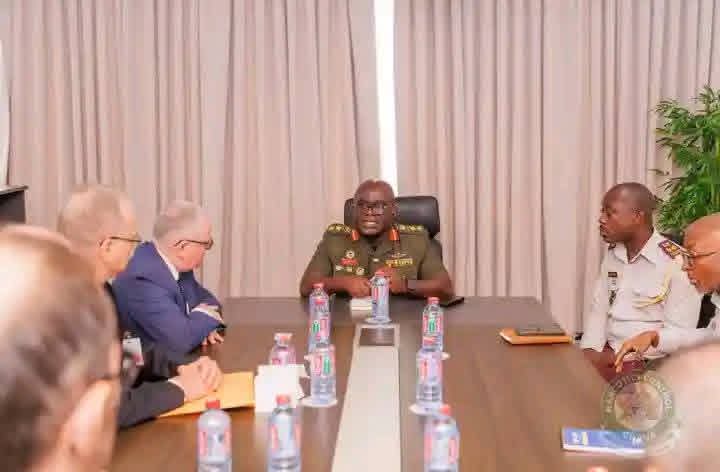
The Director-General of Ghana’s Narcotics Control Commission (NACOC), Major-General Maxwell Obuba Mantey, has issued a strong call for practical, operational cross-border cooperation among African nations to confront the escalating threats of synthetic drugs, cocaine trafficking and transnational organised crime.
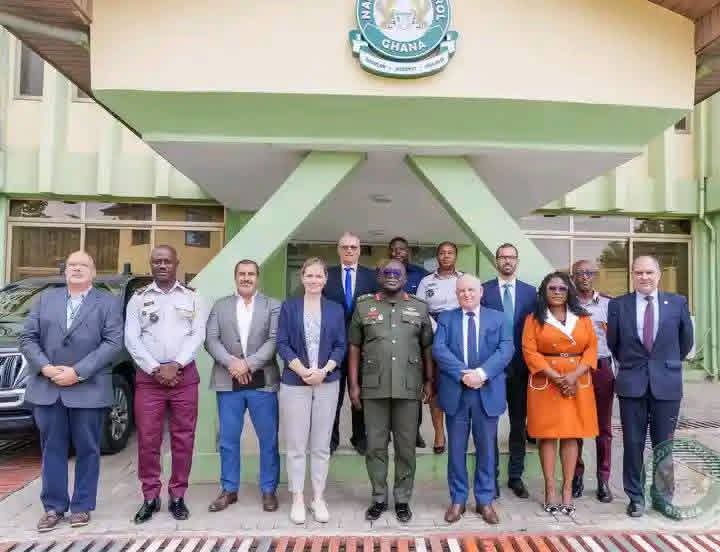
Speaking in Ghana’s statement at the close of the 33rd Meeting of Heads of National Drug Law Enforcement Agencies, Africa (HONLEA Africa), held in Vienna, Austria, from 8 to 11 September 2026, Major-General Mantey stressed that fragmented national responses are no longer enough. Trafficking networks now routinely operate across multiple jurisdictions, moving synthetic drug precursors, cocaine consignments and illicit financial flows through different countries while exploiting gaps between enforcement systems.
“Cooperation is therefore not a diplomatic courtesy to be affirmed in closing statements; it is the operational prerequisite for any of our national strategies to be successful,” he declared.
He advocated a practical “neighbour-to-neighbour” approach as the foundation for deeper regional action. This would include timely intelligence sharing, joint patrols, coordinated investigations and integrated border management so that information obtained in one country can immediately support enforcement in another. He pointed to Ghana’s existing bilateral arrangements with its neighbours, as well as cooperation between The Gambia and Senegal, as workable models that could be scaled up.
Major-General Mantey also recalled a high-level dialogue hosted in Accra in November 2025 under the theme “Mapping the Future of Drug Markets in West Africa – Synthetics, Cocaine, Criminal Money, and Strategic Responses.” The concerns raised then, he said, remain urgent: the growing impact of synthetic drugs on young people and the capacity of organised crime and illicit financial flows to undermine governance and state institutions.
The Vienna meeting brought together heads of African drug law enforcement agencies to strengthen regional and sub-regional responses to the illicit drug trade. Ghana’s intervention underscored a broader shift observed across West Africa, where the region is moving beyond its traditional role as a transit corridor and increasingly confronting production, distribution and rising domestic consumption of synthetic substances.
NACOC has in recent months intensified intelligence-led operations at borders, enhanced precursor chemical monitoring and deepened inter-agency collaboration inside Ghana. The Commission has also signed a memorandum of understanding with Nigeria’s National Drug Law Enforcement Agency covering intelligence sharing, joint operations and anti-money-laundering efforts, reflecting the practical cooperation Major-General Mantey is urging at the continental level.

As synthetic drugs and cocaine continue to evolve in sophistication—often using maritime routes, cyberspace and complex financial networks—African countries face a clear choice: act in coordinated, operational partnership or remain vulnerable to networks that treat national borders as opportunities rather than barriers.
Major-General Mantey’s message from Vienna is that the time for practical, neighbour-driven action is now.
Do you want to advertise with us?
Do you need publicity for a product, service, or event?
Contact us on WhatsApp +2348033617468, +234 816 612 1513, +234 703 010 7174
or Email: validviewnetwork@gmail.com
CLICK TO JOIN OUR WHATSAPP GROUP