

• Latest
  • Trending

Refineries, Reforms, and the Cost of Repeating Failure By Lanre Ogundipe

May 9, 2026

BREAKING: Court sentences ex-power minister Mamman to 75 years

May 13, 2026

Ogun Police Under Fire for Alleged Assault on Gateway Poly Students

May 13, 2026

Why I assaulted my daughter, Ilebaye – Father

May 13, 2026

Tragedy in Zamfara: 100 Civilians Killed in Market Airstrike

May 12, 2026

Court Grounds Bauchi Accountant General Over Alleged ₦1.6bn Fraud

May 12, 2026

EFCC Boss Warns Corporates: Compliance is Cheaper Than Crime

May 12, 2026

University Librarians Decry Rise of Predatory Journals, Unethical AI Use

May 12, 2026

South Africa to Produce Breakthrough Twice-Yearly HIV Drug

May 12, 2026

Wema Bank Unveils ₦170m Prize Pool for 5for5 Season Five

May 12, 2026

Ruto, Macron Lead Continental Shift at Landmark ‘Africa Forward’ Summit

May 12, 2026

Aiyedatiwa Moves to Secure Ondo’s Cocoa Future in Global Market

May 12, 2026

Lookman Shines as Atletico Edge Osasuna; Real Betis End 21-Year UCL Wait

May 12, 2026

Nigeria To Host 2026 CAF Awards

May 12, 2026

After 40 Years In Power, 81-Year-Old Ugandan President Begins Fresh Term

May 12, 2026

Tragedy Hits Nollywood: Actor Alex Ekubo Passes Away at 40

May 12, 2026

Ilebaye’s Mother Breaks Silence, Rebuts Father’s “Financial Abandonment” and Drug Claims

May 12, 2026

Ondo Court Arraigns Hunter for Alleged Murder

May 12, 2026

2027: INEC requests 1.4m corps members

May 12, 2026

Boiling Point Arena Discourse Sparks Nationwide Reflection on Future of Marriage Institution

May 12, 2026

Experts Push for Lifelong Learning in Nigerian Teacher Education

May 12, 2026

FCE Abeokuta Revamps Campus with 2026 TETFund Project Bids

May 12, 2026

Global Health Alert as Cruise Ship Virus Claims Third Victim

May 12, 2026

Starmer Under Siege: Cabinet Split and Resignations Push PM to the Brink

May 12, 2026

Suicide Bomber Kills Seven in Northwest Pakistan

May 12, 2026

Women Now Lead Global Higher Education Enrolment, UNESCO Reports

May 12, 2026

Kidnappers Abduct Businessman, Shoot 10-Year-Old Girl in Oyo

May 12, 2026

NAPTIP Scores Major Victory as Supreme Court Jails Human Trafficker

May 12, 2026

Stop the “Nonsense”: Ibiyeomie Bans Gum,Water, and Phones in Church

May 12, 2026

LeBron’s Future Uncertain as Thunder Sweep Lakers

May 12, 2026

ABSU Under Fire: Otti Empowers High-Powered Panel to Probe Extortion, Forgery

May 12, 2026
ADVERTISEMENT
  • Home
  • BREAKING NEWS
  • Tech
  • Entertainment
  • Lifestyle
  • Education
    • Sports
  • CONSULTATION
  • Shop
ValidView Network - Breaking News, Nigerian News, Nigerian newspapers, Entertainment, Videos, Sports, Business and Politics.
ADVERTISEMENT
  • Home
  • BREAKING NEWS
  • Tech
    • All
    • Apps
    • Mobile

    The End of the Password? UK Cyber Chiefs Urge Shift to ‘Unbreakable’ Passkeys

    Tinubu Hails Lebara’s Entry as “Vote of Confidence” in Nigeria’s Digital Economy

    I have been fired unfairly by Paystack, says co-founder Ezra Olubi

    FG unveils digital ID app to enhance data protection, user control

    A New Era Begins: Traffic Lights to Add Fourth White Signal for Autonomous Vehicles

    Nigerian Girls Triumph at 2025 Technovation Global Summit with AI Safety App

    Trending Tags

    • Nintendo Switch
    • CES 2017
    • Playstation 4 Pro
    • Mark Zuckerberg
  • Entertainment
    • All
    • CELEBRATIONS
    • Gaming
    • History and Culture
    • Movie
    • Music
    • Sports

    Lookman Shines as Atletico Edge Osasuna; Real Betis End 21-Year UCL Wait

    Nigeria To Host 2026 CAF Awards

    Tragedy Hits Nollywood: Actor Alex Ekubo Passes Away at 40

    Ilebaye’s Mother Breaks Silence, Rebuts Father’s “Financial Abandonment” and Drug Claims

    LeBron’s Future Uncertain as Thunder Sweep Lakers

    Dembele Secures Back-to-Back Ligue 1 Player of the Year Award

  • Lifestyle
    • All
    • Health

    South Africa to Produce Breakthrough Twice-Yearly HIV Drug

    Boiling Point Arena Discourse Sparks Nationwide Reflection on Future of Marriage Institution

    Global Health Alert as Cruise Ship Virus Claims Third Victim

    The Mosquito Dilemma: Can We Eradicate Our Deadliest Foe Without Breaking Nature?

    WHO approves first Malaria drug for babies

    UK To Isolate MV Hondius Passengers At Former COVID-19 Facility Over Hantavirus Fears

    Trending Tags

    • Golden Globes
    • Game of Thrones
    • MotoGP 2017
    • eSports
    • Fashion Week
  • Education
    • Sports
  • CONSULTATION
  • Shop
No Result
View All Result
  • Home
  • BREAKING NEWS
  • Tech
    • All
    • Apps
    • Mobile

    The End of the Password? UK Cyber Chiefs Urge Shift to ‘Unbreakable’ Passkeys

    Tinubu Hails Lebara’s Entry as “Vote of Confidence” in Nigeria’s Digital Economy

    I have been fired unfairly by Paystack, says co-founder Ezra Olubi

    FG unveils digital ID app to enhance data protection, user control

    A New Era Begins: Traffic Lights to Add Fourth White Signal for Autonomous Vehicles

    Nigerian Girls Triumph at 2025 Technovation Global Summit with AI Safety App

    Trending Tags

    • Nintendo Switch
    • CES 2017
    • Playstation 4 Pro
    • Mark Zuckerberg
  • Entertainment
    • All
    • CELEBRATIONS
    • Gaming
    • History and Culture
    • Movie
    • Music
    • Sports

    Lookman Shines as Atletico Edge Osasuna; Real Betis End 21-Year UCL Wait

    Nigeria To Host 2026 CAF Awards

    Tragedy Hits Nollywood: Actor Alex Ekubo Passes Away at 40

    Ilebaye’s Mother Breaks Silence, Rebuts Father’s “Financial Abandonment” and Drug Claims

    LeBron’s Future Uncertain as Thunder Sweep Lakers

    Dembele Secures Back-to-Back Ligue 1 Player of the Year Award

  • Lifestyle
    • All
    • Health

    South Africa to Produce Breakthrough Twice-Yearly HIV Drug

    Boiling Point Arena Discourse Sparks Nationwide Reflection on Future of Marriage Institution

    Global Health Alert as Cruise Ship Virus Claims Third Victim

    The Mosquito Dilemma: Can We Eradicate Our Deadliest Foe Without Breaking Nature?

    WHO approves first Malaria drug for babies

    UK To Isolate MV Hondius Passengers At Former COVID-19 Facility Over Hantavirus Fears

    Trending Tags

    • Golden Globes
    • Game of Thrones
    • MotoGP 2017
    • eSports
    • Fashion Week
  • Education
    • Sports
  • CONSULTATION
  • Shop
No Result
View All Result
ValidView Network - Breaking News, Nigerian News, Nigerian newspapers, Entertainment, Videos, Sports, Business and Politics.
No Result
View All Result

Refineries, Reforms, and the Cost of Repeating Failure By Lanre Ogundipe

ValidViewNetwork by ValidViewNetwork
May 9, 2026
in Opinion
0 0
0
Home Opinion
ADVERTISEMENT
488
SHARES
508
VIEWS
Share on FacebookShare on Twitter
ADVERTISEMENT
Spread the love
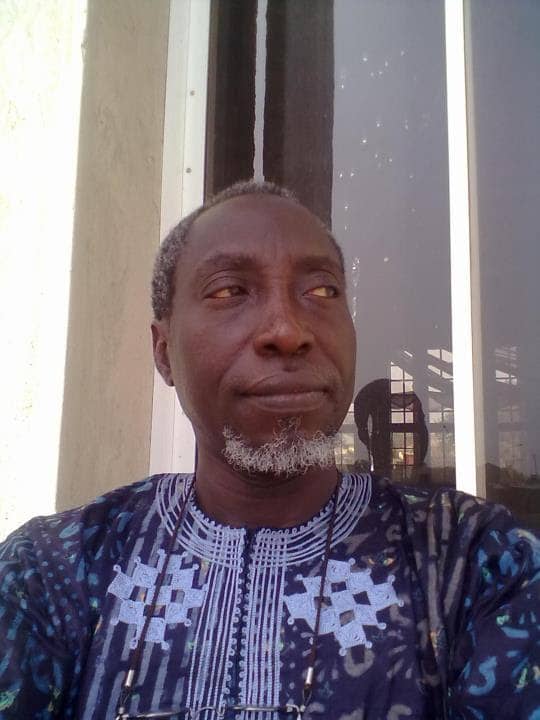
Lanre Ogundipe

Nigeria’s decision to once again seek foreign partners and financing to revive its long-ailing refineries comes with urgency, but also with a heavy weight of history. It is not the first time the country has turned to capital public or external in the hope of restoring domestic refining capacity. It is, rather, another moment in a long cycle of ambition, expenditure, and underwhelming results. That cycle now raises a more fundamental question: whether Nigeria is attempting to solve a structural problem with the same tools that have repeatedly failed.

From the early 2000s under the administration of Olusegun Obasanjo, when attempts were made to reform and partially privatise the refining system before policy reversals intervened, through successive governments that approved multiple turnaround maintenance programmes, Nigeria has consistently returned to the idea of refinery rehabilitation as both economic necessity and political promise. Each intervention came with assurances, technical upgrades, improved efficiency, and increased output. Each round was presented as a turning point. Yet the outcome has been strikingly consistent: substantial financial commitments without sustained operational transformation.

Over the years, billions of dollars, amounting to trillions of naira when converted and accumulated, have been channelled into efforts to resuscitate refineries in Port Harcourt, Warri, and Kaduna. Under the restructured Nigerian National Petroleum Company Limited, the rehabilitation of the Port Harcourt refinery alone has been associated with significant financial outlays, with similar commitments announced for other facilities. These investments were justified on the basis that domestic refining would reduce import dependence, conserve foreign exchange, and stabilise fuel supply.

Yet despite these commitments, sustained, verifiable refining output that reflects the scale of expenditure has remained limited. The gap between investment and outcome is not marginal; it is structural.

It is tempting to interpret this pattern as evidence of inadequate funding or outdated infrastructure. But such explanations, while convenient, do not fully capture the problem. Nigeria’s refinery challenge has never been solely about money, nor has it been strictly about technology. It is fundamentally about governance, how projects are conceived, funded, monitored, and enforced.

In systems where funding is not tightly linked to measurable performance, where oversight is episodic rather than continuous, and where consequences for failure are weak or absent, even substantial investment can fail to produce results. The issue, therefore, is not simply that money has been spent; it is that the system into which that money is introduced has not consistently ensured accountability.

This is the context within which the current proposal to engage foreign partners must be understood. On its face, the approach is rational. External partners can bring technical expertise, operational discipline, and access to capital. They often operate under frameworks that emphasise efficiency, cost control, and return on investment. In theory, such partnerships can impose a level of rigour that domestic processes have struggled to maintain.

But theory depends on structure.

If foreign partners are introduced into a system that has not been fundamentally reformed, the risk is not merely that projects will underperform. The greater risk is that new funding will be absorbed into old patterns, producing outcomes that differ in scale but not in nature. Capital, whether domestic or foreign, does not correct governance weaknesses; it operates within them.

There is also a broader financial dimension that cannot be ignored. Where external financing is secured with sovereign backing, explicitly or implicitly, the obligations extend beyond the life of the project itself. Debt must be serviced regardless of whether the underlying investment achieves its intended outcomes. If performance falls short, repayment pressures persist. In certain scenarios, poorly structured agreements can expose national assets to forms of external leverage that may not be immediately apparent at the point of signing.

This is not a theoretical concern; it is a risk observed in multiple jurisdictions where infrastructure financing has not been matched by strong governance safeguards.

At the same time, the urgency of Nigeria’s refining challenge is undeniable. The country continues to export crude oil while relying heavily on refined product supply, leaving it exposed to global price fluctuations, exchange rate volatility, and logistical constraints. The emergence of the Dangote Petroleum Refinery has demonstrated that large-scale refining is achievable within Nigeria and has begun to alter supply dynamics. It has also underscored the contrast between private-sector efficiency and the persistent underperformance of state-owned facilities.

Advertisement. Scroll to continue reading.

That contrast should not lead to resignation or dependency. It should prompt a deeper examination of why similar outcomes have not been achieved within public institutions.

If Nigeria is to avoid repeating its past, the current initiative must be anchored on a fundamentally different framework. Funding must be tied directly to verifiable output measured in actual refining throughput and operational uptime rather than to milestones that can be declared without corresponding performance. Independent technical audits must be embedded into the process, providing real-time monitoring rather than retrospective evaluation. Contractual terms must be transparent, with clear allocation of risk between parties and enforceable provisions for underperformance.

Equally important is the structure of financing. Funds must be ring-fenced, ensuring that they are used strictly for defined project purposes and cannot be diverted through administrative discretion. Payment mechanisms should be designed to reward delivery, not merely activity. And perhaps most critically, there must be a credible framework for consequences where failure carries measurable implications for both contractors and overseeing officials.

These principles are not novel. They are standard in well-governed project environments. What has been missing in Nigeria’s experience is not awareness of these mechanisms, but consistent enforcement.

Public scepticism, often expressed in blunt or emotionally charged language, reflects an accumulated experience rather than mere cynicism. When large sums are repeatedly committed with limited visible results, trust erodes. That erosion cannot be reversed by assurances alone. It requires demonstrable evidence that the system itself has changed.

ADVERTISEMENT

Nigeria does not lack the financial capacity to invest in its energy infrastructure. It does not lack access to technical expertise. What it has lacked is a governance architecture that ensures investment translates into sustained value.

The refinery question, therefore, is not simply about infrastructure renewal. It is about institutional credibility.

If the current effort is to succeed, it must break decisively from precedent not in rhetoric, but in design and execution. It must demonstrate that lessons have been learned, that safeguards have been strengthened, and that accountability is not an afterthought but a foundation.

Do you want to share a story with us?
Do you want to advertise with us?
Do you need publicity for a product, service, or event?
Contact us on WhatsApp +2348033617468, +234 816 612 1513, +234 703 010 7174
or Email: validviewnetwork@gmail.com
CLICK TO JOIN OUR WHATSAPP GROUP
ADVERTISEMENT
ADVERTISEMENT

Anything less risks extending a cycle that has already consumed too much time, too many resources, and too much public confidence.

Because in the final analysis, the issue is not whether Nigeria can mobilise funds to repair its refineries. It is whether Nigeria can build a system strong enough to ensure that those funds do not once again fail.

Ogundipe, Public Affairs Analyst and former President of the Nigeria and Africa Union of Journalists, writes from Abuja.


Previous Post

Troops Crush Massive ISWAP Raid in Buni Gari, 50 Terrorists Neutralized

Next Post

Iyabo Obasanjo, Monarchs Celebrate Ayo Arowojolu at 59, Laud Boiling point Arena

ValidViewNetwork

ValidViewNetwork

Next Post

Iyabo Obasanjo, Monarchs Celebrate Ayo Arowojolu at 59, Laud Boiling point Arena

Leave a Reply Cancel reply

Your email address will not be published. Required fields are marked *

Get the latest news from ValidViewNetwork
Loading

SPONSORED ADVERT

SPONSORED ADVERT

As the Lord liveth, you are feeling bushing this 6th month better and stronger than the way you started it in Jesus Mighty Name. Our angels of good news shall locate us this month. Shalom!

  • Home
  • BREAKING NEWS
  • Tech
  • Entertainment
  • Lifestyle
  • Education
  • CONSULTATION
  • Shop

© 2022 ValidViewNetwork - Website Developed by HaybeeMultimedia.

No Result
View All Result

© 2022 ValidViewNetwork - Website Developed by HaybeeMultimedia.

Welcome Back!

Login to your account below

Forgotten Password? Sign Up

Create New Account!

Fill the forms below to register

All fields are required. Log In

Retrieve your password

Please enter your username or email address to reset your password.

Log In

Add New Playlist