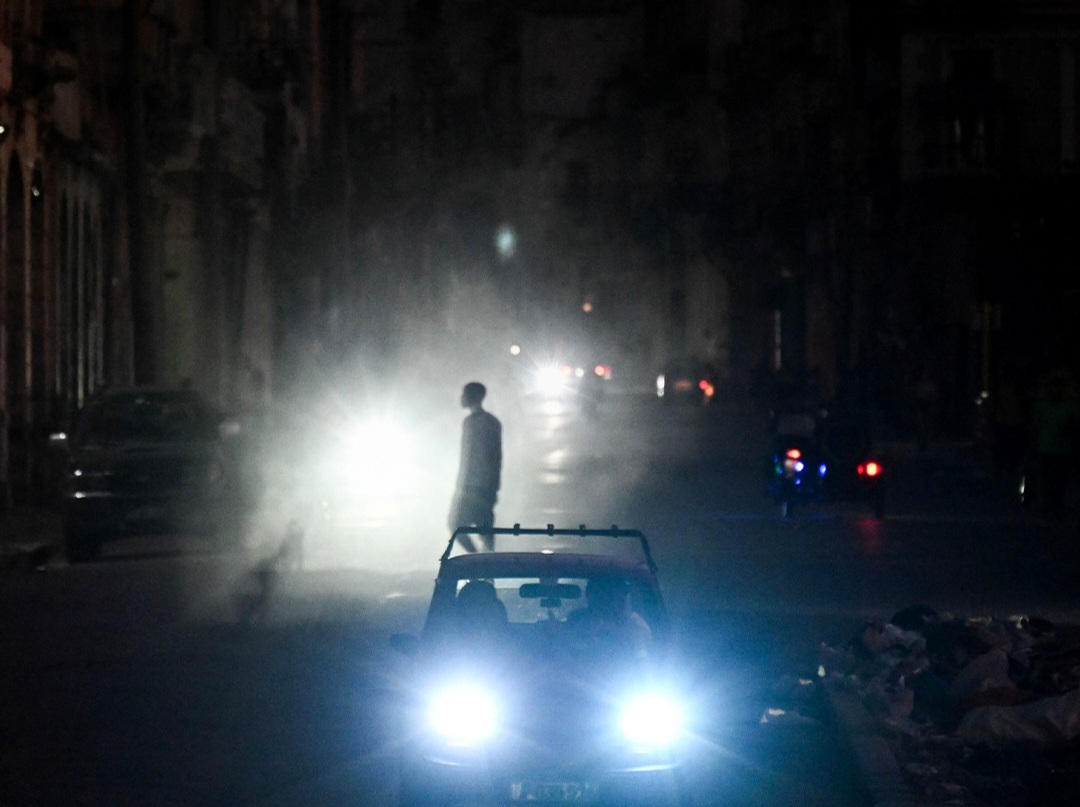
HAVANA — For the second time in less than a week, Cuba’s national power grid has suffered a total collapse, plunging more than 10 million people into darkness and paralyzing an island already reeling from a tightening U.S. oil blockade.
The Ministry of Energy and Mines confirmed the “total disconnection” of the National Electric System late Saturday evening. While officials stated that restoration protocols were immediately activated, the failure underscores the extreme fragility of an aging infrastructure that has been deprived of its primary fuel sources for months.
A System at the Breaking Point
The latest blackout follows a similar collapse last Monday. According to the state-owned Cuban Electric Union, the failure originated from a generating unit at the Nuevitas thermoelectric plant in Camagüey, triggering a “cascading effect” across the island’s eight antiquated plants.
The crisis is being driven by a perfect storm of decaying hardware—some units are over 40 years old—and a critical lack of fuel. President Miguel Díaz-Canel recently noted that the island has not received significant oil shipments from foreign suppliers in three months. Historically, Cuba has relied on Venezuela and Mexico for its energy needs, but both taps have effectively been turned off.
The “Absolute Resolve” Fallout
The energy shortage intensified following Operation Absolute Resolve in January, the U.S. military mission that led to the capture of Venezuelan President Nicolás Maduro. Since then, the Trump administration has enforced a strict maritime blockade, threatening heavy tariffs on any nation—specifically targeting Mexico’s Pemex—that continues to supply Havana with crude oil.
From the White House, President Trump has maintained a hawkish stance, suggesting that the collapse of the Cuban government is imminent.
Do you want to advertise with us?
Do you need publicity for a product, service, or event?
Contact us on WhatsApp +2348033617468, +234 816 612 1513, +234 703 010 7174
or Email: validviewnetwork@gmail.com
CLICK TO JOIN OUR WHATSAPP GROUP

”I think I can do anything I want with it,” Trump told reporters this week, musing on the “honor of taking” the island. “Whether I free it, take it… they’re a very weakened nation right now.”
Diplomacy Amid Darkness
Despite the rhetoric, “sensitive” negotiations between Washington and Havana are reportedly underway. President Díaz-Canel confirmed that talks regarding the fuel embargo have taken place, though the Cuban government remains adamant that its political system and sovereignty are not on the bargaining table.
As of Sunday morning, “micro-islands” of power have been established to keep hospitals and water pumping stations running, but for the majority of Cubans, daily life remains a struggle for basic light, refrigeration, and communication.