LAFIA – Health experts and policy stakeholders have issued a stark warning regarding the escalating burden of Non-Communicable Diseases (NCDs) in Nigeria, describing the current trajectory as a looming public health catastrophe fueled by systemic neglect and “zero” budget releases.
At a high-level capacity-strengthening workshop held in Nasarawa State on Thursday, officials from the Federal Ministry of Health, the Legislative Initiative for Sustainable Development (LISDEL), and the Global Health Advocacy Incubator (GHAI) gathered to address the “silent killer” stripping the nation of its productivity.
A Funding “Blackout”
The most alarming revelation came from Prof. Emmanuel Alhassan, Country Director of GHAI, who disclosed that a recent assessment of Nigeria’s NCD response found a total absence of financial backing.

”Last year, there was no funding release at all for NCDs,” Prof. Alhassan stated. “This is deeply concerning given that these diseases are a significant and growing challenge.”
He further noted that while the health sector is often blamed, “non-health” ministries, departments, and agencies (MDAs) lack the technical capacity to design programs that could attract the necessary funding for multisectoral interventions.
The Household Burden
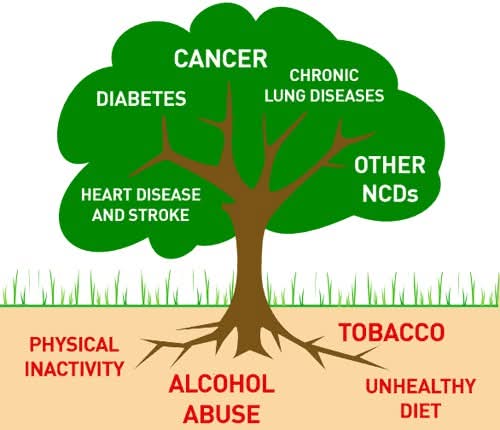
Dr. Alayo Sopekan, the National Coordinator for NCDs at the Federal Ministry of Health and Social Welfare, emphasized that NCDs—including hypertension, diabetes, asthma, and cancers—are no longer “old age” issues. They are lifestyle-driven chronic conditions that are increasingly striking younger Nigerians.
”About 15 percent of our population is living with hypertension, and those are just the diagnosed cases,” Dr. Sopekan said. He added a chilling statistic: nearly 25 percent of Nigerians have never had their blood sugar checked, meaning millions are walking “health time bombs.”
The financial toll is equally devastating. In a country where out-of-pocket health expenditure remains the norm, families are often forced into a “medication or meal” dilemma.
”Management is expensive. Many patients must choose between basic needs like food and purchasing life-saving drugs,” Sopekan added.
A Call for Legislative Teeth
The Vice President of LISDEL, Muhammed Usman, argued that the crisis cannot be solved within the walls of a hospital. He called for a “whole-of-government” approach, urging the National Assembly to move beyond rhetoric and exercise its oversight powers.
”Those involved in budgeting should ensure adequate allocation to agencies like the NCDC,” Usman urged. “There must be strong oversight to ensure that what is appropriated is actually released and utilized.”
The Global Context
According to the World Health Organization (WHO), NCDs are responsible for over 70 percent of deaths globally. While Nigeria’s figure currently sits at 29 percent, experts warn that rapid urbanization, sedentary lifestyles, and the consumption of highly processed foods are pushing that number higher every year.
With the previous national action plan for NCDs having expired, stakeholders at the workshop recommended a new framework backed by “political economy analysis” to ensure the government’s response is not just planned, but powered by actual investment.
Without immediate intervention, experts say Nigeria faces a future where the cost of treating preventable chronic illnesses will bankrupt both the healthcare system and the citizens it is meant to protect.
Do you want to advertise with us?
Do you need publicity for a product, service, or event?
Contact us on WhatsApp +2348033617468, +234 816 612 1513, +234 703 010 7174
or Email: validviewnetwork@gmail.com
CLICK TO JOIN OUR WHATSAPP GROUP