


LAGOS – What was meant to be a routine loan repayment between friends has turned into a nightmare for Ani Gerald Chukwuebuka, a solar system installer and sales specialist based in Lagos. A single-digit error during a mobile transfer led to N100,000 landing in the OPay account of a stranger, Opeyemi Faridat Awodoyin, who has since allegedly blocked the sender to avoid refunding the money.
The ordeal began in the early hours of Tuesday when Chukwuebuka was with a friend who intended to repay a N100,000 debt. According to Chukwuebuka, the proximity of the two account numbers made the error nearly invisible during the transaction.
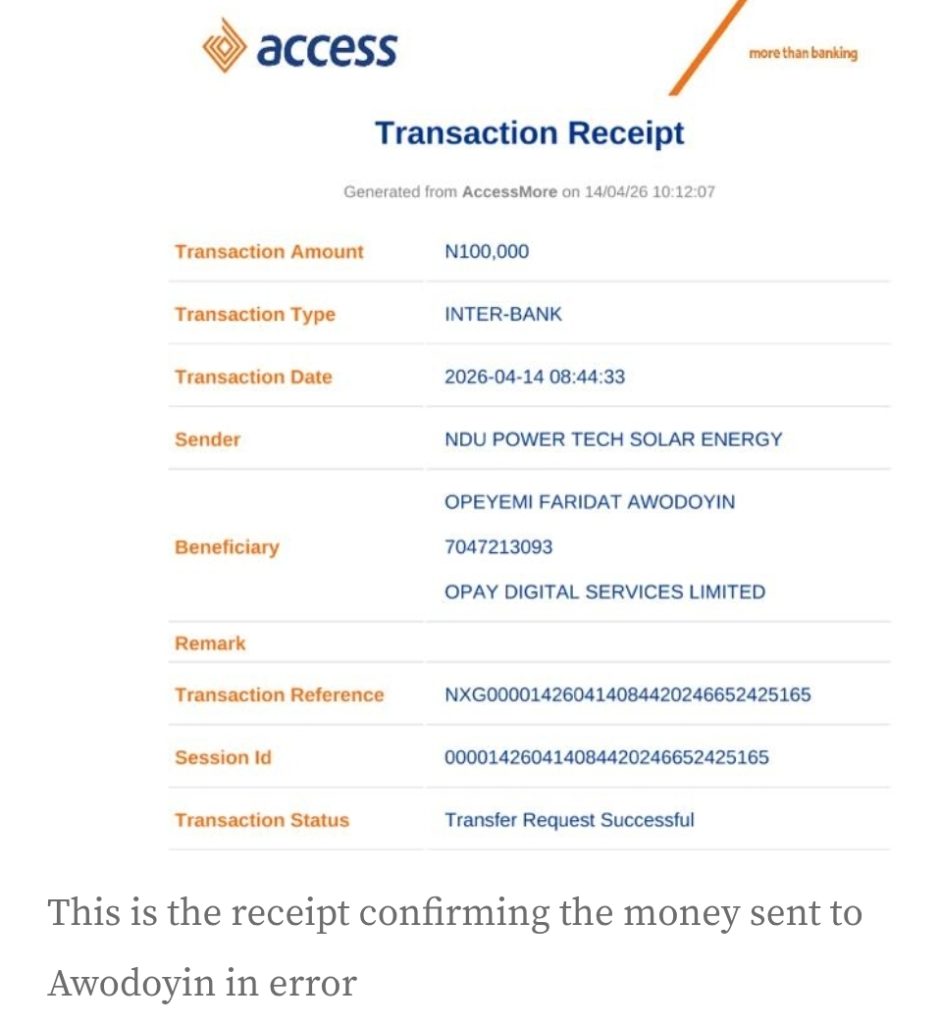
“My account number ends in 3096, while hers ends in 3093,” Chukwuebuka told reporters. “I was the one who typed the digits into my friend’s Access Bank app. In the rush of the moment, I failed to verify the name that popped up, and he authorized the transfer immediately.”
The mistake only became apparent hours later when Chukwuebuka noticed his OPay balance remained unchanged despite the successful transaction on his friend’s end. Upon reviewing the transaction receipt, he realized the last digit was incorrect.
A Game of Hide and Seek
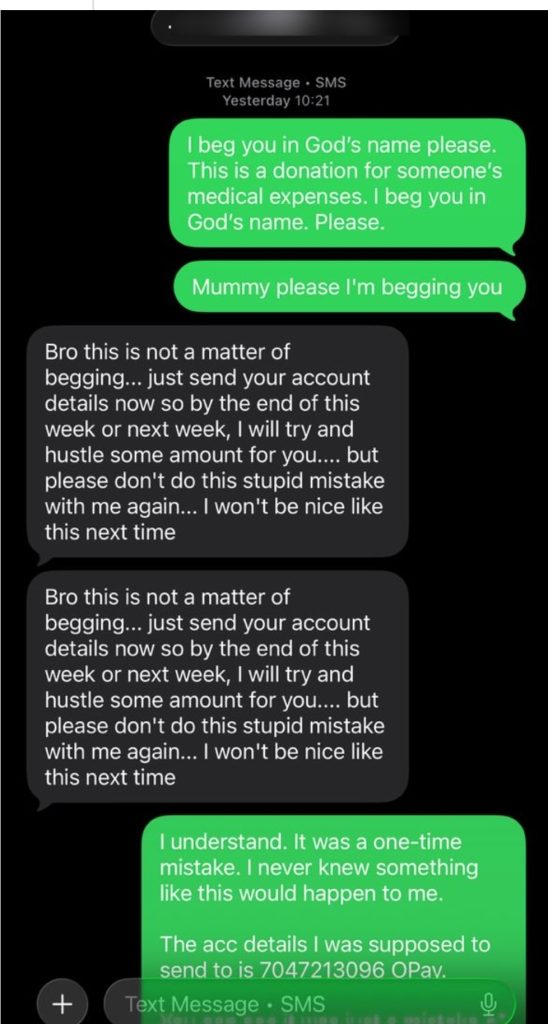
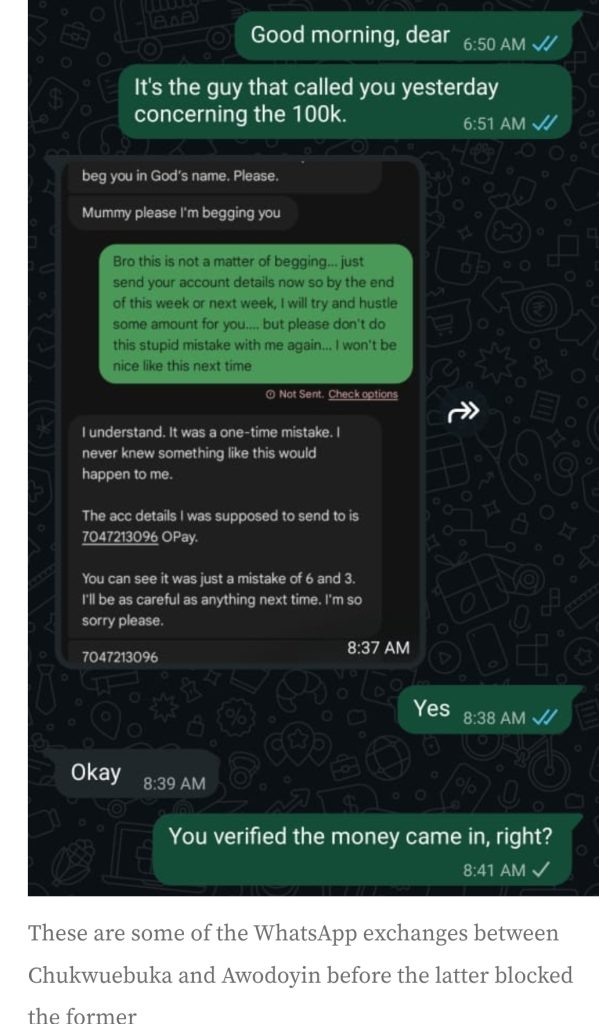
Chukwuebuka’s initial attempts to resolve the issue amicably were met with a series of conflicting stories from the recipient. When first contacted via phone, Awodoyin reportedly denied seeing the credit. However, during a subsequent call, she admitted the funds had arrived but claimed she could not return them.
“She claimed OPay had automatically deducted the money from her account because she was owing the platform,” Chukwuebuka stated.
Despite this claim, further communication via WhatsApp seemed promising at first. Chukwuebuka noted that Awodoyin eventually agreed to a repayment plan in tranches. That hope was short-lived. By Wednesday morning, after Chukwuebuka sent a polite reminder, he discovered he had been blocked on all platforms.
No Response from Recipient
Efforts by the Foundation for Investigative Journalism (FIJ) to mediate or obtain a statement from Awodoyin have been unsuccessful. When reached for comment on Wednesday, she declined the initial call and promptly switched off her mobile device. While she reportedly read a follow-up inquiry sent via WhatsApp, she has yet to provide a response.

Under Nigerian banking regulations and the Central Bank of Nigeria (CBN) guidelines on electronic payments, recipients of funds sent in error are legally obligated to return the money. Retaining “windfall” funds can be classified as “theft by conversion” or “dishonest retention of stolen property” under the Criminal Code.
As of press time, Chukwuebuka is weighing his options, including formal reporting to OPay’s anti-fraud unit and potential legal action to freeze the recipient’s account. For now, the N100,000 remains out of reach, a costly reminder of the importance of double-checking account names before hitting “send.”
Do you want to advertise with us?
Do you need publicity for a product, service, or event?
Contact us on WhatsApp +2348033617468, +234 816 612 1513, +234 703 010 7174
or Email: validviewnetwork@gmail.com
CLICK TO JOIN OUR WHATSAPP GROUP