

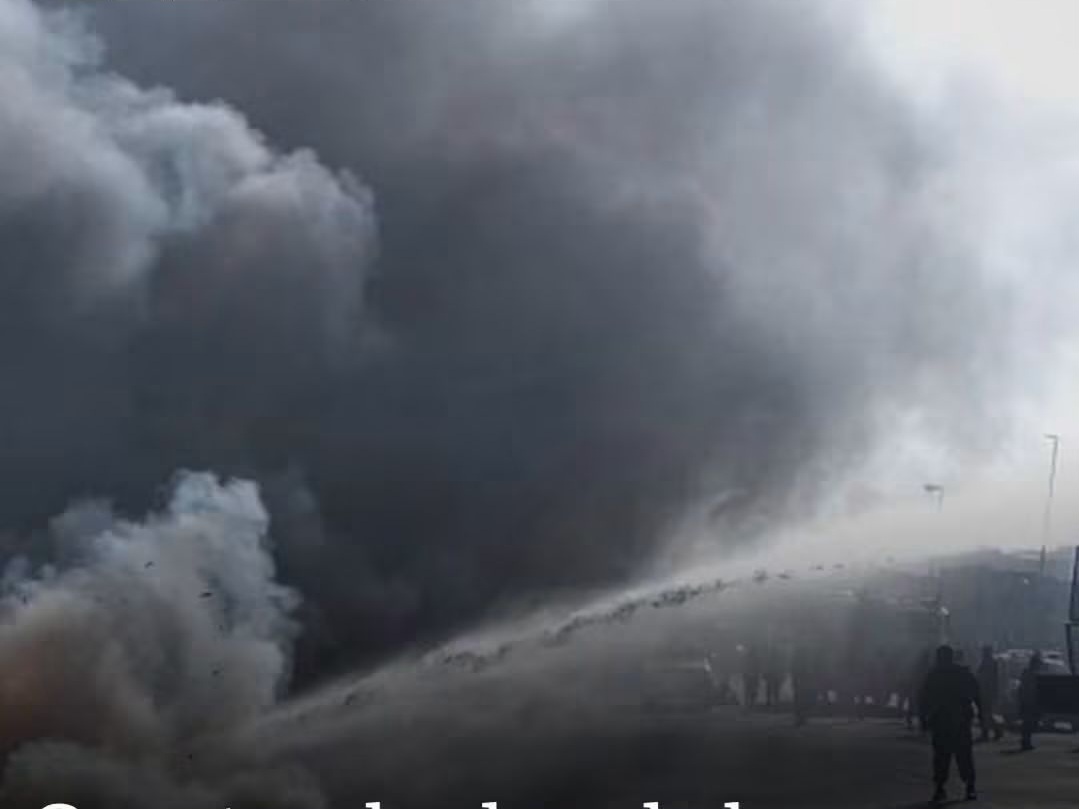
At least 24 vehicles were set alight and foreign-owned shops looted across two of South Africa’s major urban centres on Thursday as long-simmering tensions over immigration exploded into open unrest.
The violence erupted in Soweto, the sprawling township outside Johannesburg, and in the coastal city of Durban after demonstrators targeted refugee reception centres and convenience stores run by foreign nationals.
Police confirmed that 14 cars burned in Durban and 10 in Soweto. In the eastern port city, a guest house and warehouse were also partially destroyed by fire. Gunshots were reported during confrontations in Orlando West, Soweto, though authorities said no injuries had been confirmed by late Thursday.
The flashpoint was a July Constitutional Court ruling that struck down sections of the Refugees Act. The court held that people could not be barred from applying for asylum solely because they entered the country irregularly, lacked an asylum transit visa, or missed reporting deadlines. The judgment, confirmed in the Scalabrini Centre of Cape Town case, requires that claims be assessed on their merits rather than shut out on procedural grounds.
When Home Affairs issued an operational directive at the end of September instructing refugee reception offices to accept applications in line with the ruling, long queues quickly formed. Anti-immigration groups seized on the scenes, claiming the decision would open the floodgates to undocumented migration.
Government spokespeople insisted the judgment confers no automatic refugee status, permanent residence or other legal rights. Applications, they stressed, must still be individually assessed and rejected claims can lead to deportation.
Those reassurances failed to calm the streets. In Durban, protesters gathered outside a refugee centre demanding it stop processing claims.
Tension boiled over after reports that a foreign national had assaulted a demonstrator, leaving the man with a broken leg. Three foreign nationals were arrested in connection with the alleged assault. Crowds then moved through the city centre, torching vehicles, looting shops and forcing businesses to shutter. Police fired rubber bullets to disperse the throngs.
In Soweto’s Orlando West, residents first demanded the closure of spaza shops operated by foreigners. Some traders were chased from the area. Shops were attacked, goods looted and vehicles set alight after claims that foreign shopkeepers had fired shots at protesters. A building was also reported to have been set on fire. Acting National Police Commissioner Lieutenant-General Puleng Dimpane visited the scene and issued a blunt warning: those responsible for burning vehicles and destroying property would be pursued and arrested.
Reinforcements were deployed in both cities.
By Friday, the Department of Home Affairs had withdrawn the September directive. Officials said refugee offices had been overwhelmed within days, staff placed at risk, and serious threats to public order had emerged. The department stressed that the Constitutional Court ruling remains binding and that a new operational approach would be developed to comply with it while managing capacity and safety. The directive, it added, had been an administrative measure issued without political instruction.
Do you want to advertise with us?
Do you need publicity for a product, service, or event?
Contact us on WhatsApp +2348033617468, +234 816 612 1513, +234 703 010 7174
or Email: validviewnetwork@gmail.com
CLICK TO JOIN OUR WHATSAPP GROUP

South Africa has a long and painful history of xenophobic violence. In 2008 more than 60 people were killed and tens of thousands displaced in attacks largely targeting migrants from neighbouring countries. This year has already seen months of anti-immigration marches, some of which forced thousands of foreign nationals to flee or accept voluntary repatriation. Critics of the latest unrest argue that migrants are routinely scapegoated for unemployment, crime and strained public services, claims researchers say lack supporting evidence. With official unemployment hovering around a third of the workforce and deep inequality still entrenched, frustration remains high.
Police have promised to restore order and bring perpetrators to book. For many foreign shopkeepers and asylum seekers, however, the images of burning cars and looted stores will reinforce a familiar fear that in moments of economic pressure, they remain the most visible targets.