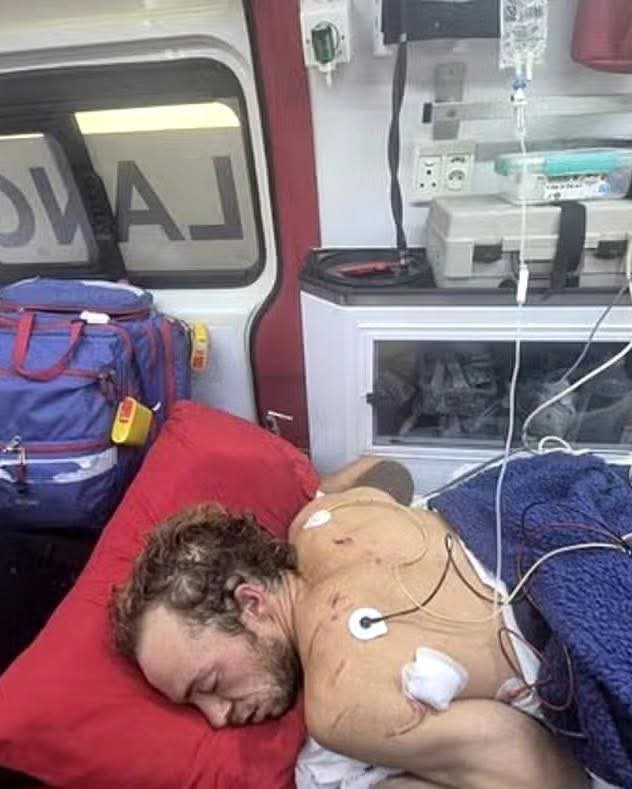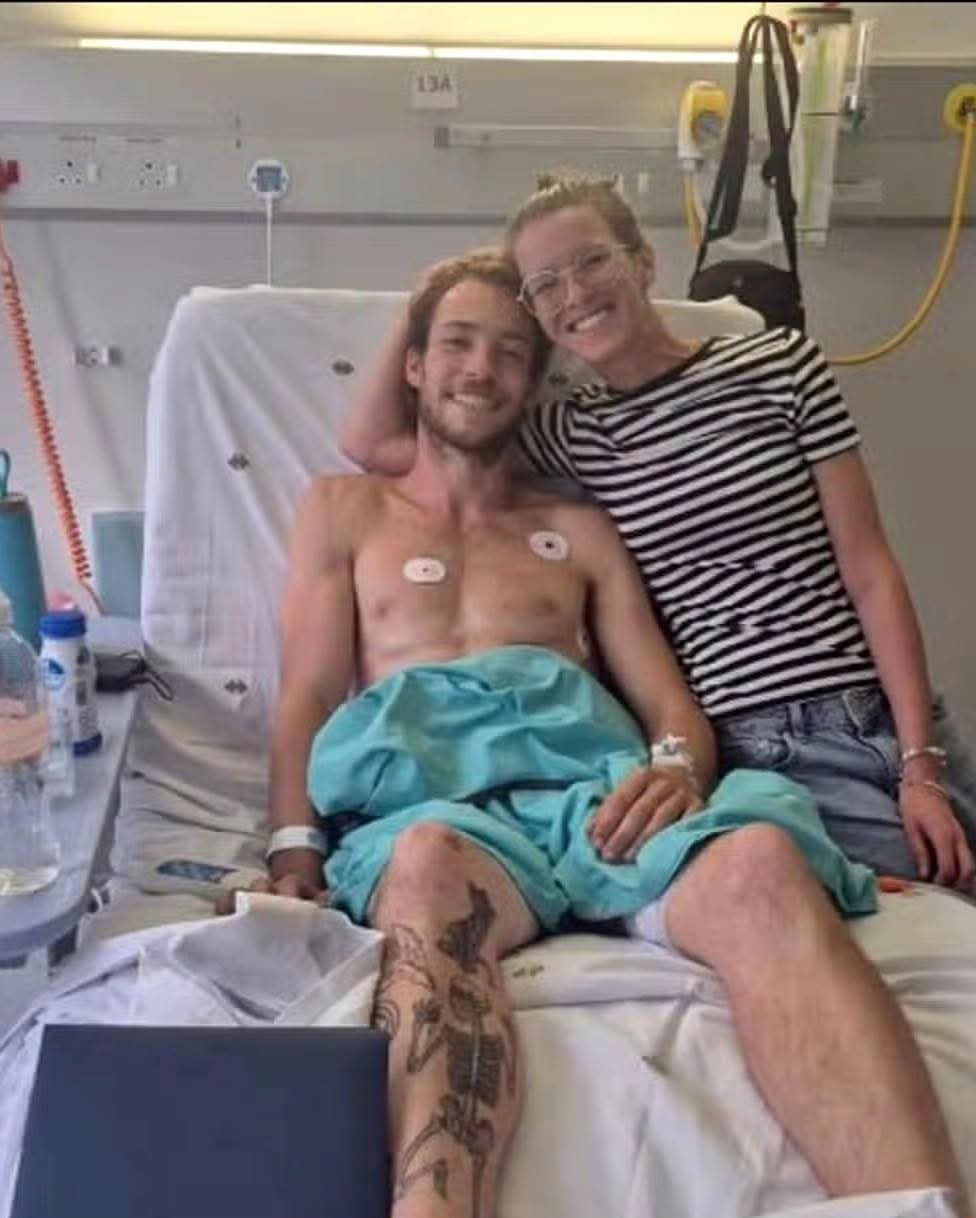
OKAVANGO DELTA, Botswana — What was meant to be an idyllic honeymoon excursion through the tranquil waterways of northern Botswana turned into a desperate fight for survival when a newlywed American was mauled and disemboweled by a hippopotamus—only to be rescued when his wife charged the massive animal and punched it in the face.
Samuel and Anna McKee, both 31 and high school sweethearts from Port Angeles, Washington, had exchanged vows in Portugal just 10 days before embarking on their southern African safari in September last year. Together for 13 years, the couple booked an evening outing in a mokoro—a traditional dugout canoe—across the flooded plains of the Okavango Delta to observe local plant life.
Before setting off, safari staff warned the group that a territorial female hippopotamus with two calves was nearby and instructed paddlers to keep their distance. During the late afternoon excursion, Sam spotted the mother hippo from afar and zoomed in with his camera to capture a photograph of her yawning wide with her young behind her. Shortly afterward, their canoe drifted away from the rest of the convoy.
The calm shattered in an instant. Hearing a loud splash and aggressive grunting behind them, Sam turned to see the mother hippo charging straight toward their vessel with her jaws wide open.
”I saw this look in the guide’s eyes that I’ll never forget. It was just like sheer terror,” Sam recalled.
The hippo rammed the canoe head-on with the force of a speeding car, throwing both newlyweds into the water. Clamping her jaws around Sam’s torso, the animal dragged him beneath the surface and pinned him to the muddy floor of the swamp, crushing his chest and back before briefly loosening her grip and biting down on his leg.

Watching from the water and believing her husband was being killed before her eyes, Anna bypassed any instinct to flee. Letting out what she described as a primal scream of grief, she charged through the shallow water and began punching the hippo near its head and face until the stunned animal released its hold and retreated.
Surfacing in agony and unable to feel one of his legs, Sam looked down to discover his intestines protruding from a severe wound in his back. Wrapping one arm around his midsection to hold his organs in place and draping the other over Anna’s shoulders, he waded with her to a nearby canoe.
While fellow tourists looked on in shock, Anna sprang into emergency first-aid mode—fashioning a tourniquet out of Sam’s belt for his wounded leg, wrapping her headscarf around his injured arm, and physically holding his exposed intestines in her hands to prevent further trauma.
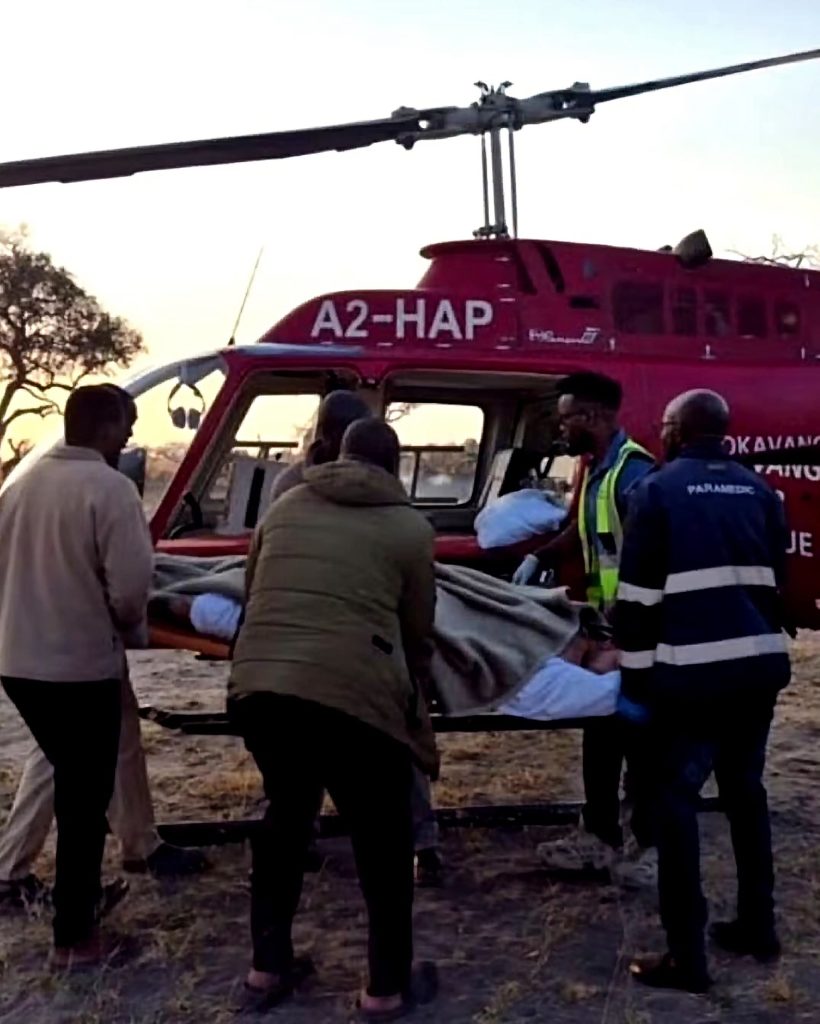
Because the attack occurred near dusk in a remote stretch of the delta, darkness fell before an air ambulance could safely land. Carried back to the safari camp on a stretcher, Sam endured an agonizing 13-hour overnight wait without pain relief. Using Anna’s waterlogged phone—which miraculously still functioned—the couple contacted family members in the United States and the U.S. Embassy to coordinate an urgent medical evacuation.
At daybreak, a medevac helicopter finally touched down with an emergency physician, transporting Sam roughly 18 hours after the attack to Netcare Milpark Hospital in Johannesburg, South Africa.
Doctors immediately rushed him into life-saving surgery to repair crushed intestines, damaged internal organs, fractured ribs and vertebrae, and deep puncture wounds across his back, arm, and thigh. The procedure required a transverse colostomy to bypass his colon and 20 staples to close his abdomen, leaving him on a ventilator and feeding tube during the initial days of intensive care.
Sam spent 19 days hospitalized in Johannesburg before gaining enough strength to fly home to Washington State for further treatment and physical therapy. Anna also required physical therapy to treat injuries to her ribs and hands sustained while striking the multi-ton animal.
Wildlife experts note that hippopotamuses are among Africa’s most dangerous animals, responsible for an estimated 500 human fatalities annually. Though herbivores, mothers with calves are fiercely protective, and late-afternoon canoe excursions carry heightened risk as hippos become more active and territorial.
Do you want to advertise with us?
Do you need publicity for a product, service, or event?
Contact us on WhatsApp +2348033617468, +234 816 612 1513, +234 703 010 7174
or Email: validviewnetwork@gmail.com
CLICK TO JOIN OUR WHATSAPP GROUP
More than a year later, the couple say the ordeal has given them a profound appreciation for everyday life. Neither holds any ill will toward the animal, recognizing she was simply defending her young. As part of his physical and mental recovery, Sam has taken up pottery—selling his handmade ceramics to purchase skateboards and snowboards for underprivileged children—and is writing a book chronicling their survival.
For a firsthand account of the attack, the overnight medevac delay, and the couple’s recovery, watch Sam McKee’s Honeymoon Hippo Attack Story, which provides additional video context and interview details about their survival in the Okavango Delta.