



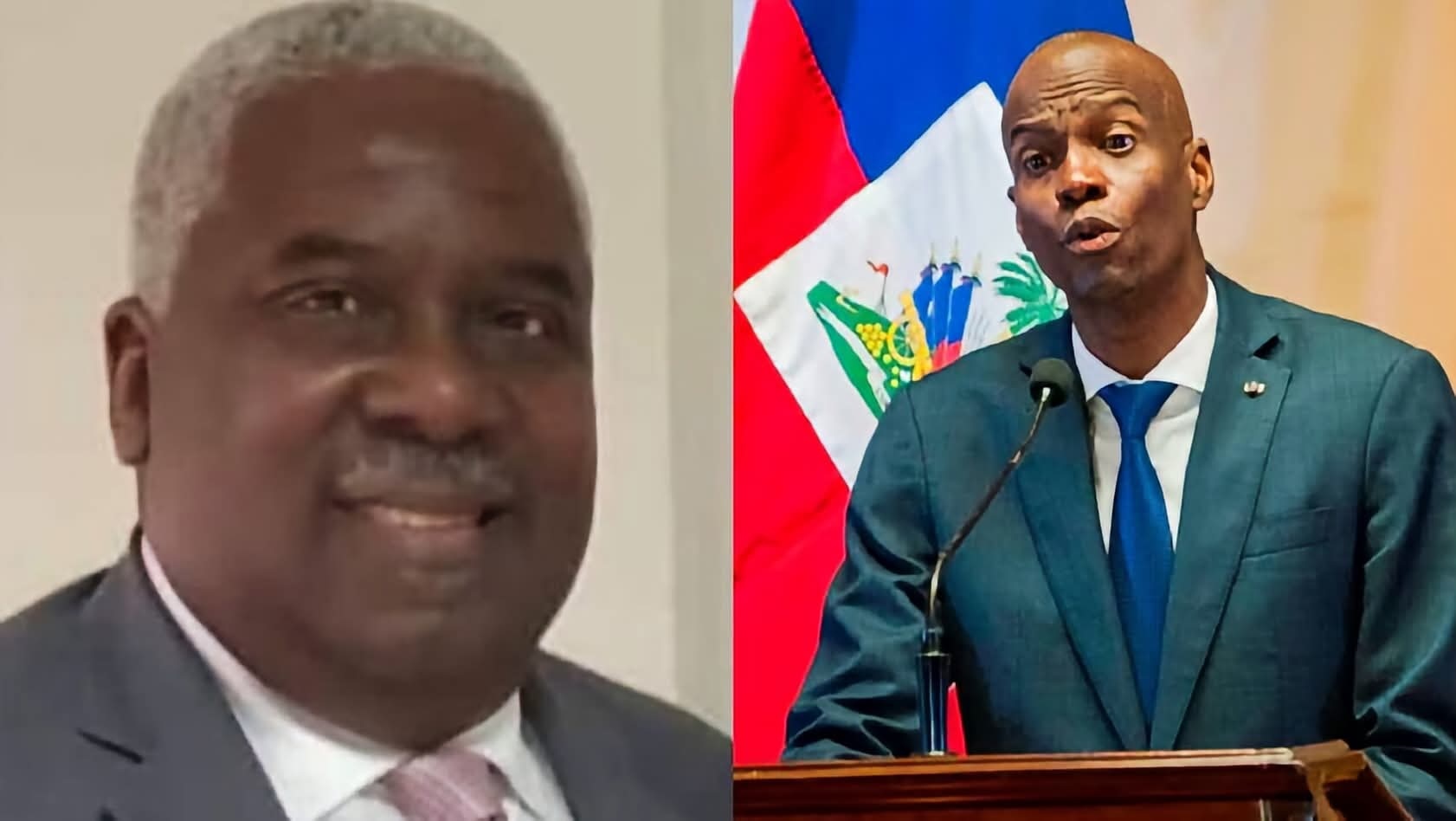
A federal jury in Miami has convicted dual Haitian-American citizen Christian Emmanuel Sanon on all eight counts brought against him over the 2021 assassination of Haitian President Jovenel Moïse, capping a nearly eight-week trial that revisited a plot rooted in South Florida.
Sanon, 68, a pastor and medical doctor who previously worked with churches in Haiti’s diaspora community and served as director of the Haitian Church Planting Department for the Florida Baptist Convention, faces up to life in prison when he is sentenced on February 10. His verdict was read in less than 10 minutes on Wednesday after jurors deliberated following weeks of testimony.
Defense attorney Zeljka Bozanic said the defense disagreed with the verdict and plans to appeal. Federal prosecutors declined to comment immediately after the ruling.

A Plot Forged in South Florida
According to federal prosecutors, South Florida served as a central hub for organizing, financing, and staffing the effort to oust Moïse. Prosecutors argued that the scheme took firmer shape in April 2021 when Sanon met in South Florida with a former Haitian senator and U.S. businesspeople.
Assistant U.S. Attorney Jason Wu told the court that Sanon helped drive the conspiracy forward from its early stages, saying, “He founded it. He came up with the idea. He gathered all the people who joined it virtually, and he was the one who set in motion the series of events that led to the assassination of President Moïse.”
Prosecutors alleged that:
- Initial presidential ambition: Conspirators initially selected Sanon to replace Moïse after he helped raise funds and arrange travel and lodging in Haiti for himself and others involved.
- Contract promises: In exchange for backing, Sanon was accused of agreeing to steer lucrative contracts—covering infrastructure, security forces, and military equipment—to two Florida-based entities known collectively as CTU (Counter Terrorist Unit Federal Academy and Counter Terrorist Unit Security).
- Mercenaries and weaponry: Roughly two dozen foreign mercenaries—predominantly former or retired Colombian military personnel—were recruited, with CTU initially hiring around 18 Colombian nationals to provide security for Sanon while conspirators sought weapons, body armor, and ties with Haitian gangs.
- COVID-19 relief funds: Prosecutors said financing for the operation came in part from money obtained through U.S. government COVID-19 business relief programs.
By June 2021, investigators said, co-conspirators concluded that Sanon lacked both constitutional qualifications and sufficient popular support to take the presidency, shifting their backing instead to former Haitian Supreme Court judge Wendelle Coq Thélot, who died in January 2025 while a fugitive.
Defense Claims and the July 2021 Attack
Throughout the trial, Sanon maintained his innocence and denied knowing about any plot to kill Moïse. He acknowledged having had contact at one point with people seeking to replace the president, but testified that the group had already moved on to another candidate well before the killing.
Prosecutors dismissed claims that the plotters merely intended a lawful arrest or political transition, calling talk of an “arrest” a code word and arguing that private citizens had no legal authority to seize a sitting head of state. They also argued that Sanon’s persona as a pastor, doctor, and humanitarian was used to win trust, money, and support.
Moïse, 53, was fatally shot on July 7, 2021, when an armed squad—made up largely of former Colombian soldiers—stormed his private residence in Port-au-Prince and wounded his wife, Martine Moïse. Sanon was arrested in Haiti days later; when police searched his residence, a local police report seen by Reuters noted officers recovered eight vehicle registration plates, 19 passports, 12 mobile phones, 30 boxes of ammunition, and 12 pistol holsters.
Sanon was originally slated to go on trial earlier in 2026 alongside four co-defendants who were convicted that year, but his proceedings were separated and delayed due to health reasons.
Broader Fallout in the U.S. and Haiti
Sanon’s conviction adds to a sprawling U.S. prosecution that has seen more than 40 people charged in connection with the assassination. Roughly a dozen defendants have been convicted in U.S. courts, including five already serving life sentences, while 18 of 19 suspects arrested early in the case were extradited from Haiti to face American justice.
In Haiti, the assassination deepened an already severe political and security crisis. More than five years after Moïse’s death, the country remains without an elected president, with presidential and general elections targeted for 2027 amid ongoing instability.
Do you want to advertise with us?
Do you need publicity for a product, service, or event?
Contact us on WhatsApp +2348033617468, +234 816 612 1513, +234 703 010 7174
or Email: validviewnetwork@gmail.com
CLICK TO JOIN OUR WHATSAPP GROUP