The streets of the Democratic Republic of Congo have become the latest battleground over a question that has unsettled African politics for years: Can a sitting president change the rules and remain in power beyond an existing term limit?
Hundreds of demonstrators took to the streets in Kinshasa and other Congolese cities on Tuesday, September 15, protesting proposed constitutional changes that critics say could create a path for President Félix Tshisekedi to seek a third term.
Police responded with tear gas and warning shots in Kinshasa as the demonstrations turned tense.
The protests were organised by the C64 opposition coalition, an alliance that includes prominent opposition figures and former presidential candidates Martin Fayulu, Moïse Katumbi and Delly Sesanga.
Protest begins peacefully, then turns violent
In Kinshasa, the demonstration had been authorised and initially proceeded peacefully.
The situation changed when protesters clashed with supporters of the government. Witnesses reported that both groups threw stones, while some people brandished machetes.
Police subsequently moved to disperse the crowd with tear gas and warning shots. The confrontation has added to concerns over an increasingly tense political environment in a country already dealing with insecurity and conflict in its eastern provinces.
ValidViewNetwork reports that the demonstrations were not limited to the capital.
In Lubumbashi and Uvira, local authorities had prohibited the protests, but demonstrators went ahead with them before security forces dispersed the gatherings.
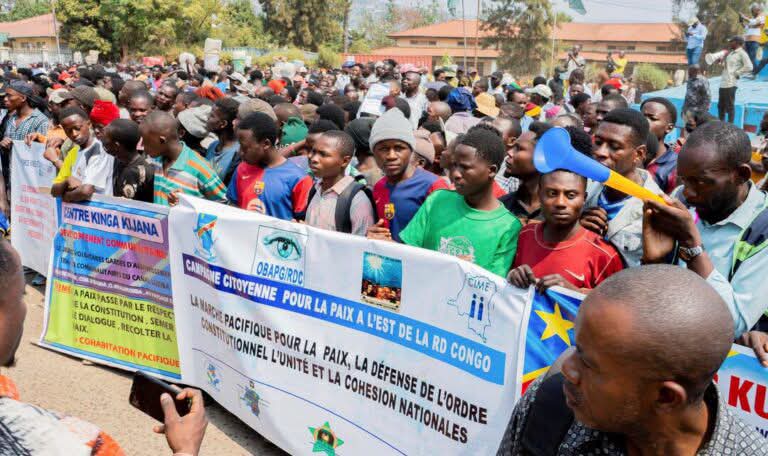
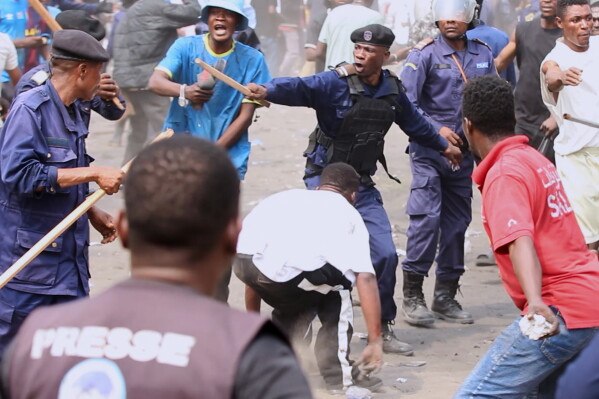
Reports also indicated demonstrations in other parts of the country.
Why is Tshisekedi’s third term causing concern?Tshisekedi has been president since 2019 and is constitutionally due to complete his second five-year term in 2028.
Under the current constitutional framework, a president is limited to two terms.
However, Tshisekedi has said he would be willing to seek another term if the Congolese people approve it through a referendum.

Parliament has also been considering measures that could permit constitutional amendments under certain circumstances.
That possibility has alarmed sections of the opposition. The C64 coalition argues that changing the constitutional framework to accommodate another presidential term would threaten political stability.
The coalition has therefore made opposition to the proposed reforms a major part of its current campaign.
The government, however, maintains that the right to protest exists but must be exercised within the law.
Government spokesperson Patrick Muyaya criticised what he described as misinformation surrounding the demonstrations while acknowledging the constitutional right to peaceful protest.
National dialogue adds another layer
The protests come only weeks after Tshisekedi announced plans for a national dialogue involving opposition parties, civil society organisations and religious leaders.
The proposed dialogue is intended to address some of the country’s political challenges.
But opposition groups have criticised the initiative, particularly because armed groups controlling territory in eastern Congo would not be included.
That disagreement means the constitutional question is unfolding alongside an already complicated security crisis.
Eastern Congo continues to face fighting involving the Rwanda-backed M23 rebel group and numerous other armed organisations, while the country is also dealing with an Ebola outbreak.
A familiar African political fault line
The dispute has also revived a familiar debate across Africa over presidential term limits and constitutional reform.
For supporters of the proposed changes, the issue is presented as a constitutional process that could ultimately be decided by voters.
For opponents, the concern is that constitutional reform could be used to remove or weaken the limits that prevent presidents from extending their time in office.
The difference between those positions is now playing out on the streets of Congo.
Tuesday’s protests also followed an earlier C64 demonstration in Kinshasa in June, which was dispersed by security forces and left several people injured, including opposition leader Martin Fayulu.
The latest confrontation therefore appears less like an isolated protest and more like another stage in a growing political dispute over Congo’s constitutional future.
Do you want to advertise with us?
Do you need publicity for a product, service, or event?
Contact us on WhatsApp +2348033617468, +234 816 612 1513, +234 703 010 7174
or Email: validviewnetwork@gmail.com
CLICK TO JOIN OUR WHATSAPP GROUP
For now, Tshisekedi remains within his second term, and no third term has been secured.
But the proposed constitutional changes have already triggered a political confrontation that is being fought both inside government institutions and on the streets.
What happens next may depend on whether Congo’s leaders can resolve the constitutional dispute through dialogue and lawful political processes rather than allowing the disagreement to deepen into further confrontation, ValidViewNetwork reports.