

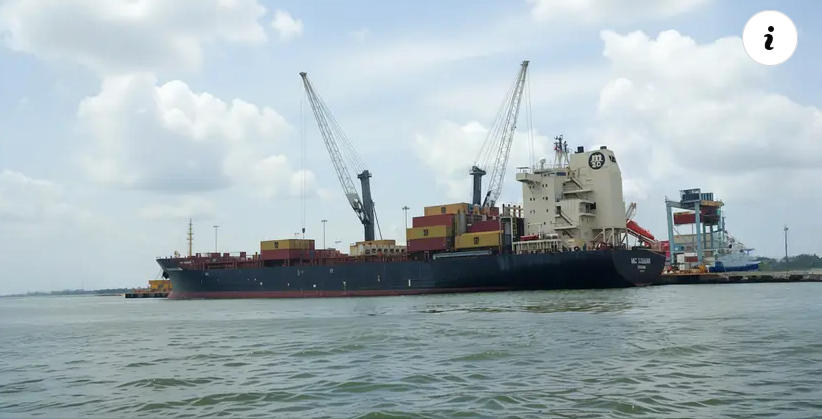
Iran says it will not allow “a single litre of oil” to pass through the Strait of Hormuz for the benefit of the United States (U.S.), Israel and their allies.
Spokesperson for Tehran’s Khatam al-Anbiya military command headquarters, Ebrahim Zolfaqari, said yesterday that the oil price will reach $200 a barrel.
However, the African Democratic Congress (ADC) has called on the Federal Government to introduce a temporary cap on petrol price to prevent further increases, worsening the cost-of-living crisis for millions of Nigerians.
To ease the impact of the Middle East war, the International Energy Agency (IEA) said its member countries would unlock 400 million barrels of oil from their reserves, the biggest such release ever.
The Iranian statement comes a day after the U.S. threatened “fire and fury” on the Islamic Republic if it disrupted the flow of oil.
“Let us firmly reiterate that we will never allow even a single litre of oil to pass through the Strait of Hormuz for the benefit of the U.S., the Zionists and their partners,” he said. “Any vessel or oil shipment intended for America, the Zionist regime or their hostile allies will be a legitimate target for us.
“Your strategy of hiding behind Iran’s neighbouring countries and the Muslims of the West Asia region, and even the world, has expired.”

Zolfaqari warned Israel and the U.S. that they would be unable to artificially lower oil and energy prices.
“With the expansion of war in the region, we have announced that you should prepare for $200 per barrel because the price of oil depends on security in the region, and you are the source of insecurity,” he said.
U.S. President Donald Trump had warned that “death, fire and fury willrain upon them (Iran)” if they stopped the flow of oil within the Strait of Hormuz.
In a statement signed by its National Publicity Secretary, Bolaji Abdullahi, the party said that while global oil market volatility linked to the crisis in the Middle East might be contributing to the latest price hikes, the government must act to protect citizens from the impact.
The ADC also urged the introduction of targeted palliatives for low-income Nigerians and criticised the Federal Government’s plan to distribute 100,000 CNG conversion kits, noting that the figure represents less than one per cent of Nigeria’s over 11 million vehicles and questioning the limited availability of CNG refuelling stations across the country.
He said: “ADC calls on the Federal Government to immediately introduce a temporary and time-bound cap on petrol prices to prevent further increases that continue to push the cost of living beyond the reach of millions of Nigerians.
“Recent hikes in petrol prices reflect rising volatility in global oil markets, driven in part by the ongoing crisis in the Middle East. However, ADC believes that external shocks cannot justify allowing fuel prices to spiral without restraint in an already fragile economy, one that continues to reel from the consequences of the Tinubu-led APC government’s abrupt removal of the fuel subsidy.”
The coordinated release was the sixth in the history of the IEA, which was created to coordinate responses to major supply disruptions after the 1973 oil crisis.
“IEA countries have unanimously decided to launch the largest-ever release of emergency oil stocks in our agency’s history. IEA countries will be making 400 million barrels of oil available,” IEA Executive Director, Fatih Birol, told reporters. “This is a major action aiming to alleviate the immediate impacts of the disruption in markets.”
According to the agency, the most important factor for a return to stable oil and gas flows is the resumption of transit through the Strait of Hormuz.
Do you want to advertise with us?
Do you need publicity for a product, service, or event?
Contact us on WhatsApp +2348033617468, +234 816 612 1513, +234 703 010 7174
or Email: validviewnetwork@gmail.com
CLICK TO JOIN OUR WHATSAPP GROUP
The IEA-coordinated release exceeded the 182 million barrels of oil that member countries of the Paris-based global energy body released in 2022 when Russian leader, Vladimir Putin, invaded Ukraine.
The 32-member IEA said the emergency stocks would be made available “over a timeframe that is appropriate to the national circumstances of each member country and will be supplemented by additional emergency measures by some countries”.