



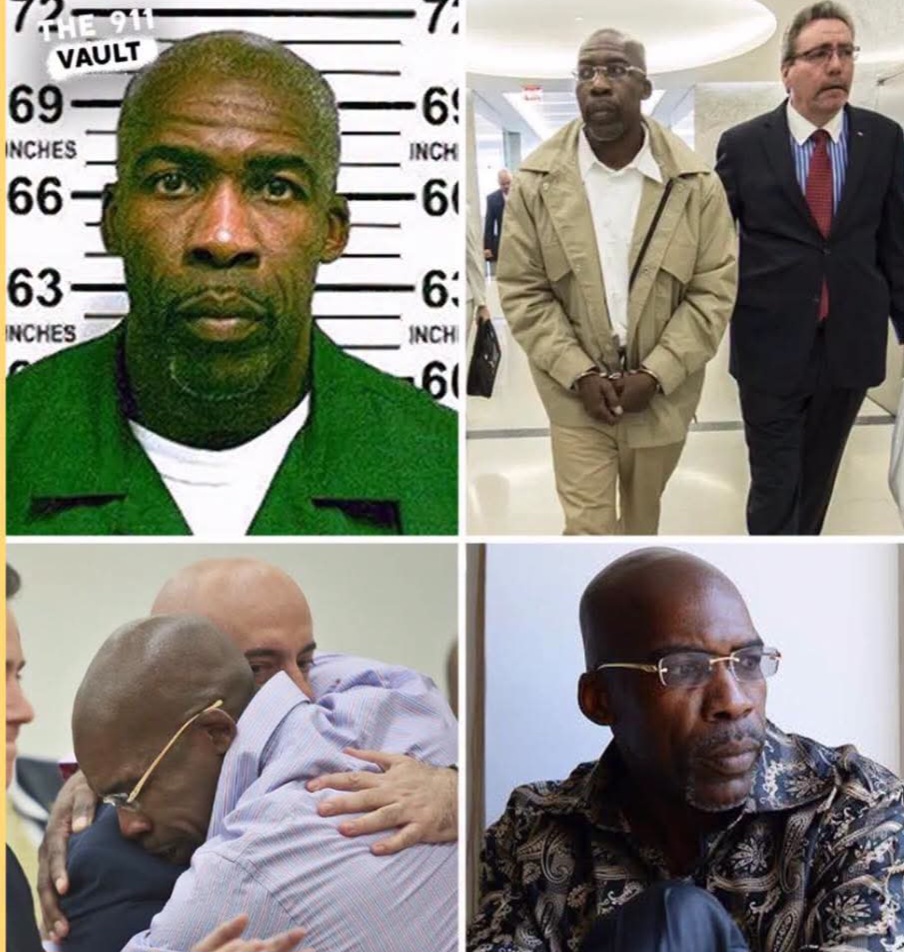
Jonathan Fleming told Brooklyn detectives the same thing from the moment they arrested him in August 1989: he was more than 1,100 miles away at Disney World with his mother when his friend was gunned down. He had the plane tickets, the postcards, the family videos. It made no difference.
On the early morning of August 15, 1989, Darryl “Black” Rush, 22, was shot dead outside a public housing complex in Williamsburg, Brooklyn.
Authorities said the killing stemmed from a dispute over money in the neighborhood’s drug trade. Fleming, then 27 and himself involved in that world, became the prime suspect. A single eyewitness — a crack addict who claimed she saw him fire the shots from more than 400 feet away in the dark — sealed his fate.
In 1990 a jury convicted him of second-degree murder. A judge sentenced him to 25 years to life. He would serve nearly a quarter of a century.
What the jury never properly heard was how solid his alibi actually was. Fleming had been on a family trip to Orlando that included a visit to Walt Disney World. Police recovered a Quality Inn hotel receipt from his pocket when they arrested him. It showed he had paid a phone bill in person at 9:27 p.m. on August 14 — roughly five hours before Rush was killed at about 2:15 a.m. the next morning. An Orlando police letter to New York detectives confirmed that hotel employees remembered him. Neither document was turned over to his defense lawyers, despite rules requiring disclosure of potentially exculpatory evidence.
Prosecutors at trial suggested Fleming could have flown back to New York, committed the murder, and returned to Florida in time. The jury accepted that theory. Family members who testified about the trip, including his mother Patricia, were not believed.

The same eyewitness who identified Fleming later recanted. She admitted she had lied so police would drop unrelated charges against her. Prosecutors told the court she was lying about the recantation. Judges and appellate courts sided with the state. Fleming’s appeals failed for more than two decades.
In 2013 his new lawyers and the Brooklyn District Attorney’s Conviction Integrity Unit reopened the case. Investigators found the long-buried hotel receipt and the Orlando police letter still sitting in the files. They also located additional witnesses, including a man believed to have driven the getaway car, who identified another person as the shooter and said Fleming had nothing to do with it. Phone records further corroborated that Fleming was still in Florida on the night of the killing.
On April 8, 2014, both the prosecution and defense asked a Brooklyn judge to throw out the conviction. District Attorney Kenneth Thompson said the review had produced “key alibi facts that place Fleming in Florida at the time of the murder.” The judge agreed. Fleming, then 51, walked out of court a free man after 24 years and eight months behind bars. “I feel wonderful,” he told reporters. “I’ve always had faith. I knew that this day would come someday.” He hugged his mother and said he planned to have dinner with his family and “live the rest of my life.”
New York City later settled his claim for $6.25 million in 2015. The money could not restore the years he lost — his twenties, thirties and much of his forties — or reverse the damage to his family. One of his sons, the boy for whom the Disney World trip had been a birthday gift, later ended up in prison himself
The evidence that could have freed Jonathan Fleming in 1989 was in an envelope in a police storage room the entire time. It took a new district attorney’s conviction review unit, determined lawyers, and 25 years of insistence by an innocent man to bring it into the light.
Do you want to advertise with us?
Do you need publicity for a product, service, or event?
Contact us on WhatsApp +2348033617468, +234 816 612 1513, +234 703 010 7174
or Email: validviewnetwork@gmail.com
CLICK TO JOIN OUR WHATSAPP GROUP