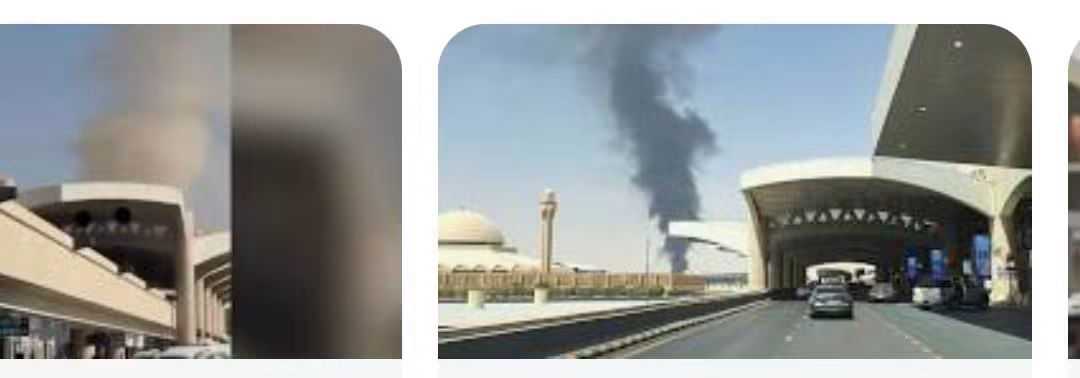
RIYADH — Operations at Saudi Arabia’s principal aviation hubs remain heavily disrupted following a devastating ballistic missile strike on King Khalid International Airport that left at least 12 people dead and over 300 wounded.
The assault, attributed to Yemen’s Houthi movement, marks a sharp and bloody escalation in the regional conflict. According to the Saudi General Authority of Civil Aviation (GACA), the weekend strike targeted the airport complex near the capital, striking areas handling domestic traffic and causing widespread fires, structural damage, and chaos.
Authorities confirmed that the fatalities included four Saudi citizens and eight foreign nationals, reflecting the multi-national toll of the strike. Among the dead were two individuals from Bangladesh, alongside one citizen each from the United States, Egypt, Jordan, Syria, Palestine, and Sudan. Medical officials reported that at least 309 people sustained injuries, with several victims remaining in critical condition across local hospitals.
The weekend tragedy marked the third consecutive assault on the Riyadh airport within a single week. Earlier strikes earlier in the week had already claimed three lives, including a Saudi pilot. In the wake of the latest devastation, GACA extended the suspension of flight operations as engineering teams and security forces assess the extent of the structural compromise. Concurrently, regional security anxieties intensified as a separate projectile struck near King Fahd International Airport in Dammam.
Condemnation from the international community was swift. The Saudi-led military coalition fighting in Yemen denounced the assault as a “full-fledged war crime,” vowing a decisive military response under Customary International Humanitarian Law.
United States President described the attack as terrible, noting that Washington is actively evaluating whether to join Saudi Arabia’s military campaign against the Houthis. The United Nations, the African Union, and nations across the Middle East, including Qatar, Egypt, Jordan, and Oman, issued statements condemning the attack as a direct and dangerous threat to regional stability.

Amid the fallout, foreign embassies in Riyadh—including those representing the United States, the United Kingdom, Ireland, and Canada—urged their nationals to exercise extreme caution and avoid all travel to the affected aviation hubs. Domestic safety measures were also swiftly enacted, with schools in Riyadh shifting entirely to remote learning for the week.
The Houthi leadership has doubled down on its posture, declaring Saudi airspace a zone of military operations and warning airlines and travelers to steer clear of the kingdom’s airports, excluding the holy cities of Mecca and Medina. Analysts warn that unless diplomatic backchannels succeed in de-escalating the renewed cross-border hostilities, the region faces an unprecedented cycle of retaliation.
Do you want to advertise with us?
Do you need publicity for a product, service, or event?
Contact us on WhatsApp +2348033617468, +234 816 612 1513, +234 703 010 7174
or Email: validviewnetwork@gmail.com
CLICK TO JOIN OUR WHATSAPP GROUP