

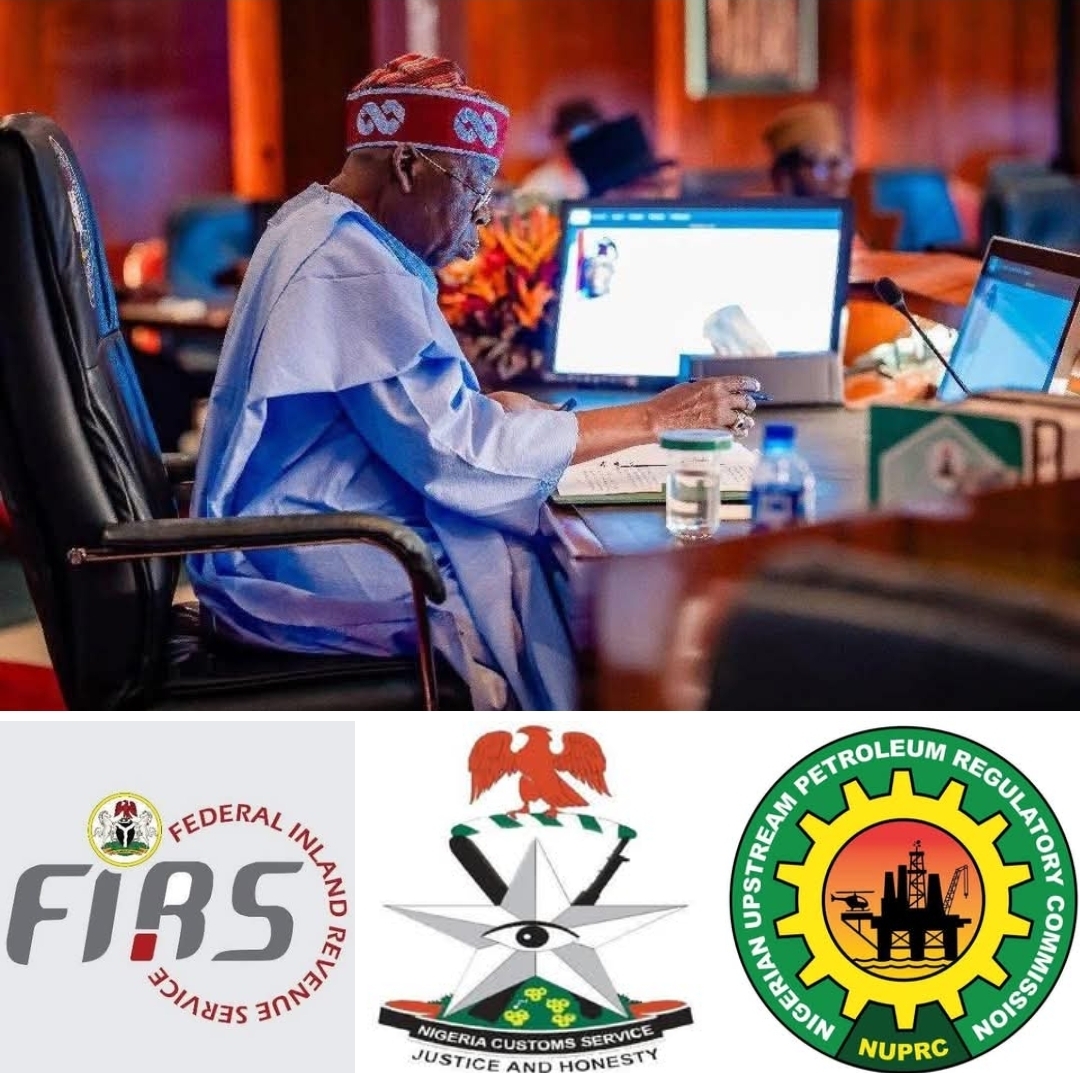
In a major fiscal reform aimed at enhancing transparency and maximizing public resources, President Bola Ahmed Tinubu has officially ended the decades-old practice whereby revenue-generating agencies such as the Federal Inland Revenue Service (FIRS), Nigeria Customs Service (NCS), and the Nigerian Upstream Petroleum Regulatory Commission (NUPRC) withheld significant sums as “cost of collection.” This landmark policy directive ensures that every kobo collected by these agencies now flows entirely into the Federation Account, in strict compliance with the Nigerian Constitution.
Announced by Minister of Finance and Coordinating Minister of the Economy, Mr. Wale Edun, during the recent National Development Update in Abuja, the reform dismantles a practice that saw agencies like FIRS withholding over ₦250 billion in 2024 alone before remitting funds to the federal government. Similar deductions by Customs and NUPRC also considerably shrank the amounts available for equitable sharing among federal, state, and local governments via the Federation Account Allocation Committee (FAAC)..

Minister Edun highlighted that although Nigeria’s gross revenues have consistently risen due to ongoing reforms, the long-standing deductions reduced the net funds available for critical national development projects and social programs. “While funds have flowed into the Federation Account, the efficiency and fairness of public spending remained held back by these deductions. We have been mandated by President Tinubu to review all such deductions and ensure compliance with constitutional provisions,” Edun affirmed.
The government’s directive now mandates full remittance of all revenues into the Federation Account, removing deductions related to operational expenses or collection costs. This policy was solidified during the last FAAC allocation, where most of the deductions were eliminated permanently, signaling a new era of fiscal discipline and transparency.


This sweeping reform complements Tinubu’s Renewed Hope Agenda, which prioritizes fiscal responsibility combined with social protection. The government is currently delivering direct cash transfers to 10 million vulnerable households, with a plan to reach 50 million by year-end, ensuring that greater funding from transparent revenue collection translates directly into tangible improvements in Nigerians’ lives.
By abolishing the cost of collection deductions, the Tinubu administration hopes to end systemic leakages in Nigeria’s fiscal system, releasing more funds to finance essential infrastructure such as roads, schools, hospitals, and job creation initiatives across the country.
The reform also addresses problematic funding mechanisms entrenched within revenue agencies. For example, NUPRC historically retained about 4% of royalties and rents as operational funding. Similarly, the Nigerian Customs Service previously relied on a 7% collection cost before transitioning to a 4% Free-on-Board levy on imports per the House of Representatives mandate earlier this year.
President Tinubu’s directive and the Finance Minister’s enforcement represent a decisive step toward fiscal accountability, increased government revenue efficiency, and enhanced economic development prospects for Nigeria. The policy underscores that transparency in revenue management is critical to restoring Nigerian citizens’ trust and boosting the country’s socio-economic growth trajectory.
This bold fiscal reform marks a turning point, ensuring that every naira generated by the nation’s key revenue agencies contributes fully and transparently to Nigeria’s development and prosperity. Nigerians can now anticipate a more equitable distribution of resources and improved quality of public services funded by these reforms.
Do you want to advertise with us?
Do you need publicity for a product, service, or event?
Contact us on WhatsApp +2348033617468, +234 816 612 1513, +234 703 010 7174
or Email: validviewnetwork@gmail.com
CLICK TO JOIN OUR WHATSAPP GROUP