



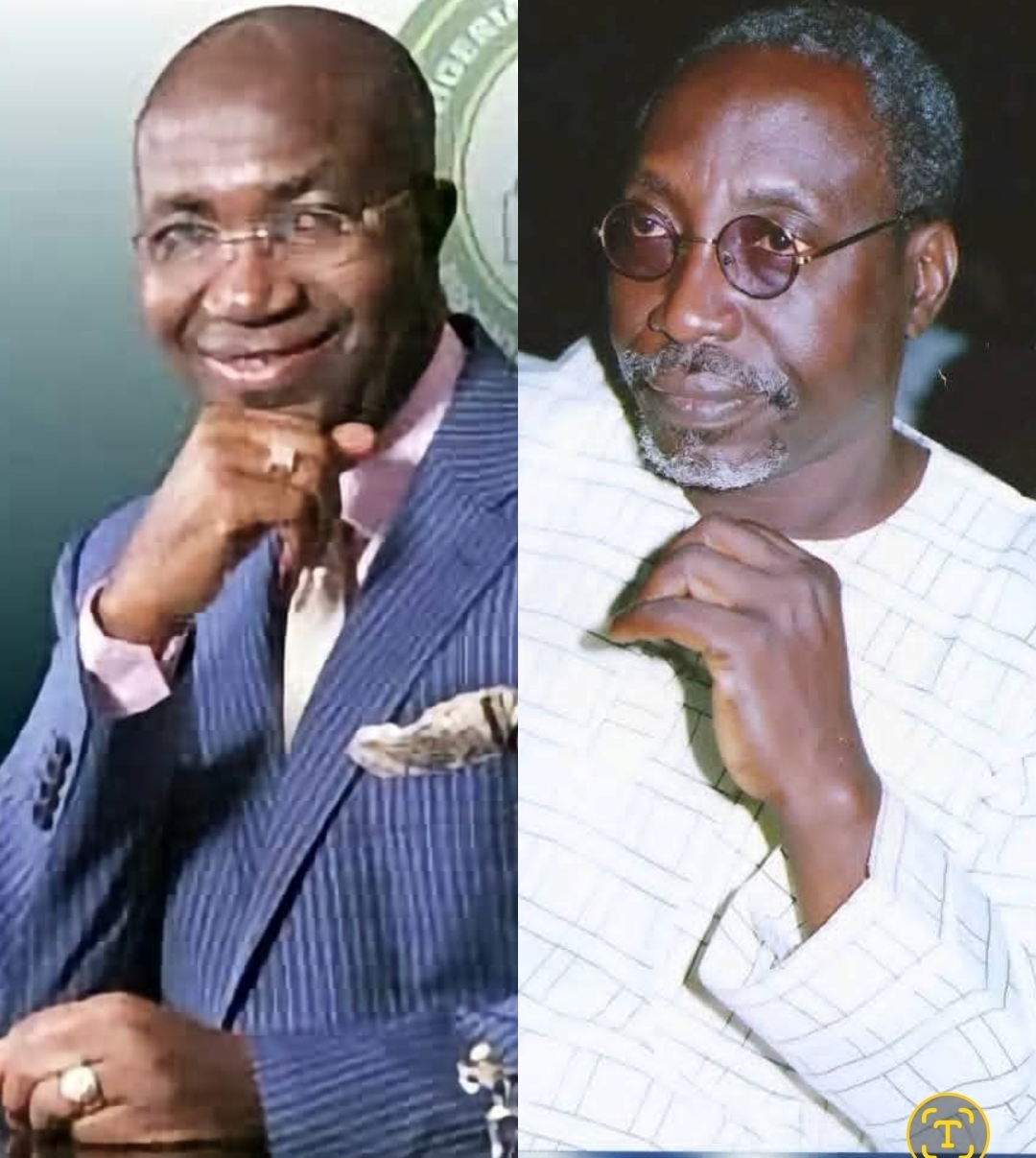
By Lanre Ogundipe
Fifty years at the Bar is not merely a measure of longevity. It is an invitation to examine a lawyer’s journey through changing institutions, evolving jurisprudence, shifting political realities and the transformation of advocacy itself. Chief Wole Olanipekun, SAN, GCON, who turned 75 on November 18, 2026, offers such an opportunity.
Called to the Nigerian Bar in July 1976, elevated to the rank of Senior Advocate of Nigeria in July 1991, appointed Attorney-General and Commissioner for Justice of the old Ondo State between 1992 and 1993, and elected President of the Nigerian Bar Association between 2002 and 2004, Olanipekun’s career has traversed private practice, public service, professional leadership and influential institutional assignments. His recent conferment of the Grand Commander of the Order of the Niger adds another distinction to an already consequential professional journey.

Yet, beyond the honours and positions, there is a more interesting subject: the advocate, his craft, the changing character of courtroom persuasion and the relationship between legal outcomes and public understanding of justice.
Having spent close to five decades observing Nigerian journalism and the courts, I have watched advocacy evolve. The courtroom of the earlier generations was often a theatre of intellectual contest. Lawyers such as F.R.A. Williams, Gani Fawehinmi, Kehinde Sofola and Rotimi Williams brought distinctive personalities, expansive reasoning and formidable oral engagement to legal argument. The judge was not simply receiving submissions. The courtroom was witnessing a contest of ideas, sometimes dramatic, often memorable.
The modern courtroom has changed. Written briefs now carry much of the architecture of appellate argument. Oral submissions increasingly serve to illuminate, reinforce and respond to the questions that emerge from the bench. This transformation did not eliminate oral advocacy. It altered its function. The advocate must now master the written case while possessing the capacity to identify, under pressure, the proposition upon which the entire argument may turn.
Olanipekun belongs to this evolving tradition. His advocacy invites examination beyond eloquence and reputation, into the mechanics of persuasion. A successful advocate does not merely recite authorities or overwhelm the court with citations. He constructs a pathway through which a judge can arrive at a conclusion with confidence. He understands that persuasion involves legal principle, factual organisation, timing, emphasis and the disciplined management of judicial attention.
From the press gallery, one recognises certain recurring features of accomplished advocacy. There is the ability to concede a peripheral point without surrendering the central argument. There is the careful distinction between a client’s immediate interest and the wider implications of the legal proposition being advanced. There is the presentation of counsel not merely as an advocate for a party, but as a participant in protecting the coherence of the law. There is also the ability to reduce a voluminous record into a handful of decisive propositions.
These techniques are not exclusive to Olanipekun, nor should their presence be confused with proof of the correctness of the position he advances. Their significance lies in how advocacy works. The lawyer’s task is to persuade. The judge’s responsibility is to interrogate that persuasion, test the authorities, examine the evidence and arrive at an independent decision.
This distinction becomes particularly important in politically consequential litigation, where the legal outcome may be definitive but public acceptance of it remains contested.
The Supreme Court’s decision in Inakoju v Adeleke illustrates the importance of procedure in constitutional disputes. The case concerned the impeachment of a governor and the constitutional requirements governing the exercise of that power. Olanipekun represented the Speaker and Deputy Speaker whose positions were implicated in the proceedings. The dispute demonstrated that constitutional safeguards are not decorative provisions. They are restraints against the arbitrary exercise of political power. Procedure, in such circumstances, is not an inconvenience to democracy. It is part of democracy’s protection.
Election litigation presents another difficult terrain. The legal contest frequently extends beyond who won the votes to whether the allegations can be established through admissible, credible and legally sufficient evidence. Section 137 of the Electoral Act 2022 has generated debate over the circumstances in which documentary evidence may be sufficient to establish non-compliance without oral testimony.
The tension is real. Electoral justice must neither dispense with proof nor erect evidentiary barriers that make genuine grievances practically impossible to establish. The law must protect the integrity of elections, but the courts must also remain attentive to the difference between procedural discipline and procedural obstruction. The interpretation of these requirements, and the arguments advanced by counsel on either side, deserve scrutiny rather than automatic endorsement.
Olanipekun’s involvement in major political and electoral cases is therefore a legitimate subject of examination. But the examination must distinguish the lawyer’s argument from the court’s eventual reasoning, the statutory provisions from their judicial interpretation, and the professional duty of representation from personal political allegiance. A lawyer’s appearance for a political figure does not, by itself, establish agreement with that figure’s politics. Equally, professional obligation does not exempt advocacy from public scrutiny where its implications extend beyond the immediate client.
The courtroom and the press gallery occupy different but complementary positions. Journalism seeks to illuminate events, expose contradictions and make public institutions answerable. Advocacy operates within the rules of evidence, procedure and law, seeking to persuade a court toward a particular outcome. The journalist may be concerned with the broader factual landscape; the lawyer must concentrate on what the court can properly consider and determine.
These realities do not always coincide. A factual account may be compelling in public but legally insufficient. A judgment may be sound within the framework of the law yet leave unanswered questions in the public mind. The distinction between factual reality, evidentiary reality and legal reality is one of the enduring complications of justice. Confusing them can produce either unjust condemnation or uncritical celebration.
Olanipekun’s professional journey also extends beyond the courtroom. His leadership of the Nigerian Bar Association, participation in legal institutions, university governance, philanthropy and mentorship invite consideration of the lawyer’s responsibility beyond winning cases. The legal profession derives its standing not only from the brilliance of its practitioners but also from the institutions they strengthen, the younger lawyers they prepare and the standards they uphold when professional advantage is not the only consideration.
At 75, and at the threshold of five decades in legal practice, Chief Wole Olanipekun stands within a profession whose demands have changed considerably since his call to the Bar. The courtroom has become more document-driven, constitutional disputes more politically charged, public expectations more immediate and judicial decisions more intensely scrutinised.
The measure of a legal career, however, cannot rest solely on the number of victories, the honours received or the stature attained. It must also be considered against the quality of advocacy, the contribution to institutional life, the influence on legal thinking and the capacity of the profession to remain credible in the eyes of society.
That is the more enduring conversation his milestone invites. Not simply how long he has practised, or how many distinctions he has accumulated, but what his career reveals about advocacy, law, power, institutional responsibility and the continuing struggle to ensure that justice is not merely pronounced, but understood, trusted and respected.
Do you want to advertise with us?
Do you need publicity for a product, service, or event?
Contact us on WhatsApp +2348033617468, +234 816 612 1513, +234 703 010 7174
or Email: validviewnetwork@gmail.com
CLICK TO JOIN OUR WHATSAPP GROUP
Ogundipe, Public Affairs Analyst, former President Nigeria and Africa Union of Journalists writes from Abuja.