



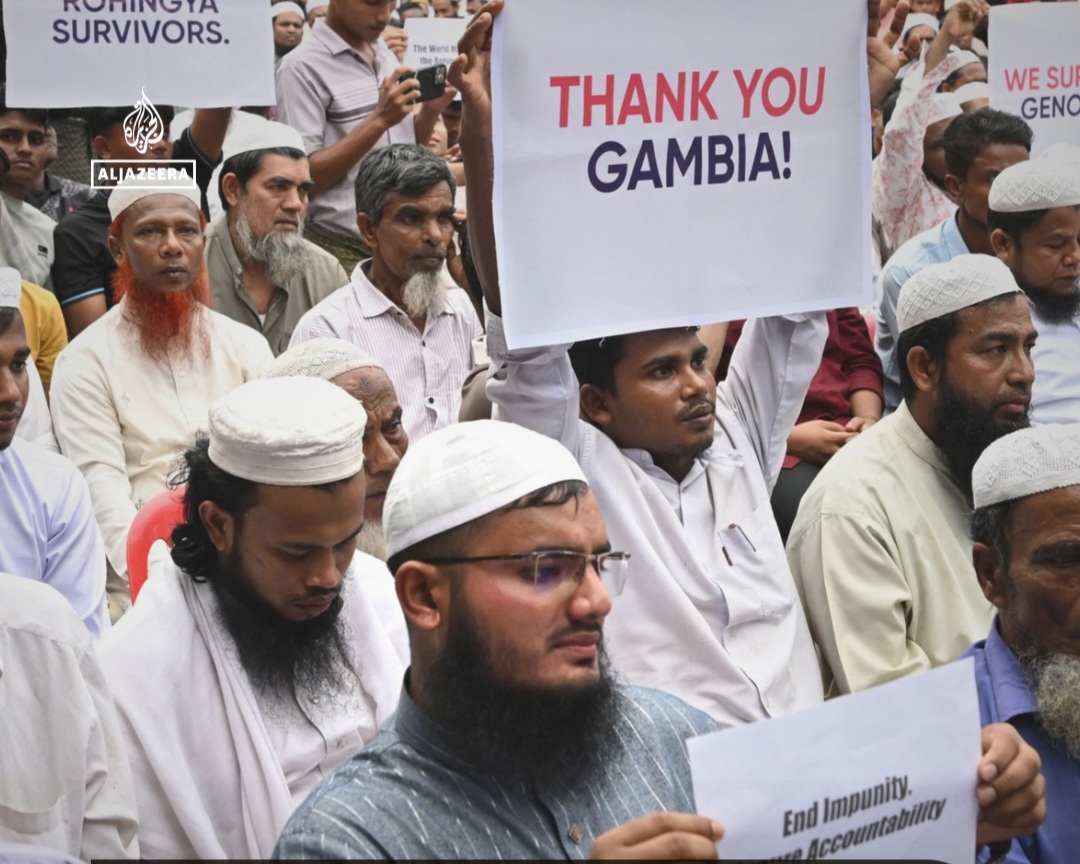
COX’S BAZAR, Bangladesh — Inside the sprawling, densely packed bamboo-and-tarpaulin shelters of Cox’s Bazar, tears of relief mingled with anxious prayers this week after the United Nations’ highest court ruled that Myanmar committed genocide against the Rohingya Muslim minority.
For more than a million refugees who have languished in limbo for nearly a decade following Myanmar’s brutal 2017 military crackdown, Thursday’s landmark decision by the International Court of Justice (ICJ) in The Hague delivered long-awaited moral and legal vindication. Yet as celebrations rippled through the world’s largest refugee settlement, the euphoria quickly gave way to a sobering question: will the ruling actually allow them to go home?
A Landmark Legal Reckoning
In a historic 9–6 decision, the 15-judge panel concluded that Myanmar’s security forces acted with the “intent to destroy a substantial part of the Rohingya population” in northern Rakhine State. The ruling marks the first time the ICJ has ever held a state legally responsible for committing genocide, concluding a seven-year legal battle initiated in November 2019 by The Gambia on behalf of the Organisation of Islamic Cooperation.

Crucially for survivors, the court explicitly recognized the Rohingya as a distinct ethnic group indigenous to Myanmar—directly repudiating decades of state-sponsored erasure and denial of their citizenship. ICJ President Yuji Iwasawa noted that Myanmar’s forces not only carried out mass killings, widespread sexual violence, and the razing of entire villages, but also engaged in the “extensive destruction of evidence,” including bulldozing burned villages and building government bases atop them to conceal their crimes.
”For me, this is not simply a legal verdict. It is proof of our suffering,” said Umme Ruman, a refugee in Camp 1E who broke down in tears upon seeing the news on her mobile phone. At The Hague, Rohingya survivor Yousuf Ali echoed the sentiment: “Today, we have finally been heard, and it is a profound relief. This judgment gives hope to our children and the next generation of Rohingya. But our fight is not over.”
Orders for Reparations and Repatriation
Beyond establishing guilt, the court issued sweeping remedial and restitutional orders. By a 10–5 vote, the ICJ ordered Myanmar to allow and facilitate the “safe, voluntary and dignified return” of all displaced Rohingya, restore or replace lost property, provide financial compensation for irreparable harm, and prosecute perpetrators of the 2017 atrocities. Myanmar was given two years to submit a formal report detailing its compliance.
Visiting the Cox’s Bazar camps on Friday, United Nations General Assembly President Khalilur Rahman urged the international community to ensure the verdict translates into tangible change. “Yesterday in The Hague, the highest court of the United Nations spoke. It spoke your name: Rohingya,” Rahman told gathered refugees, emphasizing that any repatriation must come with ironclad guarantees of safety, freedom of movement, and full civil rights.
Harsh Realities on the Ground
Despite the binding nature of ICJ judgments, the path back to Rakhine State remains fraught with political and physical obstacles.
The World Court possesses no police force or direct enforcement mechanism beyond referring non-compliance to the U.N. Security Council. In Myanmar’s capital, Naypyitaw, authorities swiftly rejected the verdict. A spokesperson for President Min Aung Hlaing—the former military chief who oversaw the 2017 operations—dismissed the split decision as “unfair,” maintaining the government’s longstanding claim that its forces were merely conducting counterinsurgency operations.
Meanwhile, the physical landscape the Rohingya left behind has been fundamentally altered. Hundreds of villages were obliterated, leaving families with virtually nothing to return to. Furthermore, Rakhine State remains engulfed in ongoing civil conflict between Myanmar’s military and ethnic armed groups, raising fresh fears for the safety of any returning civilians.
In the interim, refugees in Bangladesh face deteriorating living conditions, dwindling international food rations, and rising insecurity in the camps—pressures that have driven thousands to risk their lives on perilous sea journeys to Malaysia and Indonesia.
For 18-year-old refugee Mohammad Rehan, who watched the verdict unfold on a laptop surrounded by friends and elders in Cox’s Bazar, the ruling is a vital first step, even if the destination remains distant. “We are hoping this judgment will lead to something more,” he said, “that we will finally be able to return home with our rights and dignity.”
Do you want to advertise with us?
Do you need publicity for a product, service, or event?
Contact us on WhatsApp +2348033617468, +234 816 612 1513, +234 703 010 7174
or Email: validviewnetwork@gmail.com
CLICK TO JOIN OUR WHATSAPP GROUP