



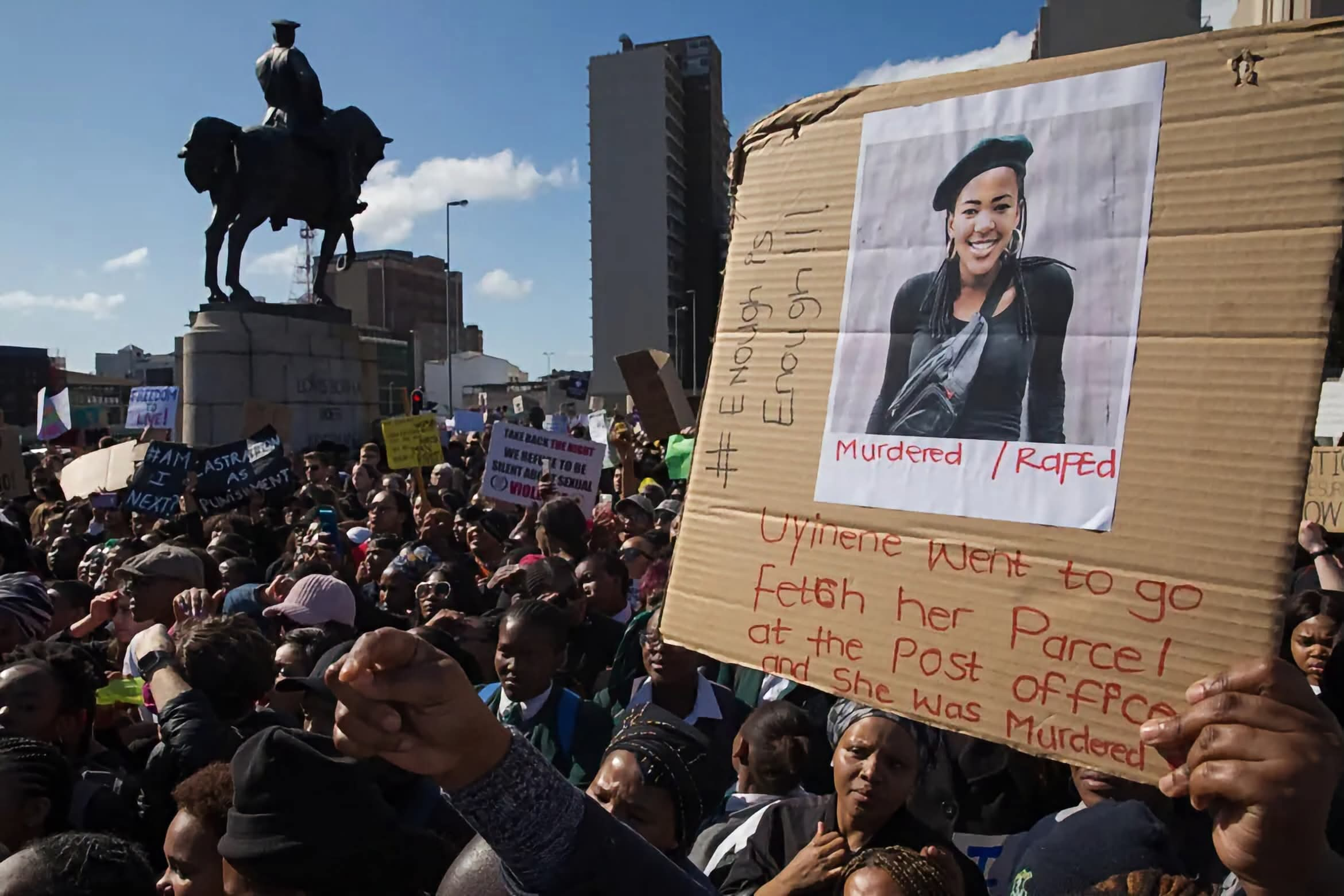
JOHANNESBURG — South Africa is facing renewed national outrage and urgent calls for systemic reform following the release of quarterly crime statistics revealing that 581 women were murdered across the country between July and September 2026.
The sobering figures, unveiled on Friday, November 20, by the South African Police Service (SAPS), underscore a persistent crisis of gender-based violence (GBV) that continues to plague the nation despite a marginal decline in the overall homicide rate. According to the police report, 131 of the female fatalities occurred in Gauteng—South Africa’s most populous province and economic hub, which encompasses Johannesburg and Pretoria.
The release of the data coincides with mounting public anger over a disturbing spate of femicides in and around Johannesburg, where the bodies of several women have been discovered abandoned in public spaces, open veld, and residential neighborhoods in recent weeks.
Among the most high-profile cases driving the national outcry are the deaths of 13 women whose bodies were found dumped in various locations across Gauteng, many bearing signs of severe physical trauma and left partially unclothed. The brutality of the discoveries has sparked widespread condemnation from civil society organizations, women’s rights advocates, and community leaders, who have demanded an end to impunity and greater state accountability.
Addressing the ongoing investigations, Gauteng Provincial Police Commissioner Lieutenant-General Tommy Mthombeni confirmed that law enforcement has made significant breakthroughs, arresting eight suspects in direct connection with the 13 killings. Mthombeni noted that several of the suspects in custody have been linked to the murders of Elizabeth Moselakomo, Jabulile Ntimba, and Ntombifuthi Nxumalo—victims whose deaths have become rallying points for anti-GBV demonstrations across the province.

Broader figures from the second-quarter crime report indicate that South Africa recorded a total of 5,590 murders between July and September. While this reflects a slight decrease of 204 homicides compared to the corresponding period in 2025, the numbers still translate to a staggering average of roughly 60 people killed every single day.
A demographic breakdown of the 5,590 victims highlights the scale of lethal violence across all segments of society:
- Men: 4,819 victims
- Women: 581 victims
- Children: 149 victims
- Unidentified (age and sex unestablished): 41 victims
Speaking during the presentation of the statistics, Acting Police Minister Firoz Cachalia struck a somber tone. While acknowledging the modest downward trend in the aggregate murder rate, Cachalia admitted that the sheer volume of violent deaths remains at an unacceptable, crisis-level threshold.
”Even a single life lost to violent crime is one too many, and the numbers we are seeing today—particularly regarding the brutality inflicted upon women and children—demand a far more robust response,” Cachalia stated. He emphasized that policing alone cannot eradicate the root causes of femicide and violent crime, calling for an integrated, whole-of-society approach involving social services, the justice system, community structures, and economic empowerment initiatives to safeguard vulnerable populations.
As investigations into the Gauteng murders continue and suspects prepare to face the courts, activists have warned that statistical declines offer little comfort to communities living in fear, insisting that the government must translate its pledges into tangible protection on the streets.
Do you want to advertise with us?
Do you need publicity for a product, service, or event?
Contact us on WhatsApp +2348033617468, +234 816 612 1513, +234 703 010 7174
or Email: validviewnetwork@gmail.com
CLICK TO JOIN OUR WHATSAPP GROUP