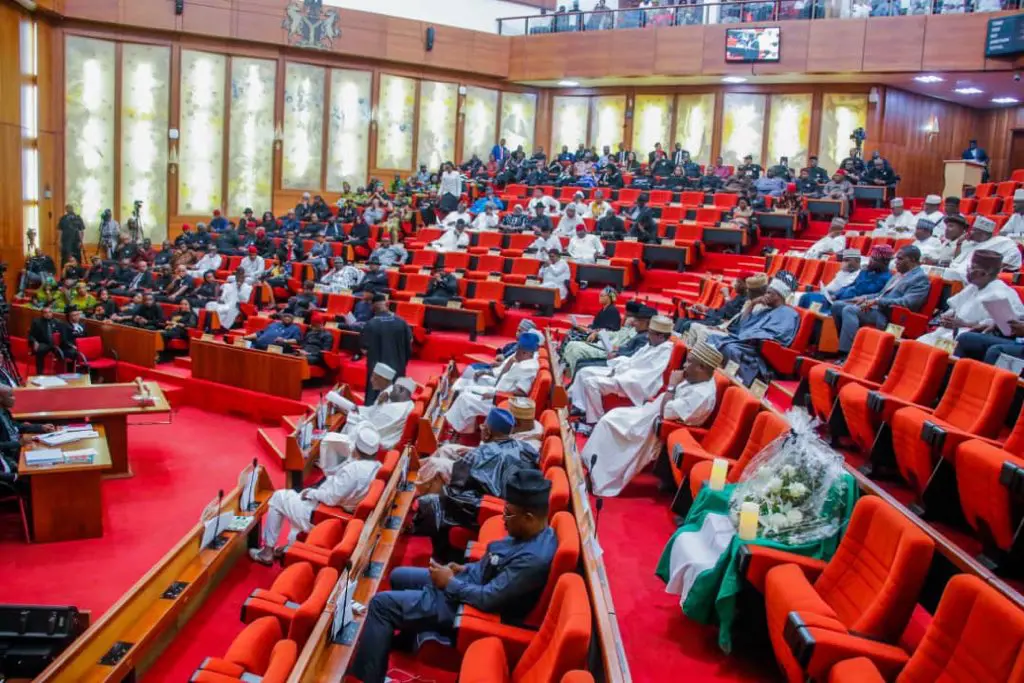
ABUJA – In a move that has ignited a firestorm of criticism across Nigeria’s political landscape, the Senate on Tuesday stood its ground on the newly amended Electoral Act 2026, insisting that the removal of the requirement for “real-time” electronic transmission of results was a necessary safeguard against technical failure.
Senate Spokesman Yemi Adaramodu (APC, Ekiti South) dismissed the backlash from opposition figures and civil society organizations (CSOs), comparing the gravity of lawmaking to a serious endeavor rather than a casual social activity.
”Lawmaking is not eating amala,” Adaramodu stated during an appearance on Channels Television’s Politics Today. “You have to be very thorough. It must be so painstakingly done that the flaws must not be so latent to the extent that it can repudiate whatever good trust Nigerians have in our system.”
The “Real-Time” Controversy
The crux of the dispute lies in Clause 60(3) of the amendment bill. While the Senate officially replaced “smart card readers” with the Bimodal Voter Accreditation System (BVAS), it pointedly declined to make the upload of results to the INEC Result Viewing Portal (IReV) mandatory in “real-time.”
Instead, the lawmakers approved a version that allows for electronic transmission but maintains Form EC8A (the manual result sheet) as the primary instrument for collation in the event of internet connectivity issues.
The legislative shift follows a turbulent week:
- February 4: The Senate initially passed the amendment but voted down the “real-time” mandate.
- February 9: Protesters under the “Occupy NASS” banner, alongside the Nigeria Labour Congress (NLC), threatened nationwide demonstrations.
- February 10: The Senate held an emergency plenary to address the mounting pressure but ultimately ratified the discretionary electronic transmission clause.
Backlash from the Opposition and CSOs
The decision has drawn sharp rebukes from high-profile political figures. Former Vice President Atiku Abubakar warned that a “mixture” of manual and electronic transmission would invite confusion and potential manipulation. Similarly, Senator Kenneth Okonkwo and various civil society groups have called on the Senate to remove the manual backup clause to ensure full transparency.

Critics argue that by making electronic transmission discretionary rather than compulsory, the Senate is “diluting” the progress made during the 2023 elections. The Nigeria Civil Society Situation Room described the changes as “retrogressive,” noting that the lack of a legal mandate for real-time uploads could undermine public confidence heading into the 2027 general elections.
Key Changes in the 2026 Amendment
Beyond result transmission, the bill introduces several structural changes:
- Election Timelines: The notice of election has been reduced from 360 days to 180 days.
- Candidate Lists: Parties now have 90 days (down from 180) to submit their candidate lists.
- Voter Identification: The Senate rejected electronically generated IDs, maintaining the Permanent Voter Card (PVC) as the sole valid identification.
As the bill moves toward a likely presidential assent this month, the debate remains polarized. While the Senate maintains it is protecting the process from “latent flaws,” the opposition views the move as a strategic retreat from the digital transparency Nigerians have demanded.
Do you want to advertise with us?
Do you need publicity for a product, service, or event?
Contact us on WhatsApp +2348033617468, +234 816 612 1513, +234 703 010 7174
or Email: validviewnetwork@gmail.com
CLICK TO JOIN OUR WHATSAPP GROUP