




Nigeria’s pioneering Olympic champion Chioma Ajunwa-Opara is free to return to athletics after the Athletics Integrity Unit reduced her lifetime doping ban to the time already served.
In a decision dated November 18, 2026, and issued from Monaco, the AIU granted the former long jumper’s application for a review of her sanction. The ruling takes immediate effect and restores her eligibility to participate in the sport in any capacity.
Ajunwa, who turned 55 this year, approached the AIU on August 28, 2026. She sought relief under the revised World Athletics Anti-Doping Rules that came into force on January 1, 2026. Those rules allow athletes still serving older sanctions to request a reduction where the current regulations would have produced a lighter penalty. The AIU applied the legal principle of lex mitior—the doctrine that permits the more lenient law to be applied retrospectively.
Under the updated framework, Ajunwa’s 2002 violation would have attracted an eight-year period of ineligibility rather than a lifetime ban.

Having already served more than 23 years since the relevant sample was collected, she has long surpassed that period. The AIU therefore reduced the lifetime ineligibility to time served.

The decision does not erase the original finding or wipe the anti-doping violations from her record. Both the 1992 and 2002 infractions remain. Results from the relevant periods stay disqualified. What has changed is the remaining restriction: Ajunwa is no longer barred from athletics activities, including coaching, administration, officiating or other roles within the sport.
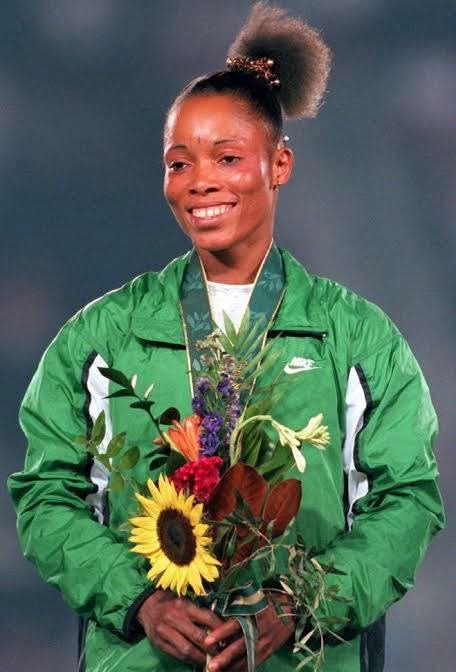
The case that ended her competitive career began on June 10, 2002, at the Athens Grand Prix Tsiklitiria. A urine sample returned an adverse analytical finding for nandrolone, an anabolic steroid. It was her second doping offence. She had earlier served a four-year suspension after testing positive in 1992. Under the rules then in force, a second such violation triggered an automatic lifetime ban. The Athletics Federation of Nigeria imposed the sanction, which the then-IAAF (now World Athletics) recorded with effect from early 2003.
Ajunwa’s sporting legacy rests on far more than the ban that followed. At the 1996 Atlanta Olympic Games she produced a leap of 7.12 metres to win the women’s long jump gold medal. The victory made her Nigeria’s first individual Olympic champion and the first African woman to claim Olympic gold in a field event. She remains one of the most celebrated figures in Nigerian athletics history.
Beyond the track she built a distinguished career in the Nigeria Police Force, rising to the rank of Deputy Commissioner of Police before retiring in 2023. The lifting of the ban now opens the door for her to contribute again to the sport that made her name—whether through mentoring, administration or other official capacities.
Copies of the AIU decision have been sent to Ajunwa, the Athletics Federation of Nigeria, the Nigerian National Anti-Doping Committee and the World Anti-Doping Agency. Those parties retain rights of appeal under the applicable rules. The decision itself will be publicly reported on the AIU website in accordance with the Anti-Doping Rules.
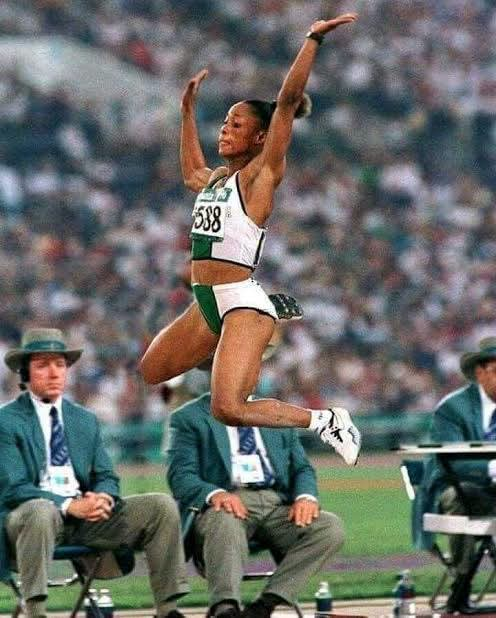
For a generation of Nigerian athletes and fans who watched Ajunwa’s Atlanta triumph, the ruling closes a long and painful chapter while leaving open the possibility of a new one.
Do you want to advertise with us?
Do you need publicity for a product, service, or event?
Contact us on WhatsApp +2348033617468, +234 816 612 1513, +234 703 010 7174
or Email: validviewnetwork@gmail.com
CLICK TO JOIN OUR WHATSAPP GROUP