



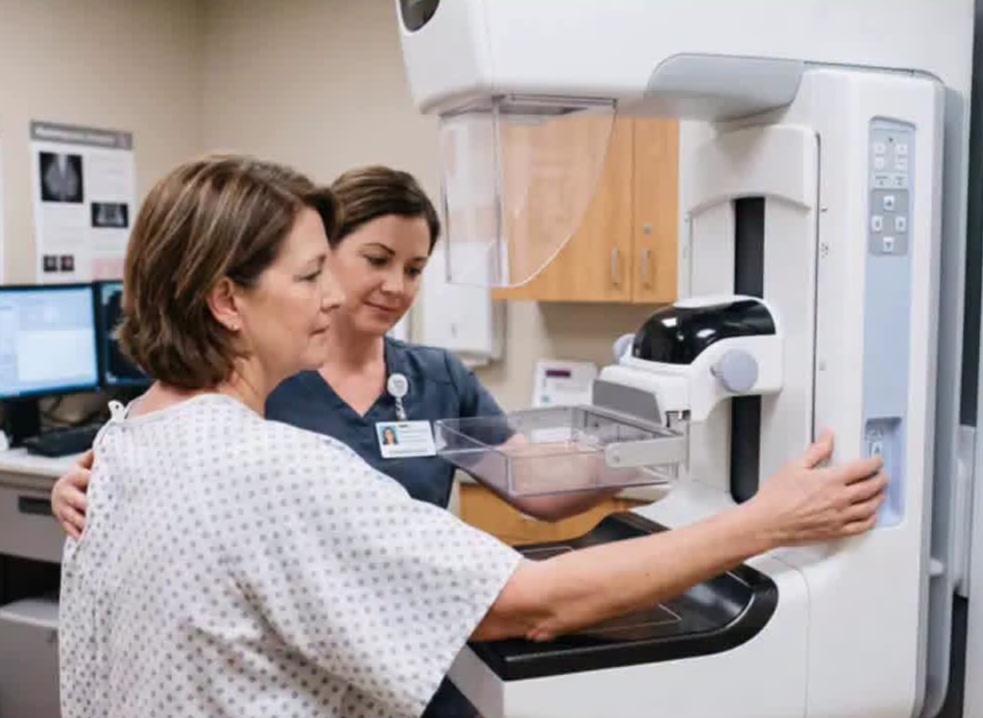
LONDON — Britain’s National Health Service (NHS) has officially launched the world’s largest clinical trial testing artificial intelligence in breast cancer screening, an ambitious three-year programme designed to detect tumours earlier while easing severe workforce pressures on specialist doctors.
Backed by £10 million in funding from the National Institute for Health and Care Research (NIHR), the landmark study—named EDITH (Early Detection using Information Technology in Health)—will involve nearly 700,000 women across 30 screening centres in the United Kingdom. Recruitment began on Monday, November 23, at Addenbrooke’s Hospital under the Cambridge University Hospitals NHS Foundation Trust, with additional sites scheduled to roll out nationwide in the coming months.
Under existing NHS protocols, every routine mammogram must be independently examined by two specialist radiologists. Because fewer than one per cent of routine scans reveal signs of cancer, specialists spend vast amounts of clinical hours reviewing healthy, negative images. The EDITH trial will investigate whether AI software can accurately flag subtle, microscopic abnormalities—often too small to be seen or felt—allowing low-risk scans to be safely reviewed by just one human specialist alongside the algorithm.
Health and Social Care Secretary Yvette Cooper, who visited Addenbrooke’s Hospital in Cambridge to mark the launch, described the initiative as a potential turning point for cancer care.
”This is the biggest AI breast cancer trial in the world, backed by £10 million of government investment to speed up diagnosis and potentially deliver life-saving improvements,” Cooper said. “If successful, this technology could help women get a breast cancer diagnosis and start treatment much more quickly, giving them the best possible chance of recovery. AI has huge potential, but we also need proper safeguards in place to make sure we’re using it safely and effectively to improve treatment and research.”
The study is co-led by Professor Fiona Gilbert of the University of Cambridge and Professor Sian Taylor-Phillips of the University of Warwick, working in collaboration with NHS England and the UK National Screening Committee.
”Through this landmark trial, we’re putting AI to work alongside our expert radiologists to test whether it can help spot warning signs sooner and free specialists to spend more time on direct patient care,” said Professor Gilbert, noting that every mammogram in the study will still be assessed by at least one human clinician.

For women attending routine appointments at participating clinics, GP practices, or mobile screening vans, the physical screening experience will remain completely unchanged. Eligible women aged 50 to 71—who are invited for NHS breast screening every three years—will receive details about EDITH in their invitation letters and will be automatically enrolled unless they choose to opt out before or during their appointment. Participants will be randomly assigned to either standard double-human review or AI-assisted review, and researchers will closely monitor outcomes, including whether AI triggers higher rates of false-positive recalls or unnecessary patient anxiety.
While medical leaders welcomed the trial, some cautioned that technology alone will not resolve wider bottlenecks in cancer care. Stephen Harden, president of the Royal College of Radiologists, noted that the trial would not immediately clear diagnostic backlogs, while Pat Price, chair of Radiotherapy UK, stressed that faster diagnosis must be paired with boosted screening attendance and quicker access to treatment once cancer is found.
Breast cancer remains the most common cancer among women in the UK, with roughly 55,000 to 59,000 new diagnoses annually. Across the country, approximately 2.1 million women undergo routine screening each year, a programme estimated by the NHS to save around 1,300 lives annually. Should the EDITH trial prove that AI-assisted screening is as safe and effective as current methods, it could pave the way for nationwide adoption across the health service.
Do you want to advertise with us?
Do you need publicity for a product, service, or event?
Contact us on WhatsApp +2348033617468, +234 816 612 1513, +234 703 010 7174
or Email: validviewnetwork@gmail.com
CLICK TO JOIN OUR WHATSAPP GROUP