



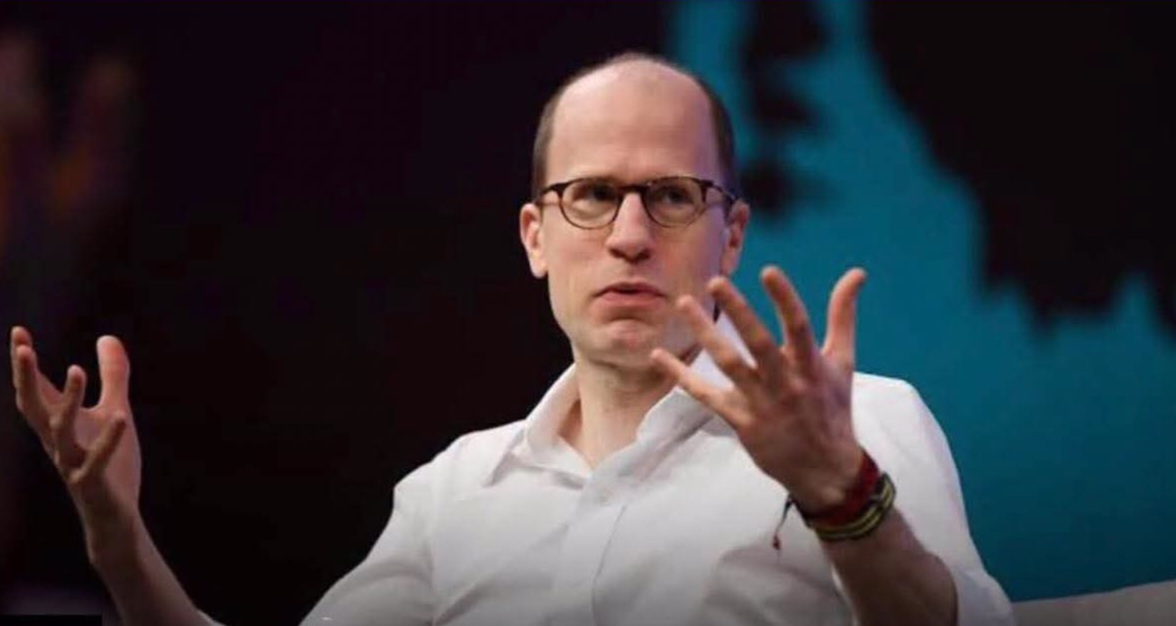
Renowned Swedish philosopher and former Oxford University professor, Nick Bostrom, has projected that breakthroughs driven by artificial intelligence could eventually enable human beings to live for up to 1,400 years.
Bostrom, the author of the influential 2014 book Superintelligence and founder of Oxford University’s former Future of Humanity Institute, made the assertion during an episode of The a16z Show podcast titled “How Fast Should We Build Superintelligence?”, hosted by Eddy Lazzarin and Elena Burger.
According to the philosopher, rapid advancements in artificial intelligence and machine superintelligence could unlock unprecedented discoveries in biomedicine, disease eradication, and anti-ageing therapies. If biological ageing is effectively halted, human life expectancy would shift dramatically from current global averages of just over 73 years to more than a millennium.
”If you think about what our life expectancy would be if we weren’t aging, it’s something on the order of, you know, 1,200, maybe 1,400 years or so,” Bostrom stated during the broadcast.

Drawing on actuarial calculations detailed in his recent research paper, “The Optimal Timing for Superintelligence,” Bostrom noted that if human mortality rates were lowered to match those of modern 20-year-olds—roughly 0.07 per cent annually, primarily from non-age-related causes—the average lifespan would naturally stretch to around 1,400 years.
He further argued that even a 1,400-year lifespan represents a modest baseline, as an era of advanced AI would likely usher in parallel innovations capable of curbing external causes of death.
”And that maybe is quite a conservative lower bound, because in this situation you might also have other ways of reducing other mortality risks, like accidents and so forth,” he added, noting that his projection does not even factor in more radical possibilities such as digital consciousness or mind uploading.
Bostrom’s remarks land squarely in the middle of an intensifying global debate over the pace of artificial intelligence development. While numerous technologists and safety researchers have advocated for a prolonged moratorium or significant slowdown in AI deployment to resolve “alignment” challenges and prevent existential catastrophes, Bostrom cautioned against overlooking the human cost of inaction.
Pointing out that approximately 95 per cent of all humans who have ever lived are already dead, with the remaining population on track to follow within a few decades, Bostrom emphasized that roughly 150,000 people die daily from natural causes.
”I think that’s only one of many different considerations that would come into an all-things-considered evaluation here,” Bostrom said while weighing safety against speed. “So you might think that if we spend more time doing AI alignment research, the existential risk from developing AI goes down at some rate. On the other hand, every year that we delay it, we have millions and millions of people dying.”
Rather than an indefinite freeze on AI progress, Bostrom argued that if the objective is to preserve the lives of people currently alive, any strategic pause for safety verification should be measured in months or a few years rather than decades. Comparing the pursuit of superintelligence to a high-risk heart surgery, he maintained that while the procedure carries severe dangers, refusing the intervention guarantees mortality
Do you want to advertise with us?
Do you need publicity for a product, service, or event?
Contact us on WhatsApp +2348033617468, +234 816 612 1513, +234 703 010 7174
or Email: validviewnetwork@gmail.com
CLICK TO JOIN OUR WHATSAPP GROUP