

For Suleiman Yunusa, the school run ended with a phone call no parent should ever receive.
His two sons were returning home from school in Kano when a sand-laden truck crushed them, leaving their father to confront the loss of two children in the same road tragedy.
Yunusa has now narrated the devastating incident, describing how the truck struck his sons as they made their way home.
The account has once again put a painful question before Nigeria: how many children must die on ordinary journeys before road safety stops being treated as an occasional emergency?
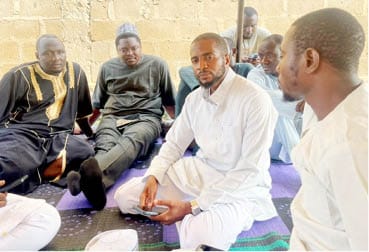
The details of the crash are still being investigated, but the father’s account has placed the human cost at the centre of the story.
He is not describing statistics. He is describing two sons who left home for school and never returned.
A Familiar Nigerian Road Tragedy
ValidViewNetwork reports that the Kano tragedy is part of a wider pattern in which heavy commercial vehicles have been involved in deadly crashes involving students, pedestrians, motorcycles and other road users.
In November 2023, a trailer carrying sharp sand crashed in Abuja’s Mpape area, killing at least eight people, including students, after the truck reportedly suffered brake failure.
In another earlier tragedy, a truck crushed a father and two children who were travelling to school in Ogun State.
These incidents are separated by years and locations. They should not automatically be treated as evidence of one common cause.
But they raise recurring safety questions: vehicle roadworthiness, brake condition, driver training, speed, route management, enforcement and the suitability of heavy trucks operating around schools and densely populated communities.
The Question Beyond One Family
The tragedy should not end with condolences.
If a truck is found to have been mechanically defective, the investigation should establish whether that defect could have been detected before the vehicle entered the road.
If speed or dangerous driving contributed, that should be established through evidence.
If the road itself lacked proper separation between heavy vehicles and vulnerable road users, that too deserves attention.
And if enforcement agencies had previously received complaints about dangerous vehicles or unsafe routes, those records should form part of the inquiry.
None of these questions should be answered by assumption. They should be answered by evidence.
For Yunusa, however, the investigation will not bring his sons back. That is the cruelest part of road safety in Nigeria. By the time an agency releases a statement, two children may already have become names in a casualty figure.
Do you want to advertise with us?
Do you need publicity for a product, service, or event?
Contact us on WhatsApp +2348033617468, +234 816 612 1513, +234 703 010 7174
or Email: validviewnetwork@gmail.com
CLICK TO JOIN OUR WHATSAPP GROUP
ValidViewNetwork reports that every road-safety conversation eventually comes back to the same principle: roads are built for movement, but human lives must remain more important than speed, cargo or profit.

Suleiman Yunusa’s loss is therefore not only a family tragedy. It is another reminder that schoolchildren, pedestrians and other vulnerable road users depend on adults, transport operators and regulators to make the roads safe enough for an ordinary journey home.
Two boys went to school. Their father expected them back. They did not return. ValidViewNetwork reports.