

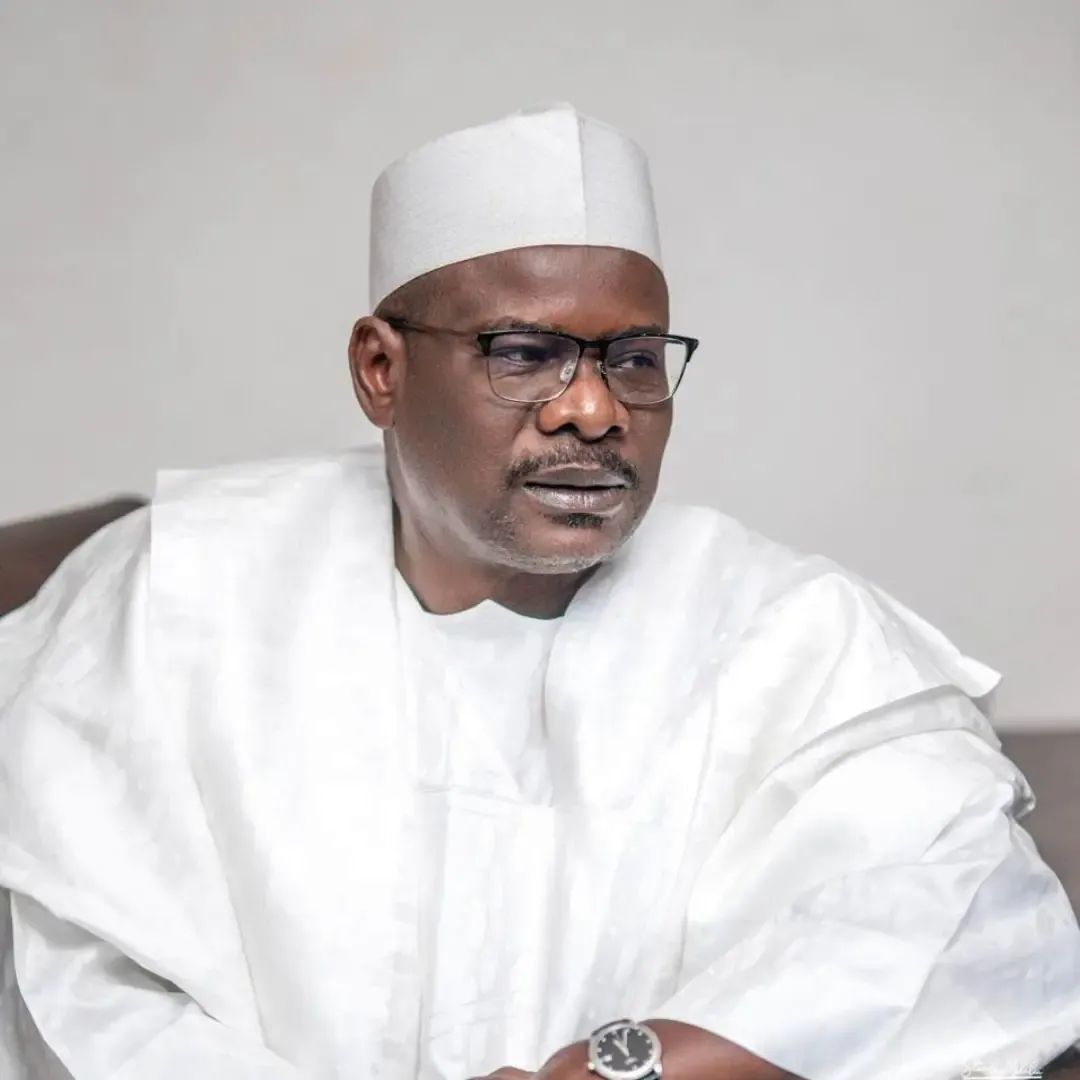
Senator Ali Ndume has sparked fresh debate on Nigeria’s governance crisis, insisting that citizens must accept a share of responsibility for the quality of leaders they elect and, in some cases, help install through flawed processes.
Speaking on Wednesday, September 16, at the public presentation of the book Military Transformational Leadership in Action: The Buratai Era in Abuja, the Borno South senator rejected the widespread tendency to heap all blame on politicians. He argued that elected officials are products of the society that produces and sustains them.
“Every blame is on the politician. And I’m a politician, though accidental, or maybe, forced or recruited into it. But I’m a realist. I live with the situation I find myself, and I’m proud of it,” Ndume said at the Nigerian Army Conference Centre and Suites, Asokoro.
He was responding to remarks by the Emir of Kano, Muhammadu Sanusi II, who had criticised the political class for politicising ethnicity and religion and for contributing to Nigeria’s security and governance failures. Sanusi argued that the roots of insecurity predated the violence of Boko Haram, banditry and terrorism, tracing them instead to divisive rhetoric that framed Nigerians as Northerners versus Southerners, Muslims versus Christians, and members of competing ethnic groups. He called for stronger, independent institutions and an end to short-term electoral thinking in security planning.
Ndume did not dispute the failures of the political class. Instead, he redirected attention to the electorate. “Politics is people; politics is one way to run democracy, and what is democracy? It’s the government of the people, for the people, and by the people. From all discussions, now the blame goes down to us, and we are your product,” he declared.
He went further, addressing the common defence that leaders emerge through rigging. “And by the way, you are to be blamed because even if it is through rigging, it is you people that do the rigging to bring us in. So, if you put us here, we are doing your bidding,” Ndume said.
Drawing on a widely known principle, he added: “And God says that he does not bring leaders different from the followers. I think part of this is something that we look at very well, so that you make sure that we have democracy, and when we have democracy, we would have good governance.” His sharpest line captured the essence of his argument: “You put garbage in, you expect something good out of it? It’s not possible.”
The occasion itself was devoted to documenting the tenure of former Chief of Army Staff Lt Gen Tukur Buratai (rtd), who served from 2015 to 2021 during a critical phase of the fight against Boko Haram and other threats. Defence Minister Christopher Musa, who presented the book, described Buratai’s years as a period of deliberate institutional reform in training, equipment, welfare and professionalism. Musa, a self-described beneficiary of Buratai’s mentorship, praised the former army chief’s ability to identify and develop future leaders, many of whom later rose to senior command positions. He recalled Buratai’s frequent overnight trips to Maiduguri to stay close to troops on the frontline.
Ndume used the platform to stress that security is a collective Nigerian responsibility, not solely a military or regional one. “It’s not a Northern problem. It’s not a Muslim problem. It’s not a Christian problem. It is a Nigerian problem. We have lost our sense of being a nation. We have to go back to that,” he said. He urged traditional rulers, religious leaders, community leaders, the judiciary, security agencies and politicians to work together for peace, while also noting improvements in soldiers’ welfare under the current administration.

The book, authored by Dr M.S. Abubakar after nearly a decade of research that began in 2016, examines reforms under Buratai, including welfare schemes, the Nigerian Army University Biu, resource centres, manufacturing complexes, and a mix of kinetic and non-kinetic strategies. Abubakar described it as a leadership document rather than a praise song, warning that nations that fail to record and learn from wartime experiences risk fighting the same battles repeatedly.
Ndume’s comments fit a pattern of forthright interventions from the long-serving senator, who has previously criticised aspects of the current administration while remaining within the ruling All Progressives Congress. His latest remarks place the onus of democratic quality not only on those who seek power, but on the citizens who enable, tolerate or actively participate in the processes that install them.
As Nigeria continues to grapple with insecurity, economic hardship and questions of institutional integrity, Ndume’s blunt assessment invites a wider national conversation: better leaders will only emerge when citizens demand and actively support higher standards at every stage of the political process.
Do you want to advertise with us?
Do you need publicity for a product, service, or event?
Contact us on WhatsApp +2348033617468, +234 816 612 1513, +234 703 010 7174
or Email: validviewnetwork@gmail.com
CLICK TO JOIN OUR WHATSAPP GROUP