

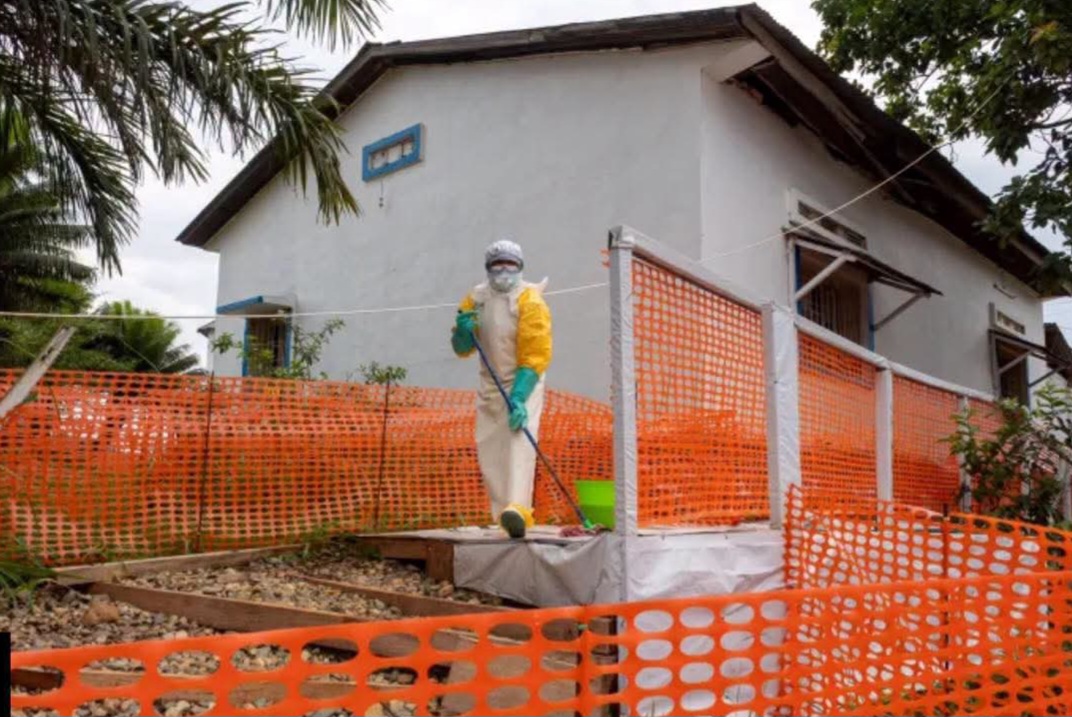
KINSHASA — The death toll from the escalating Ebola epidemic in the Democratic Republic of the Congo (DRC) has surged past 1,300, marking an alarming acceleration in what public health experts are describing as the fastest-spreading outbreak of the virus in history.
Updated figures released by the Ministry of Communications and Media place total confirmed cases at 2,973, with a heavy case fatality rate hovering around 44%. The trajectory has far outpaced previous major health emergencies, hitting the 1,000-death milestone in under ten weeks. By comparison, the historic 2013–2016 West Africa epidemic took roughly eight months to reach that same grim threshold.
The Threat of the Bundibugyo Strain
Fueling the unprecedented transmission is the Bundibugyo ebolavirus (BDBV), a rare species known to infect humans. Unlike the Zaire strain responsible for past major outbreaks in Central and West Africa, no globally approved vaccines or targeted antiviral treatments exist for Bundibugyo, leaving medical responders heavily reliant on supportive care and rapid isolation.
Public health consultant Abdulsalami Nasidi, who helped establish the Africa Centres for Disease Control and Prevention (Africa CDC), warned that the vacuum of medical countermeasures allows the virus to run rampant, compounded heavily by active regional conflicts and acute resource shortages in eastern provinces.
Frontline Strains and Strikes
The crisis has hit healthcare workers particularly hard. More than 100 medical personnel have contracted the virus since May, resulting in approximately 35 deaths.
Adding to the administrative strain, facilities such as the Elikya Ebola Treatment Centre in Bunia, the capital of Ituri province, recently faced crippling staff strikes. Doctors, nurses, and support teams walked off the job over delayed performance risk bonuses and hazardous working conditions. While local operations managers note that emergency measures—including mobile money payouts—are underway to clear the wage backlogs, the disruptions have laid bare the profound vulnerabilities inside active treatment zones.
International Alarm and Experimental Trials
World Health Organization (WHO) Director-General Tedros Adhanom Ghebreyesus cautioned that official numbers likely understate the crisis. Persistent insecurity across Ituri, North Kivu, and neighboring operational zones continues to block response teams from accessing remote settlements, keeping contact tracing well below optimal containment levels.

Amid the bleak landscape, a glimmer of hope emerged from the scientific community. The Oxford Vaccine Group recently administered the first dose of an experimental candidate vaccine in a rapidly mobilized clinical trial, marking a historic first step toward establishing medical defenses against the Bundibugyo strain.
Africa CDC Director-General Jean Kaseya has issued an urgent call for international solidarity, warning that global intervention is vital to keep the localized epidemic from exploding into a wider continental catastrophe.
Do you want to advertise with us?
Do you need publicity for a product, service, or event?
Contact us on WhatsApp +2348033617468, +234 816 612 1513, +234 703 010 7174
or Email: validviewnetwork@gmail.com
CLICK TO JOIN OUR WHATSAPP GROUP