

Lagos State recorded 33,009 domestic and sexual violence cases between September 2021 and July 2026, but perhaps the most devastating statistic is the 10,613 children who suffered emotional abuse simply by witnessing violence in their own homes.
Behind the doors of homes across Lagos; homes that should be sanctuaries of safety and love, a quiet epidemic has been raging.
ValidViewNetwork gathered that the Lagos State Government recorded 33,009 cases of domestic and sexual violence between September 2021 and July 2026.
The data was disclosed on Monday by the Attorney-General and Commissioner for Justice, Lawal Pedro, SAN, at a media parley to mark the commencement of the 2026 Domestic and Sexual Violence Awareness Month in Lagos.
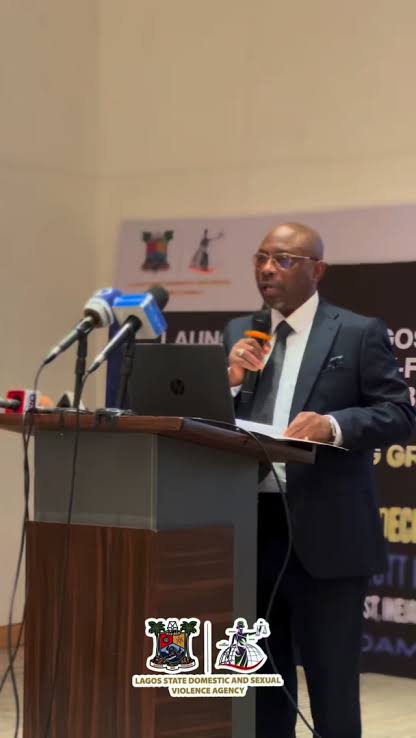
The numbers are staggering. But beneath the statistics lies an even more harrowing truth: 10,613 children were identified as having suffered emotional abuse simply by witnessing violence in their homes.
These children were never physically touched. They were never direct targets of the violence.
Yet they carry wounds that may never fully heal.
The Numbers That Cannot Be Ignored
The data, presented by the Lagos State Domestic and Sexual Violence Agency (DSVA), painted a troubling picture of life behind closed doors across Nigeria’s most populous state.
The breakdown of cases between September 2021 and July 2026 includes:
· 13,515 cases of domestic violence
· 1,171 cases of defilement
· 797 cases of child abuse and physical assault· 420 cases of rape
· 428 cases of sexual harassment
· 100 cases of sexual assault by penetration· 323 threats to life

· 79 attempted rape cases
· 95 incidents of technology-facilitated sexual and gender-based violence
· 1,861 family-related disputes involving custody, neglect, abduction and child labour
The Children Who Suffered in Silence
ValidViewNetwork notes that Pedro singled out the number of children affected by domestic violence as one of the most concerning aspects of the figures.
“One of the most sobering findings from the year’s data concerns children. 10,613 children were identified as having suffered emotional abuse as a result of being exposed to domestic violence in their homes,” Pedro stated.
“These children may not have been direct targets of the violence, but exposure to violence can leave deep emotional scars. This is why our response must extend beyond addressing the immediate incident to supporting the psychological well-being of those affected,” he added.
A Silent Epidemic Within the Home
Among children, emotional abuse was the dominant category, accounting for 82.3 per cent of reported cases.
Defilement represented 8.2 per cent, while physical assault and child abuse accounted for 6.6 per cent. These figures suggest that for the vast majority of children affected by violence in Lagos, the abuse is not physical, but that does not make it any less damaging.
ValidViewNetwork understands that exposure to domestic violence can cause long-term psychological harm, including anxiety, depression, post-traumatic stress disorder and difficulties in forming healthy relationships later in life.
The emotional scars left by witnessing violence can be as debilitating as physical injuries, if not more so.
A Disturbing Trend Across Nigeria
ValidViewNetwork notes that the Lagos figures are part of a wider national crisis. The Federal Government has previously revealed that six out of 10 Nigerian children are physically, sexually and emotionally abused before the age of 18.
More than 70 per cent of children experience this violence repeatedly, while one out of two suffer physical violence.
Psychiatrists have called on the Federal Government to declare a national emergency on child abuse, describing sexual and emotional violence against children as a serious threat to Nigeria’s prosperity.
Official national reporting shows that while six in 10 children experience some form of abuse, only two in five children under five have their births registered, making it difficult to track and protect vulnerable children.
Breaking Down the Numbers
A year-by-year breakdown showed troubling trends:
· 2021 (September–December): 1,075 cases· 2022: 5,929 cases
· 2023: 6,389 cases
· 2024: 7,882 cases
· 2025: 7,721 cases
· 2026 (up to July): 4,013 cases
The figures show a 23.6 per cent decline in reported cases between the two consecutive years under review.
Pedro, however, cautioned against interpreting the decline as evidence that violence itself had fallen by the same proportion.
“As an agency committed to evidence-based practice, we must interpret these figures responsibly. A reduction in reported cases does not automatically mean that Sexual and Gender Based Violence has reduced by exactly the same proportion across Lagos State,” he said.
He noted that reporting figures could be affected by awareness, survivors’ willingness to report, access to services and changes in the channels through which victims sought assistance.
A Gender Divide in Reporting
The data also revealed a significant gender divide in reporting patterns.
Do you want to advertise with us?
Do you need publicity for a product, service, or event?
Contact us on WhatsApp +2348033617468, +234 816 612 1513, +234 703 010 7174
or Email: validviewnetwork@gmail.com
CLICK TO JOIN OUR WHATSAPP GROUP
Women continued to constitute the overwhelming majority of reporters, accounting for 88 per cent, while men represented only 12 per cent.
Male reporters decreased by 47.8 per cent, while female reporters decreased by 28 per cent.
The decline in male reporting is particularly concerning, as it may indicate that male victims of domestic violence continue to suffer in silence, afraid to come forward due to stigma or fear of not being believed.
The State’s Response
Despite the alarming figures, ValidViewNetwork gathered that the Lagos State Government has continued to strengthen its legal, medical and psychosocial responses to reported cases.
The government has provided free legal support to 175 survivors through DSVA’s in-house lawyers, the Office of the Public Defender, private law firms and the Lagos Public Interest Law Partnership.
Sexual assault survivors were also provided free access to treatment through general hospitals and primary healthcare centres under the SGBV Intervention Fund of the Lagos State Health Management Agency, as well as referral centres including the Mirabel Centre, Women at Risk International Foundation and Idera Centre.
40 survivors requiring immediate protection were accommodated at Eko Haven and other safe shelters.
The Agency’s Clinical Psychology Department provided psychotherapy and counselling to 953 survivors, 267 perpetrators and 304 children.
The state also conducted 501 rescue operations to provide immediate protection to people in dangerous environments.
Access to JusticeOn access to justice, Pedro said DSVA secured 20 restraining orders under the Lagos State Protection Against Domestic Violence Law 2015 and financially supported the investigation and prosecution of 464 SGBV-related cases.
More than 711 cases were charged to court, while the Directorate of Public Prosecutions in the Ministry of Justice secured more than 160 convictions within the period under review.
Pedro also noted that the government’s ambition was not merely to record fewer cases but to ensure that fewer people experienced violence in the first place.
“Behind every number is a person, a family and, often, a story of trauma, courage and the search for justice,” Pedro said, stressing that the government’s responsibility was to ensure that every victim was heard, every survivor supported and every perpetrator brought within the ambit of the law.
The Path Forward
ValidViewNetwork understands that the path forward requires a multi-pronged approach:
1. Greater public awareness — Many victims do not report abuse because they do not know their rights or where to seek help. Awareness campaigns must reach every community, including the most vulnerable.
2. Improved access to services — Survivors need accessible, affordable and safe avenues to report abuse and receive support.
3. Stronger enforcement of laws — The Protection Against Domestic Violence Law 2015 exists, but it must be vigorously enforced.
4. Support for children — The 10,613 children identified as suffering emotional abuse from witnessing domestic violence need targeted psychological and social support.
5. Encouraging male reporting — The significant decline in male reporting suggests that male victims of domestic violence continue to suffer in silence. More needs to be done to encourage men to come forward and seek help.
A Crisis That Demands Action
Behind every number is a person, a woman or child who has suffered in silence, a family torn apart by violence, a life forever altered by trauma.
The 10,613 children identified as having suffered emotional abuse after being exposed to domestic violence represent a generation growing up in fear, learning that violence is normal, carrying wounds that may never fully heal.
ValidViewNetwork notes that the scale of the crisis is immense.
But so too is the opportunity for action.
The Lagos State Government has taken important steps. But much more remains to be done.
The 10,613 children who suffered emotional abuse by witnessing domestic violence are not just statistics. They are daughters and sons. They are the next generation of Nigerians.
And they deserve better.