



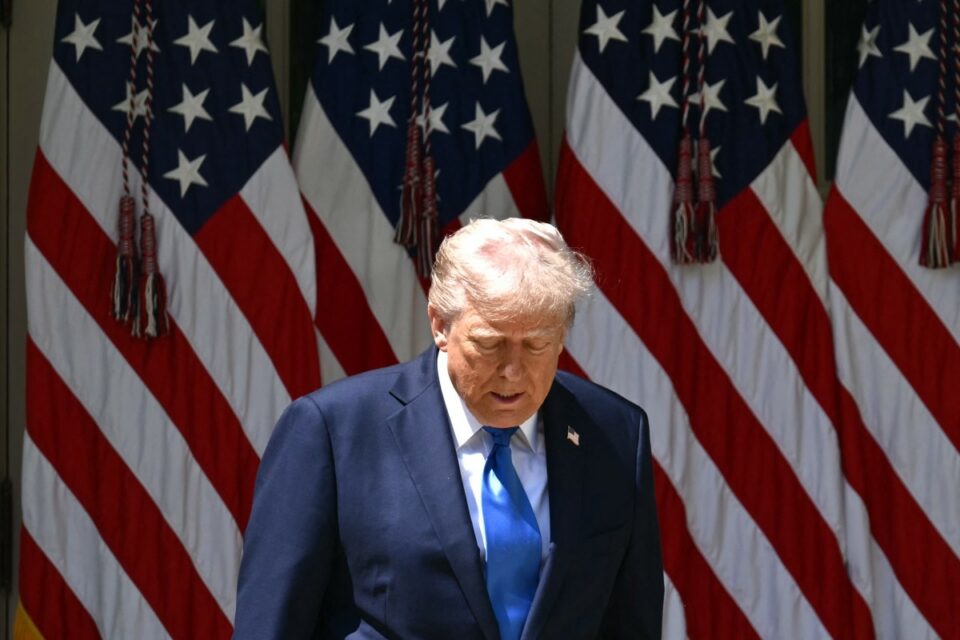
WASHINGTON — The United States has announced sweeping new tariff proposals targeting 14 of its largest trading partners—including China, the European Union, Japan, South Korea, and India—in an aggressive effort to counter what Washington describes as “structural excess industrial capacity.”
Unveiled on Wednesday by the Office of the United States Trade Representative (USTR), the proposed duties follow an eight-month investigation conducted under Section 301 of the Trade Act of 1974. The probe was launched in March shortly after the U.S. Supreme Court struck down President Donald Trump’s earlier “Liberation Day” tariffs, ruling that the administration had overstepped its legal authority. By anchoring the new levies in Section 301, the White House is seeking a more durable legal foundation to rebuild its protectionist trade agenda.
The Scope of the Levies
The USTR investigation examined 16 economies over allegations that state subsidies and non-market policies have artificially inflated factory output, flooding global markets and undercutting American manufacturers. Alongside China, the EU, Japan, South Korea, and India, the list of targeted economies includes Bangladesh, Cambodia, Indonesia, Malaysia, Singapore, Switzerland, Taiwan, Thailand, and Vietnam. Mexico and Norway were investigated but spared from the new duties for the time being.
China faces the steepest proposed penalty: an additional 20 percent tariff on most goods, which—when combined with existing duties—could push total rates on certain Chinese imports to roughly 40 percent. U.S. Trade Representative Jamieson Greer noted, however, that roughly $30 billion in Chinese goods currently under review for tariff reductions would be exempted, and the duties remain within the bounds of ongoing bilateral trade negotiations.

For allies and partners with existing trade agreements—such as the European Union, South Korea, and Taiwan—tariffs are expected to be broadly capped at 15 percent. Administration officials clarified that the new duties will not “stack” on top of existing sector-specific tariffs (such as those on steel, aluminum, and automobiles) or the 10 to 12.5 percent levies introduced in July over forced-labor enforcement. Instead, the higher applicable rate will prevail.
In a separate action on Wednesday, the USTR also proposed targeted tariffs on Brazil after bilateral trade talks stalled, including higher duties on raw and refined sugar and a new 10 percent levy on aircraft—a move expected to directly impact Brazilian aerospace giant Embraer.
Global Reaction and Market Jitters
The announcement triggered immediate pushback from abroad and rattled financial markets at home. In Beijing, Foreign Ministry spokesperson Guo Jiakun condemned the move, dismissing claims of overcapacity as a “false narrative” and warning that “a tariff war or a trade war serves no party’s interests.” Brussels also pushed back against the proposals, signaling renewed transatlantic friction just weeks before President Trump is scheduled to host world leaders at the Group of 20 (G20) summit in Florida next month.
On Wall Street, major U.S. stock indexes opened lower following the news, with the tech-heavy Nasdaq Composite falling more than 3 percent amid fears of supply chain disruptions and retaliatory measures.
Domestic Inflation and Political Headwinds
The tariff rollout comes at a politically sensitive moment for the White House. Earlier on Wednesday, the Bureau of Economic Analysis reported that U.S. consumer prices rose at an annualized rate of 3.8 percent in October—the fastest pace since May and well above the Federal Reserve’s 2 percent target.
Following Republican setbacks in the recent midterm elections, critics and Democratic lawmakers have increasingly blamed administration tariffs for driving up household costs, with recent polling showing a majority of Americans favor repealing broad import taxes. Undeterred, President Trump maintains that the tariffs are essential to reviving domestic manufacturing and reducing the federal deficit.
The proposed tariffs must now undergo a mandatory period of public comment and hearings before they can be finalized, meaning the new duties are unlikely to take effect before January.
Do you want to advertise with us?
Do you need publicity for a product, service, or event?
Contact us on WhatsApp +2348033617468, +234 816 612 1513, +234 703 010 7174
or Email: validviewnetwork@gmail.com
CLICK TO JOIN OUR WHATSAPP GROUP