



Tax Self-Driving Cars Now to Shield Drivers and Fill Fuel Duty Gap, Thinktank Urges
Britain should impose a per-mile charge on autonomous vehicles immediately, before they flood the roads and eliminate hundreds of thousands of driving jobs, a leading thinktank has warned.
The Centre for British Progress, a non-partisan group focused on economic growth, argues that early action is essential to soften the blow to England’s 417,000 taxi and private-hire drivers — including 121,000 in London — and to replace the billions of pounds in fuel duty that will vanish as electric and driverless cars take over.
In a report released this week, the thinktank calculates that a levy of about 88 pence per mile, calibrated to the social cost of congestion, could generate as much as £47 billion a year by 2050. Fuel duty currently brings in roughly £27 billion annually, a figure expected to collapse as petrol and diesel vehicles disappear.

“Self-driving vehicles will eventually make much of this work obsolete,” the report states, urging ministers to act while there is still “not yet a substantial constituency of AV owners who will resist a charge.” Once ownership becomes widespread, the political battle will be far harder, it warns. Author David Lawrence pointed to the 1909 introduction of fuel duty — before mass car ownership — as a model: better to establish the principle early than fight a losing battle later. Even distant future revenue, he noted, can influence today’s bond markets and fiscal headroom.
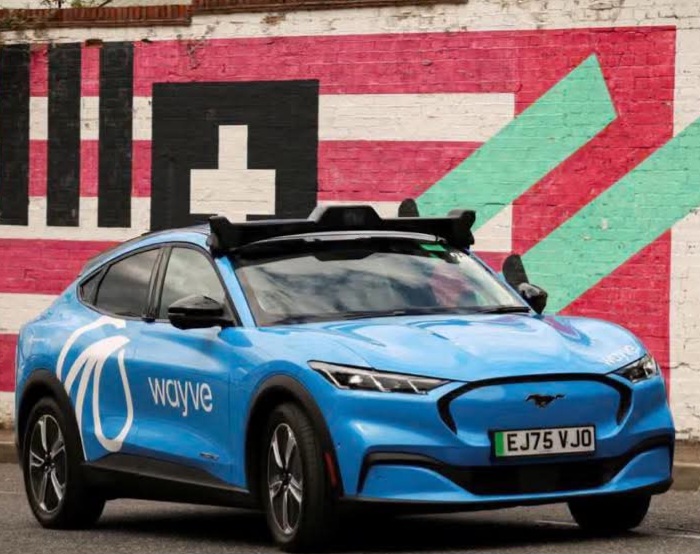
The warnings come as the technology moves from theory to London’s streets. This month Uber and British firm Wayve launched the capital’s first commercial self-driving taxi service, offering rides in AI-equipped Ford Mustang Mach-Es via the Uber app. A safety driver still sits behind the wheel, but the milestone underscores how quickly the shift is arriving. Government projections suggest up to 40 per cent of cars sold could have self-driving capability by the middle of the next decade. Department for Transport forecasts also point to a 24 per cent rise in road miles by 2050 under highly automated driving, with significant effects on congestion and speeds.
The report highlights another risk: empty robotaxis circulating because the cost of keeping a driverless vehicle moving is low. Nearly half of Waymo’s robotaxi mileage in California is travelled without passengers, it notes — potentially cheaper than parking and likely to pull journeys away from public transport.
Industry reaction has been swift and hostile. Wayve, which is pioneering the technology with government support and partnerships including Uber, said a sector-specific tax would “penalise the UK’s most promising innovators” and undermine ambitions to capture a share of a £700 billion global market. Sarah Gates, the company’s VP of global affairs, argued that autonomous vehicles represent a major growth opportunity that will create high-value jobs and corporation-tax revenue. “A sector-specific tax at this early stage would undermine the government’s growth agenda and send precisely the wrong signal,” she said.
Transport unions are equally unconvinced that taxation alone is the answer. The GMB, which represents many taxi and private-hire drivers, said an AV charge “could go some way to mitigating the economic disruption” but is not enough. Simon Rush, president of the GMB London region drivers branch, called for a proper plan to reskill and redeploy workers whose livelihoods are threatened. “GMB has asked the government, TfL and operators for a plan… but to date our questions have gone unanswered,” he said.
Ministers have so far framed autonomous vehicles as a transformative opportunity expected to create thousands of jobs and unlock billions for the economy by 2035. Yet with robotaxis already operating in the United States, China and the UAE, and Europe’s first fully driverless taxi trials under way, the debate is shifting from whether the technology will arrive to how Britain manages the economic and social fallout.
The Centre for British Progress insists the window for decisive action is open — and closing fast.
Do you want to advertise with us?
Do you need publicity for a product, service, or event?
Contact us on WhatsApp +2348033617468, +234 816 612 1513, +234 703 010 7174
or Email: validviewnetwork@gmail.com
CLICK TO JOIN OUR WHATSAPP GROUP