Nigeria’s emergency military flight into Burkina Faso has escalated diplomatic tensions with the Alliance of Sahel States, even as Abuja insists the crew is safe and the diversion was purely a technical, safety-driven decision. The Sahel bloc has responded by putting its air defences on maximum alert and warning that any unauthorised aircraft entering its airspace could be “neutralised”.
Nigerian C-130’s Emergency Landing
According to statements from the Alliance of Sahel States (AES) – comprising Mali, Niger and Burkina Faso – a Nigerian Air Force C-130 transport aircraft made an emergency landing in Bobo Dioulasso, western Burkina Faso, on 8 December 2025 while flying through Burkinabe airspace without prior authorisation. The AES said the aircraft was carrying 11 Nigerian military personnel, describing the unannounced entry and landing as an “unfriendly act” and a breach of the confederation’s sovereignty and aviation regulations.
The Nigerian Air Force, however, has explained that the C-130 was on a ferry mission from Lagos to Portugal when the crew detected a technical concern that required an immediate precautionary landing in line with international aviation safety protocols. Nigerian officials stressed that the diversion was not a hostile or clandestine operation but a safety manoeuvre, insisting that standard procedures were followed once the in-flight issue was identified.

Fate of the Nigerian Crew
While the initial AES statement did not specify the fate of those on board, subsequent briefings and Nigerian reactions indicate that the crew members are not being mistreated. The Nigerian Air Force’s spokesperson has publicly assured that the personnel “are safe and have received cordial treatment from the host authorities,” adding that arrangements are under way to enable them to continue their mission once technical and diplomatic issues are resolved.
Some regional outlets earlier suggested that Burkina Faso’s junta had effectively detained the 11 military personnel and seized the aircraft pending clarification of the circumstances surrounding the landing. However, Nigerian authorities have pushed back against any suggestion of a standoff over the crew, maintaining that discussions with Burkinabe officials are ongoing within normal diplomatic and military channels.
Sahel Alliance’s Strong Warning
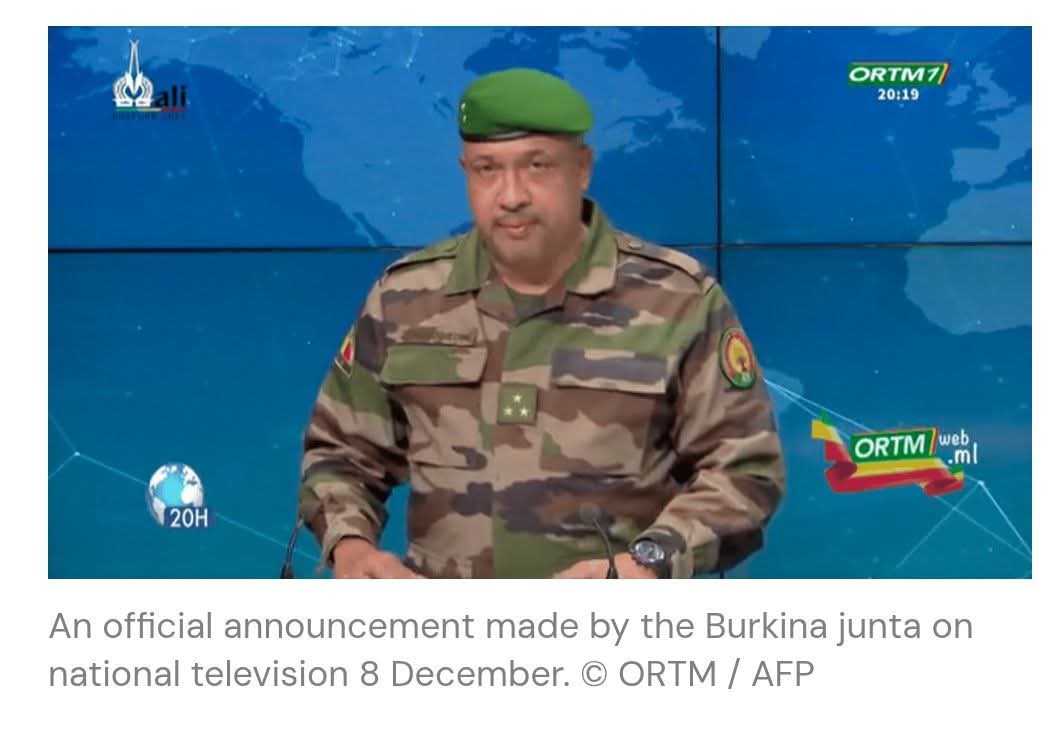
In its joint statement, the AES announced that the air and anti-aircraft defences of its “confederal space” had been placed on maximum alert and expressly authorised to “neutralise any aircraft” deemed to be violating the bloc’s airspace. The alliance framed the Nigerian C-130’s presence as a violation of international law and aviation rules, warning that future incursions – whether civilian or military – would be treated as serious threats to the coalition’s security.
This hard line underscores the deepening rift between the Sahel juntas and neighbouring coastal governments, particularly Nigeria, over security cooperation and regional leadership. It also signals the AES’s determination to use airspace control as a strategic tool amid rising tensions with ECOWAS and Western partners.
ECOWAS Split and Russian Tilt
Mali, Niger and Burkina Faso, all ruled by military juntas and facing entrenched jihadist insurgencies, formally quit ECOWAS earlier this year after years of friction over sanctions and transition timelines. They have since launched the “Confederation of Sahel States” as both a political and security framework designed to rival ECOWAS and reduce dependence on traditional partners.
The three juntas have also moved to curtail French military presence and influence while deepening security and political ties with Russia, including cooperation with Russian military advisers and companies. This realignment has complicated regional crisis management and made incidents such as the Nigerian aircraft landing more sensitive, as each side now reads security actions through the lens of geopolitical rivalry.
Do you want to advertise with us?
Do you need publicity for a product, service, or event?
Contact us on WhatsApp +2348033617468, +234 816 612 1513, +234 703 010 7174
or Email: validviewnetwork@gmail.com
CLICK TO JOIN OUR WHATSAPP GROUP
Link to Benin Coup Attempt
The incident comes less than 24 hours after Nigerian forces intervened to help foil an attempted coup in neighbouring Benin Republic, where Nigerian air assets reportedly conducted strikes against mutinous troops at the request of the Beninese government. Nigeria has argued that its role in Benin was firmly anchored in ECOWAS mechanisms and aimed at defending constitutional order in the region.
For the AES, however, Abuja’s rapid intervention in Benin reinforces its suspicion of ECOWAS-aligned governments and heightens anxiety over Nigerian military flights near or over its territory. The timing of the C-130’s emergency diversion into Burkina Faso has therefore amplified political sensitivities, prompting the unusually sharp warning on airspace violations.