



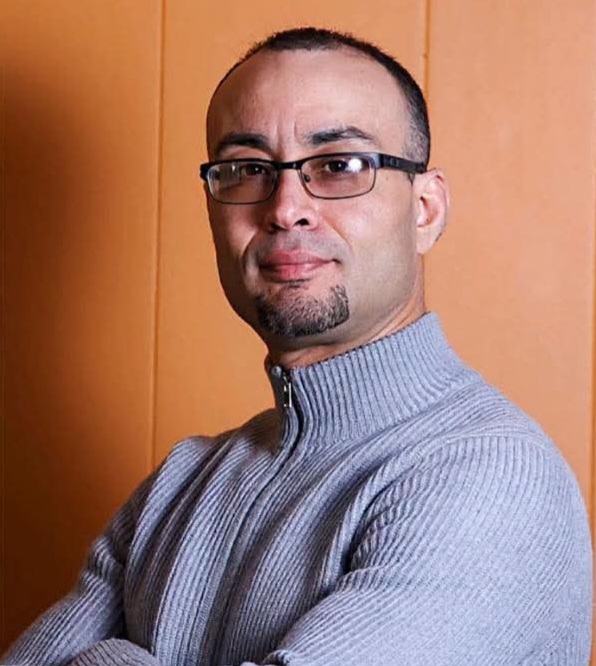
The path from a maximum-security prison cell to an Ivy League lectern is rarely straightforward, but the trajectory of Robert Saleem Holbrook has drawn intense scrutiny amid a broader national debate over criminal justice reform, higher education, and geopolitical speech.
Holbrook, who now serves as the executive director of the Abolitionist Law Center (ALC) and teaches at the University of Pennsylvania’s Carey Law School, spent 27 years in Pennsylvania’s state correctional system after being convicted of first-degree murder as an accomplice in a 1990s drug-deal-turned-robbery. Imprisoned at age 16, his mandatory life-without-parole sentence was overturned following the landmark 2016 U.S. Supreme Court ruling in Montgomery v. Louisiana, which banned mandatory life sentences for juveniles. Released in 2018, Holbrook rapidly transitioned into prominent advocacy roles, leading the ALC—a public interest law firm and organizing project—and securing academic appointments that bridge community advocacy with legal education.
However, Holbrook’s public profile has increasingly drawn fire from critics outside and inside academic circles, particularly regarding his commentary on international conflicts. In the wake of the October 7, 2023, attacks by Hamas, Holbrook faced severe backlash for public statements defending the geopolitical strategies of Hamas and Hezbollah. In essays and interviews following the outbreak of the war in Gaza, Holbrook framed the actions of the designated militant groups through an anti-colonial lens, aligning domestic prison abolition frameworks with international resistance movements.

Critics, including various watchdog groups and political commentators, have questioned the appropriateness of individuals with violent criminal records holding positions of significant institutional influence and shaping the minds of future attorneys at elite law schools, especially while defending organizations designated as terrorist entities by the United States.
Conversely, supporters and criminal justice reform advocates champion Holbrook’s journey as a testament to rehabilitation, pointing to his advocacy against mass incarceration, solitary confinement, and juvenile life sentences—efforts that have previously earned him civic recognition and platforms before international bodies like the United Nations Human Rights Commission.
As universities nationwide grapple with the boundaries of free speech, ideological alignment, and faculty conduct, the dual role occupied by Holbrook continues to serve as a flashpoint in discussions concerning restorative justice versus institutional accountability.
Do you want to advertise with us?
Do you need publicity for a product, service, or event?
Contact us on WhatsApp +2348033617468, +234 816 612 1513, +234 703 010 7174
or Email: validviewnetwork@gmail.com
CLICK TO JOIN OUR WHATSAPP GROUP