



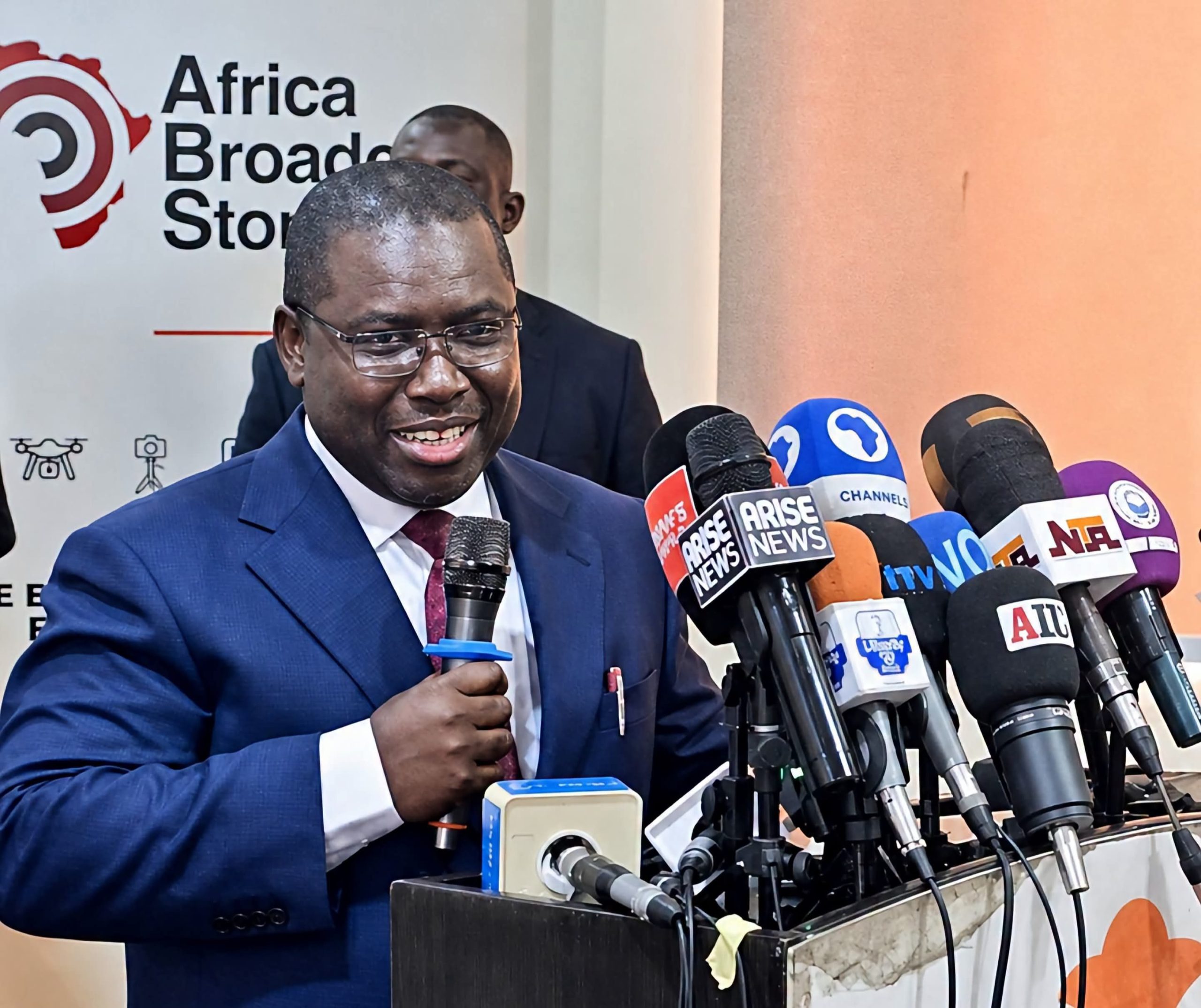
The Independent National Electoral Commission (INEC) will fully comply with any final court decision on the eligibility of former Vice-President Atiku Abubakar to contest the 2027 presidential election, Chairman Prof. Joash Amupitan has declared.
Speaking on Thursday at a dialogue organised by Chatham House in collaboration with the Kimpact Development Initiative in London, themed “Nigeria’s 2027 Elections: Democratic Trajectory and Regional Stability Beyond the Ballot,” Amupitan responded directly to questions about the uncertainty surrounding Atiku’s candidacy under the African Democratic Congress (ADC).
The controversy stems from a Federal High Court judgment delivered on 5 November by Justice Peter Lifu in Abuja. The court nullified the David Mark-led caretaker leadership of the ADC and all decisions taken under it, including the process that produced Atiku as the party’s presidential candidate. The suit was instituted by Nafiu Bala Gombe, a former deputy national chairman of the party, who challenged the manner in which Mark and other national officers emerged following the resignation of the previous leadership in July 2025.
Asked whether Atiku would still appear on the ballot if he fails to overturn the ruling, Amupitan was unambiguous. “If he eventually fails, well, I’m obligated under Section 285 of the Constitution of Nigeria to obey every court order, especially if it is from the Supreme Court,” he stated. He emphasised that the commission has no discretion in the matter and must enforce judicial pronouncements regardless of political consequences or public reaction.

Amupitan acknowledged the practical difficulties this creates for INEC. “But the danger is that whenever there’s such a decision, and it’s you who now has to implement it, you become the problem. The problem now is transferred to you. But that is the position of the law,” he added.
The INEC chairman revealed that the commission is already grappling with more than 300 pending court cases, with the presidential election scheduled for January 2027—roughly 66 days away at the time of his remarks. He expressed concern that the volume of pre-election litigation is threatening logistical preparations, noting that sensitive election materials have already been ordered.
Amupitan recalled that when the ADC leadership dispute first arose in April, INEC had pushed for an accelerated hearing, proposing that the matter be resolved within three weeks to allow adequate time for electoral planning. The case, however, dragged on. The commission complied with a court directive to suspend action on the disputed leadership structure pending determination of the suit, which is now heading to the Court of Appeal after the ADC indicated its intention to challenge the judgment.
The party’s lawyer has argued that the Federal High Court ruling did not expressly invalidate Atiku’s candidacy, while Atiku himself has vowed to remain in the race. Amupitan stressed, however, that INEC does not act on social media reports or incomplete information. He confirmed that the commission had not yet received a certified true copy of the judgment and would only proceed after obtaining the official document and seeking legal advice.
The development has heightened uncertainty over the ADC’s participation in the 2027 polls and underscores broader challenges facing Nigeria’s electoral process. Amupitan used the platform to call for reforms that would ensure pre-election disputes are resolved at least six months to one year before elections, allowing the commission to focus on delivering credible polls without the constant distraction of protracted legal battles.
As the legal process continues, INEC’s position remains clear: the final word on Atiku’s eligibility rests with the courts, and the electoral body will implement whatever decision is reached.
Do you want to advertise with us?
Do you need publicity for a product, service, or event?
Contact us on WhatsApp +2348033617468, +234 816 612 1513, +234 703 010 7174
or Email: validviewnetwork@gmail.com
CLICK TO JOIN OUR WHATSAPP GROUP