



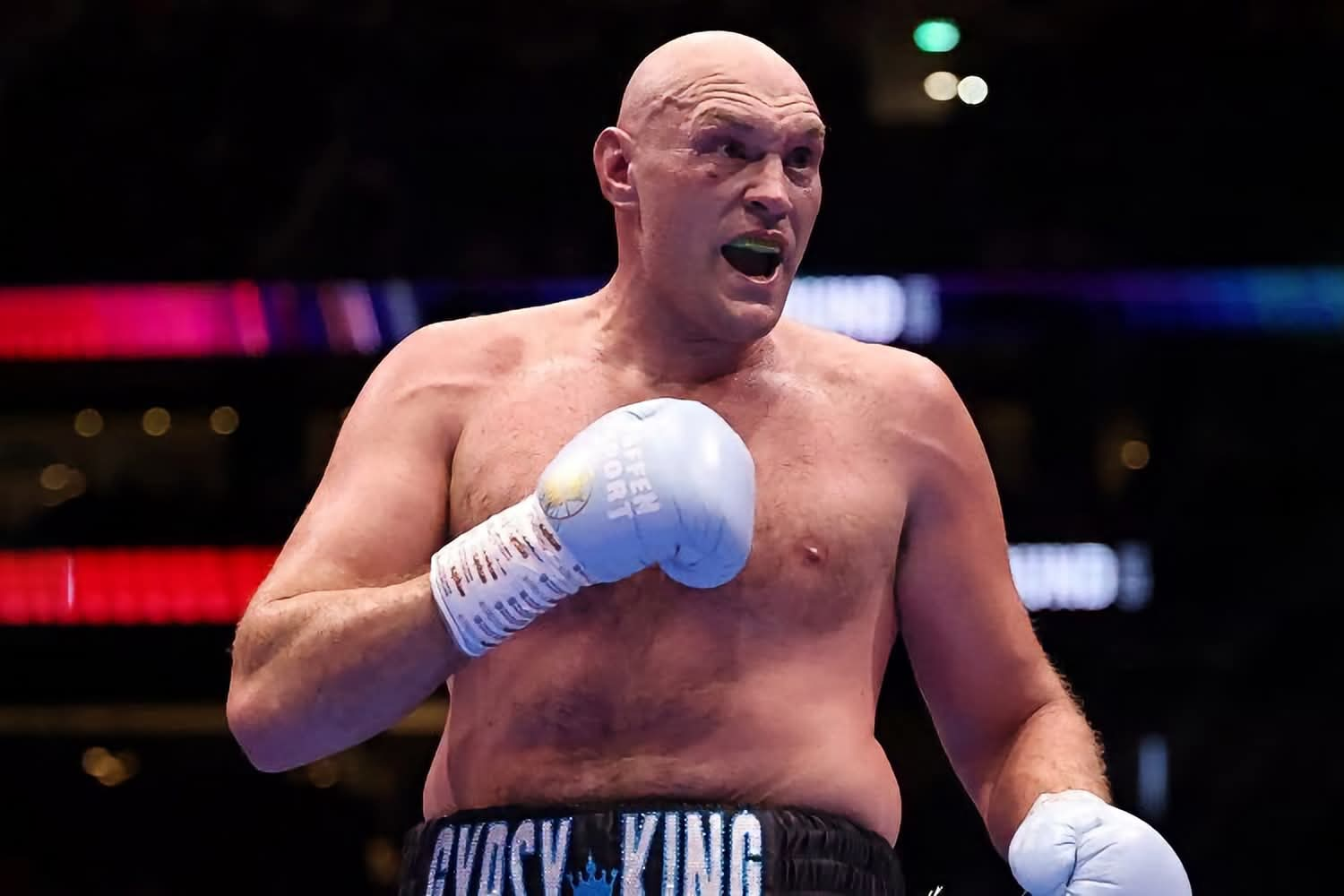
Former two-time world heavyweight boxing champion Tyson Fury has publicly revealed for the first time that he was diagnosed with schizophrenia alongside bipolar disorder, opening up about a years-long mental health crisis that left him experiencing severe paranoia and hearing voices threatening his life and the safety of his family.
The 38-year-old British fighter detailed the harrowing period in Tyson Fury, a feature-length documentary directed by Lucy Wilcox set to premiere globally on Netflix this Friday, November 27. The film—which includes candid interviews with Fury, his wife Paris, and his father John alongside previously unseen archival footage—arrives just two weeks before Fury’s highly anticipated all-British heavyweight clash against Anthony Joshua at Cardiff’s Principality Stadium on December 11.
While Fury has long been open about his battles with depression, addiction, and bipolar disorder, the documentary reveals the full extent of his psychological collapse following his shock November 2015 victory over Wladimir Klitschko in Germany. Rather than experiencing euphoria after capturing the unified heavyweight titles, Fury sank into a profound void compounded by personal tragedies, including the death of a close uncle and the loss of an unborn child.
Stepping away from the ring for nearly three years, Fury gained significant weight and turned heavily to drugs and alcohol as his mental state deteriorated. According to Fury, the psychological distress was rooted in anxiety he had quietly carried since early childhood, which escalated into relentless auditory hallucinations and delusions.
“Words can’t explain the darkness I was in,” Fury says in the film. “It was like a living version of the pits of hell. I 100 per cent thought I’d end up in a padded room with the door locked, and that scared me so much.”

The crisis reached a breaking point in June 2016 when Fury was rushed to the hospital with what was initially feared to be a heart attack, though doctors later determined it was an acute anxiety attack. Hooked up to medical monitors, Fury became gripped by intense paranoia.
“I get there and Tyson looks at me, he’s got wires around him. He looks seriously frightened,” Paris Fury recalls in the documentary. “He says, ‘Get me out of here. The Illuminati, they’re all in on it. They can’t make me be quiet so they’re going to kill me.’ I was so scared for him.”
Fury describes how everyday objects seemed to turn against him during his worst episodes, making even basic human interaction nearly impossible. “The radio starts talking, having a full conversation with me. It’s saying, ‘No one’s untouchable, we can get you at any time, if you don’t behave yourself we’ll kill your father.’ I’ve been drugged with anthrax, am I not really here, I must be dead.”
“It got that bad I was hearing voices in my mind,” he adds. “I wouldn’t be able to sit and have a conversation because I’d be hearing stuff in my mind. I really needed help, or check into rehab or something. I never got a break from it for years. I wanted to be what I thought was normal again.”
Seeking answers, Fury eventually consulted a psychiatrist in London, where he was formally diagnosed with schizophrenia and bipolar disorder. Paris admits she initially struggled to accept the medical assessment due to common misconceptions surrounding the illness.
“It was like, don’t be silly. What’s she on about? Maniacs are schizophrenic. You’re not schizophrenic, you know?” she says, noting that once the conditions were properly explained, the diagnosis matched her husband’s behavior “to a tee.”
Fury’s father, John, also reflects on his own regret over failing to recognize his son’s suffering earlier. “Me being who I am and no understanding of anything, I didn’t want to see a depressed kid,” he admits. “And if I did see it, I paid no mind to it. But I understand now. It’s an illness, a terrible illness, I suffer with it myself.”
Do you want to advertise with us?
Do you need publicity for a product, service, or event?
Contact us on WhatsApp +2348033617468, +234 816 612 1513, +234 703 010 7174
or Email: validviewnetwork@gmail.com
CLICK TO JOIN OUR WHATSAPP GROUP
Fury credits a moment of spiritual desperation and a turning point on Halloween night in 2017—when he broke down in tears and prayed for strength—for inspiring him to return to training and rebuild his life around his family. That comeback saw him reclaim world heavyweight gold in 2020 against Deontay Wilder, navigate back-to-back defeats to Oleksandr Usyk in 2024, and register two victories earlier this year to set up next month’s stadium showdown with Joshua.
Reflecting on his ongoing management of both conditions, Fury emphasizes that recovery is a continuous process rather than a permanent cure. “You must learn to maintain the disease of mental health,” he warns. “It’s a silent killer.”