



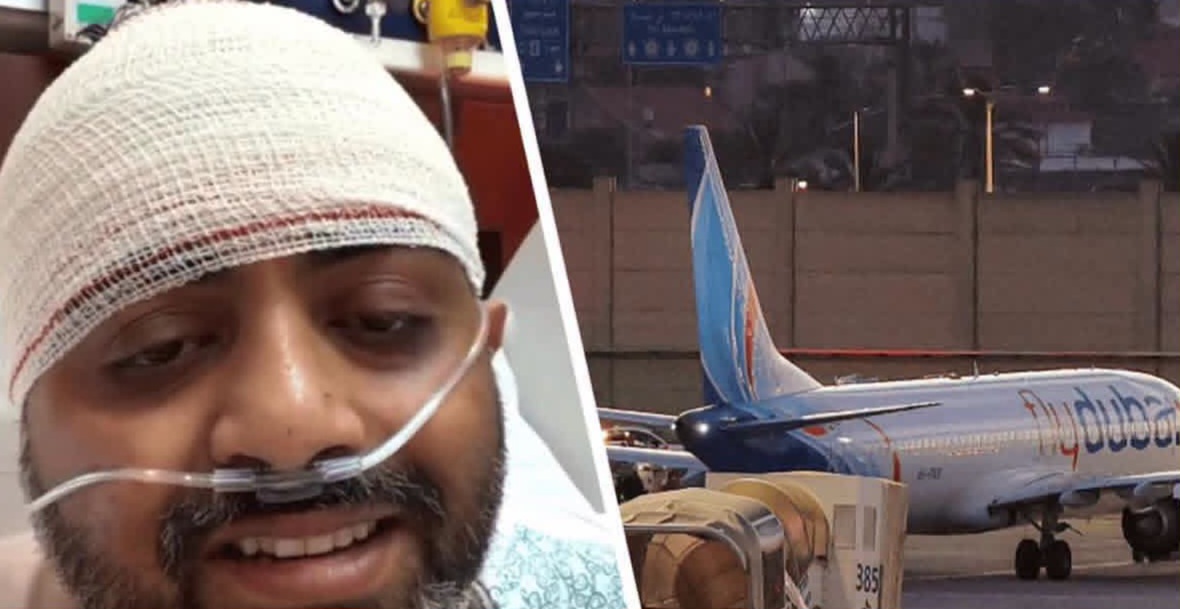
ABOVE THE MIDDLE EAST — For a brief, terrifying interval thousands of feet in the air, modern commercial aviation’s foundational premise—the absolute trust between flight deck crew members—turned into a fatal vulnerability.
When flydubai Flight 1073 departed Dubai for Tel Aviv on September 30, the routine flight carried 174 passengers, many of them Israeli citizens heading home. In command was Indian Captain Smit Machchhar, sharing the cockpit with his first officer, Hamam al-Hammami, a 29-year-old Omani national.
Mid-flight, as the Boeing 737 MAX cruised above the airspace near Jordan and Saudi Arabia, al-Hammami requested to step away from his controls to observe a prayer. Operating under standard professional courtesy and mutual respect, Captain Machchhar agreed, maintaining his forward gaze out the windscreen.
It was a professional accommodation that very nearly cost 182 souls their lives.
Moments later, al-Hammami allegedly turned on his commander with savage intent, using the flight deck’s emergency crash axe to strike Machchhar from behind. According to United Arab Emirates investigators, the assault was no workplace grievance, but a calculated, extremist-inspired hijacking plot intended to plunge the aircraft directly into Tel Aviv’s primary civilian airport.

As bloodied and incapacitated as he was, Machchhar fought desperately for control as the aircraft suddenly pitched downward. Flight tracking data later revealed that the jet underwent a terrifying, uncontrolled plunge, dropping over 14,000 feet in less than a minute and rocketing past design speed limits until structural damage tore parts of the rudder away.
With the aircraft hurtling toward the earth, Machchhar managed a final, critical act: he unlocked the flight deck door. Alerted by the chaos, passengers and crew rushed forward, physically overwhelming the co-pilot and subduing him before he could complete the catastrophic dive. Deadheading reserve pilots on board subsequently stepped in to assist, guiding the battered airliner to a safe emergency landing in Tabuk, Saudi Arabia.
In the aftermath, UAE prosecutors formally categorized the incident as an attempted terrorist act. Revelations soon surfaced indicating that al-Hammami had previously faced professional scrutiny and grounding by Oman Air over radicalization concerns before slipping through subsequent hiring protocols.
Do you want to advertise with us?
Do you need publicity for a product, service, or event?
Contact us on WhatsApp +2348033617468, +234 816 612 1513, +234 703 010 7174
or Email: validviewnetwork@gmail.com
CLICK TO JOIN OUR WHATSAPP GROUP
The incident has sent deep shockwaves through regional aviation and intelligence sectors, prompting urgent questions about employee background vetting across international carriers, the sharing of sensitive employment histories, and the blind spots inherent in modern security frameworks. For the passengers who walked off the tarmac in Tabuk, the lesson is stark: in an era of asymmetric threats, institutional goodwill cannot be allowed to substitute for rigorous, unyielding security oversight.