

UNITED NATIONS — Russia and China on Thursday used their veto powers in the UN Security Council to block a US-drafted resolution that sought to extend the mandate of an independent panel of experts monitoring international sanctions on Iran, effectively ending the formal UN mechanism for tracking compliance and potential violations.
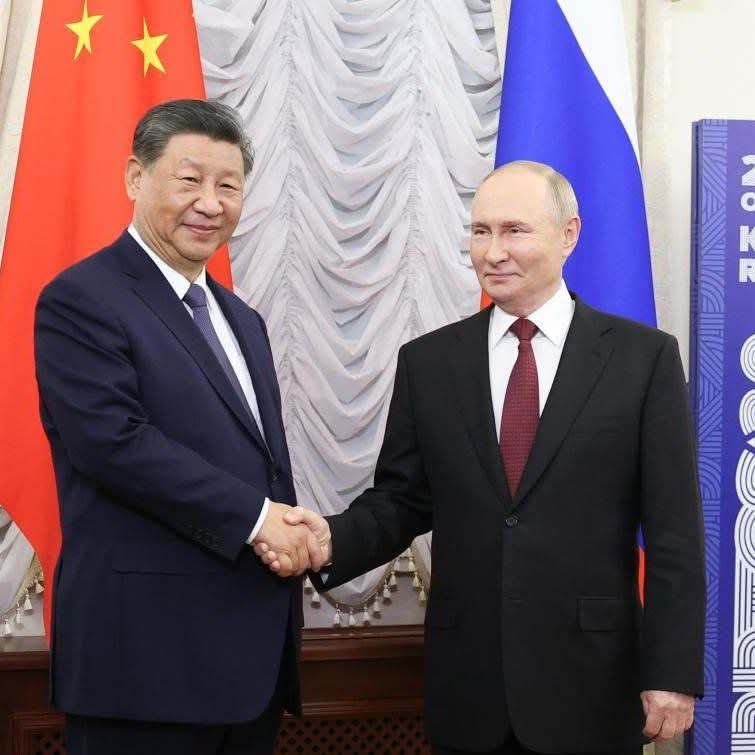
The measure received 11 votes in favor, with Pakistan and Somalia abstaining. As permanent members of the 15-nation Council, Moscow and Beijing’s opposition was decisive, preventing adoption despite the majority support. The panel’s mandate was set to expire on September 26.
Western powers had sought the one-year extension to preserve what they described as the Council’s main source of impartial, evidence-based reporting on sanctions violations. Deputy US Ambassador Jennifer Locetta warned after the vote that the absence of the panel creates a monitoring gap that “only benefits the Iranian regime and those who profit from evading those measures.”
The sanctions in question — including asset freezes, restrictions on arms transfers, and measures targeting ballistic missile development — were reimposed in late September 2025 after Britain, France and Germany triggered the “snapback” mechanism contained in the 2015 Joint Comprehensive Plan of Action (JCPOA) and UN Security Council Resolution 2231. They accused Iran of significant non-performance of its nuclear commitments.
Russia and China have consistently rejected the legal validity of that snapback. They maintain that Resolution 2231 expired on its scheduled termination date of October 18, 2025, permanently lifting the earlier sanctions regime and rendering the associated 1737 Sanctions Committee and its expert panel illegitimate.
Russian Ambassador Vassily Nebenzia told the Council the draft resolution “was deeply flawed and did not have any legal basis,” urging Western members to abandon “very dangerous actions on the Iran front” that risk further complicating efforts to resolve the Persian Gulf crisis. Chinese Ambassador Fu Cong similarly cautioned against “double standards, political manipulation, pressure and confrontation,” arguing that forcing the issue only undermines Council unity and diplomatic prospects.
In practice the expert panel had already been largely inactive for the past year. Council members failed to reach the required consensus on appointing its members, leaving the body without personnel even while the formal mandate remained on the books. The Thursday veto now formally closes that chapter.
Iran’s mission to the United Nations welcomed the outcome, thanking Russia and China for blocking what it called a “politically motivated” US draft and another attempt by Washington and its allies to abuse the Security Council for political purposes. Iranian Parliament Speaker Mohammad Bagher Ghalibaf later praised the vetoes as a rejection of unilateralism and a defense of multilateralism and the rule of law.
The dispute occurs against a backdrop of heightened regional tension. UN nuclear inspectors from the International Atomic Energy Agency have faced severe restrictions on access to Iranian facilities since US and Israeli strikes on nuclear sites in June 2025. The IAEA has reported that Iran continues to hold a substantial stockpile of uranium enriched to 60 percent purity — a short technical step from weapons-grade levels — while verification of that inventory has been hampered.

Western ambassadors stressed that the veto does not lift the underlying sanctions, which they insist remain binding on all UN member states. British Ambassador Sarah MacIntosh noted that existing proliferation-related restrictions continue in force and that London remains committed to a negotiated solution.
Denmark’s representative described the failed text as a straightforward technical rollover intended to maintain independent information flows at a time when Iran’s cooperation with safeguards obligations has deteriorated.
Do you want to advertise with us?
Do you need publicity for a product, service, or event?
Contact us on WhatsApp +2348033617468, +234 816 612 1513, +234 703 010 7174
or Email: validviewnetwork@gmail.com
CLICK TO JOIN OUR WHATSAPP GROUP
The episode underscores deep and persistent divisions within the Security Council over Iran’s nuclear program. With the formal expert-monitoring mechanism now terminated, attention is likely to shift further toward the IAEA’s reporting and bilateral or unilateral national enforcement measures. Diplomatic efforts to ease tensions in the Gulf and address outstanding nuclear concerns face an even more fragmented international landscape.