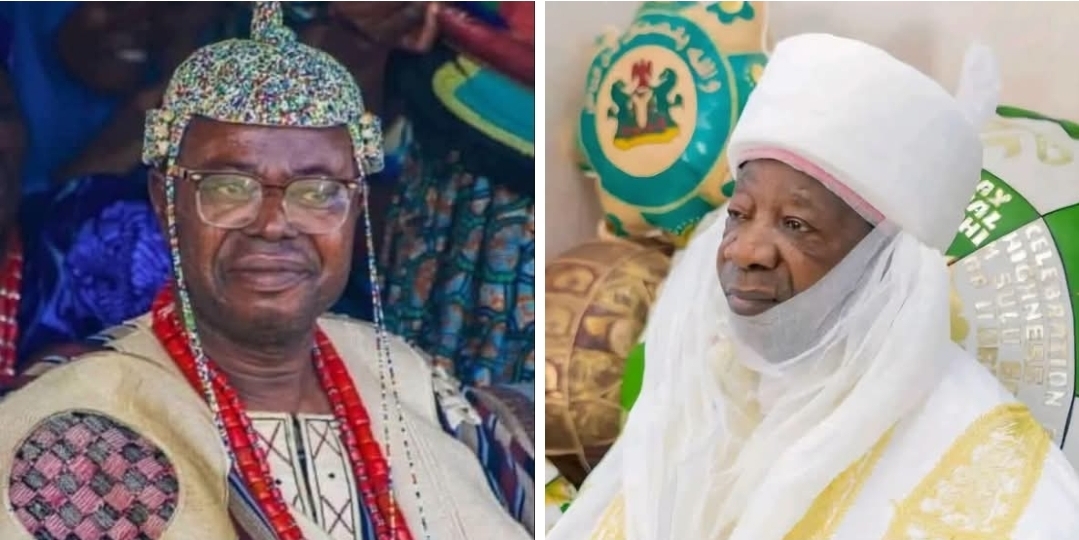
For more than two decades, the ancient throne of Jebba has stood as a defiant symbol of cultural survival. The current Oba of Jebba, Oba Kadiri Adebara, has maintained a steadfast refusal to bow to the traditional overlordship of the Emir of Ilorin, Alhaji Ibrahim Sulu-Gambari—resisting an administrative architecture that successive Kwara State governments have aggressively sought to enforce.
This quiet yet fierce resistance highlights a profound historical irony. Governor AbdulRahman AbdulRasaq, whose heritage traces back to the Yoruba stock, finds himself presiding over a system that actively bolsters Fulani feudal hegemony over ancestral Yoruba communities. Kwara State remains a quintessential Yoruba homeland caught in an ongoing struggle against an entrenched political establishment that echoes historical subversions.
The roots of this friction stretch back to 1813, when Fulani jihadists, operating under the banner of religious expansion, orchestrated a fatal betrayal against the last Oyo-Yoruba ruler of Ilorin, Aare Afonja. The subsequent assassination of Afonja allowed Alimi and his descendants to seize control of Ilorin, transforming a historic Yoruba outpost into the southern-most frontier of the Sokoto Caliphate. During the twilight of the colonial era, indigenous populations across present-ward Kwara and Kogi vehemently agitated for an administrative merger with the Western Region to preserve their cultural identity.
Do you want to advertise with us?
Do you need publicity for a product, service, or event?
Contact us on WhatsApp +2348033617468, +234 816 612 1513, +234 703 010 7174
or Email: validviewnetwork@gmail.com
CLICK TO JOIN OUR WHATSAPP GROUP

Though General Yakubu Gowon attempted to redress these structural imbalances in 1967 by creating the West Central State—appointing a distinguished Yoruba officer, Colonel David Bamigboye, as its first governor—subsequent power dynamics engineered a rollback. The nomenclature was swiftly altered to Kwara, and since the return to civil rule in 1999, the state’s political apparatus has been tightly concentrated within an oligarchic framework. What nineteenth-century warfare failed to secure entirely for the emirate system is being steadily consolidated through modern statecraft and political patronage.
Yet, the unyielding stance of monarchs like the Oba of Jebba, alongside similar quiet rebellions in Shao and surrounding districts, demonstrates that the cultural soul of the region is not easily extinguished. These developments demand more than passive observation from socio-political leaders across the South-West. Preserving indigenous heritage requires active solidarity, proving that the ancient spaces of Kwara and Kogi will continue to test the limits of modern feudal expansion.