

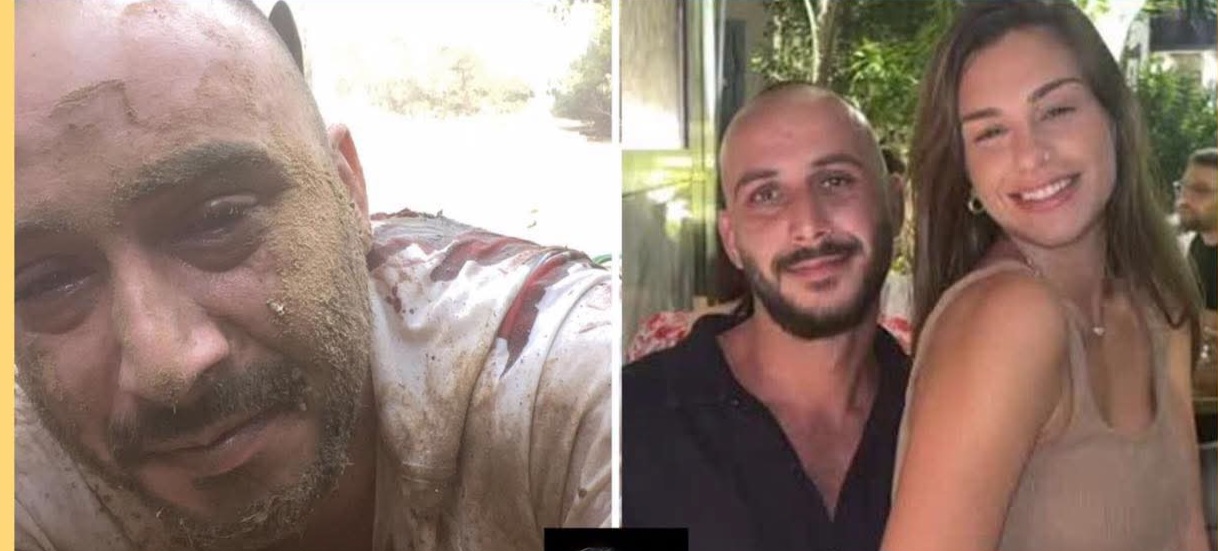
ELKANA — Nearly three years after the horrors of the October 7, 2023, attacks tore through southern Israel, the ongoing mental health crisis claimed yet another life this weekend.
Bar Asraf, a 30-year-old resident of Sha’arei Tikva, was found dead on Saturday evening, August 1, from an apparent self-inflicted gunshot wound at the gravesite of his longtime partner, Liron Barda. Barda, who served as the bar manager for the Supernova music festival near Re’im, was murdered by Hamas terrorists during the onslaught.
According to family members and community advocates, Asraf had been consumed by unrelenting grief since the massacre. Though he was turned back by security forces on October 7 while desperately attempting to drive south to rescue Barda, he spent the ensuing years keeping her memory alive—maintaining close ties with her grieving parents, honoring her sacrifice, and tattooing her likeness onto his skin.
Barda had famously refused to abandon the festival grounds during the initial barrage of rockets and gunfire, staying behind to administer first aid to wounded attendees until she was killed.
The “First-and-a-Half-Degree” Victims
Advocacy groups specializing in post-trauma care emphasize that Asraf’s tragic death highlights a frequently overlooked demographic of the war: the secondary and tertiary circle victims, often described as “first-and-a-half-degree” survivors. These individuals—partners, family members, and close friends who experienced the terror in real-time communication or lived through the excruciating aftermath of loss—carry an invisible, profound burden.

”Trauma doesn’t just affect the direct survivors,” noted Shiran Maor, Chairman of the SafeHeart mental health organization. “Partners, parents, family members, and friends carry immense pain as well, coping daily with the aftermath of loss and trauma.”
Asraf’s death mirrors other heartbreaking losses within the community of survivors and bereaved families, underscoring the deep psychological scars left by the worst massacre in Israel’s history. Mental health professionals continue to urge heightened vigilance and expanded outreach for all those touched by the events of October 7, warning that the invisible wounds of war demand as much urgency as physical rehabilitation.
If you or someone you know is struggling with grief, trauma, or mental health distress, confidential support is available.
Do you want to advertise with us?
Do you need publicity for a product, service, or event?
Contact us on WhatsApp +2348033617468, +234 816 612 1513, +234 703 010 7174
or Email: validviewnetwork@gmail.com
CLICK TO JOIN OUR WHATSAPP GROUP