

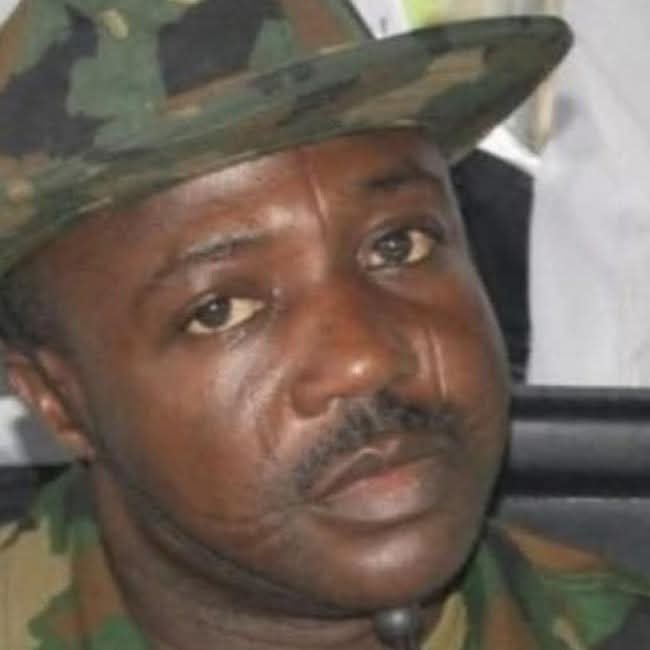
ABUJA — New details have emerged surrounding the alleged military plot to overthrow President Bola Tinubu’s administration, pointing to a mix of personal grievance over stalled promotions, deepening institutional decay, and what the prime suspect describes as a calculated entrapment by the military hierarchy.
Colonel Mohammed Ma’aji, currently facing trial before a military court-martial, has laid bare the sequence of events that transformed his career frustration into an alleged treasonable conspiracy. In statements obtained by investigators, Ma’aji claimed his descent into the plot began after he was repeatedly denied promotion to the rank of brigadier general—first under the administration of former President Muhammadu Buhari, and subsequently in 2024.
According to documents from investigative outlets including Premium Times and SaharaReporters, Ma’aji’s initial grievances dated back to late 2022 and 2023, fueled by widespread dissatisfaction among personnel over deteriorating living standards, inadequate housing, and the military’s handling of national insecurity.

The Niger State-born officer’s activities first caught the attention of the Defence Intelligence Agency (DIA) as early as 2023, when he was briefly detained and subjected to a phone forensic examination over allegations that external politicians intended to leverage his platform to disrupt the 2023 general elections. He was released without charge after investigators found no incriminating evidence.
However, subsequent career setbacks pushed him back toward disaffected elements within the ranks. Ma’aji claimed that younger officers, fearful that his continued stagnation would lead to a forced early retirement, began pressing him to resurrect a movement aimed at addressing systemic rot within the armed forces.
The Sting Operation
The turning point arrived on September 29, 2025, when Ma’aji was apprehended in what he characterizes as an elaborate sting operation.
He recounted receiving urgent phone calls from the Chief of Staff to the then Chief of Army Staff, Lieutenant General Olufemi Oluyede, instructing him to report to House 12 at the Niger Barracks under the guise of discussing his long-delayed promotion.
Excited that his career prospects were finally getting attention, Ma’aji arrived to find General Oluyede, who quizzed him on his service records before the tone abruptly shifted. Shortly after, the Chief of Defence Intelligence, Lieutenant General Emmanuel Undiandeye, arrived.
According to Ma’aji, Oluyede handed him $1,000 as “welfare support” and directed him to accompany the intelligence chief to deliver a message regarding retired Major General A. Mohammed, nicknamed ‘Bandect.’ Instead, Ma’aji was driven directly to DIA headquarters, where he was confronted by Brigadier General Nicholas Ashinze regarding an active conspiracy involving other junior officers, including Lieutenant S.S. Felix and Lieutenant Colonel Shamsuddeen Bappah.
Broader Fallout and Systemic Warnings
The alleged plot became public knowledge in October 2025 when initial reports surfaced detailing the detention of 16 senior officers. The wide-ranging investigation has since expanded to implicate a mix of serving and retired officers, civilian actors, a police inspector, and a Presidential Villa employee accused of assisting with operational reconnaissance.
The gravity of the security breach forced significant disruptions within the military establishment, notably leading to the cancellation of the October 1 Independence Day parade and a sweeping overhaul of the nation’s top military command.
Do you want to advertise with us?
Do you need publicity for a product, service, or event?
Contact us on WhatsApp +2348033617468, +234 816 612 1513, +234 703 010 7174
or Email: validviewnetwork@gmail.com
CLICK TO JOIN OUR WHATSAPP GROUP
While cooperating with investigators, Ma’aji has appealed for leniency for his co-accused, maintaining that their actions stemmed from misguided patriotism rather than personal greed. He concluded his disclosures with a stark warning to military authorities, calling for urgent reforms to address economic hardship, substandard housing, and plummeting troop morale, while advocating for safe internal channels where soldiers can air grievances without fear of victimization.
The Defence Headquarters has confirmed that implicated active-duty personnel will face court-martial proceedings, while civilian and retired suspects will be prosecuted in the Federal High Court in Abuja.