

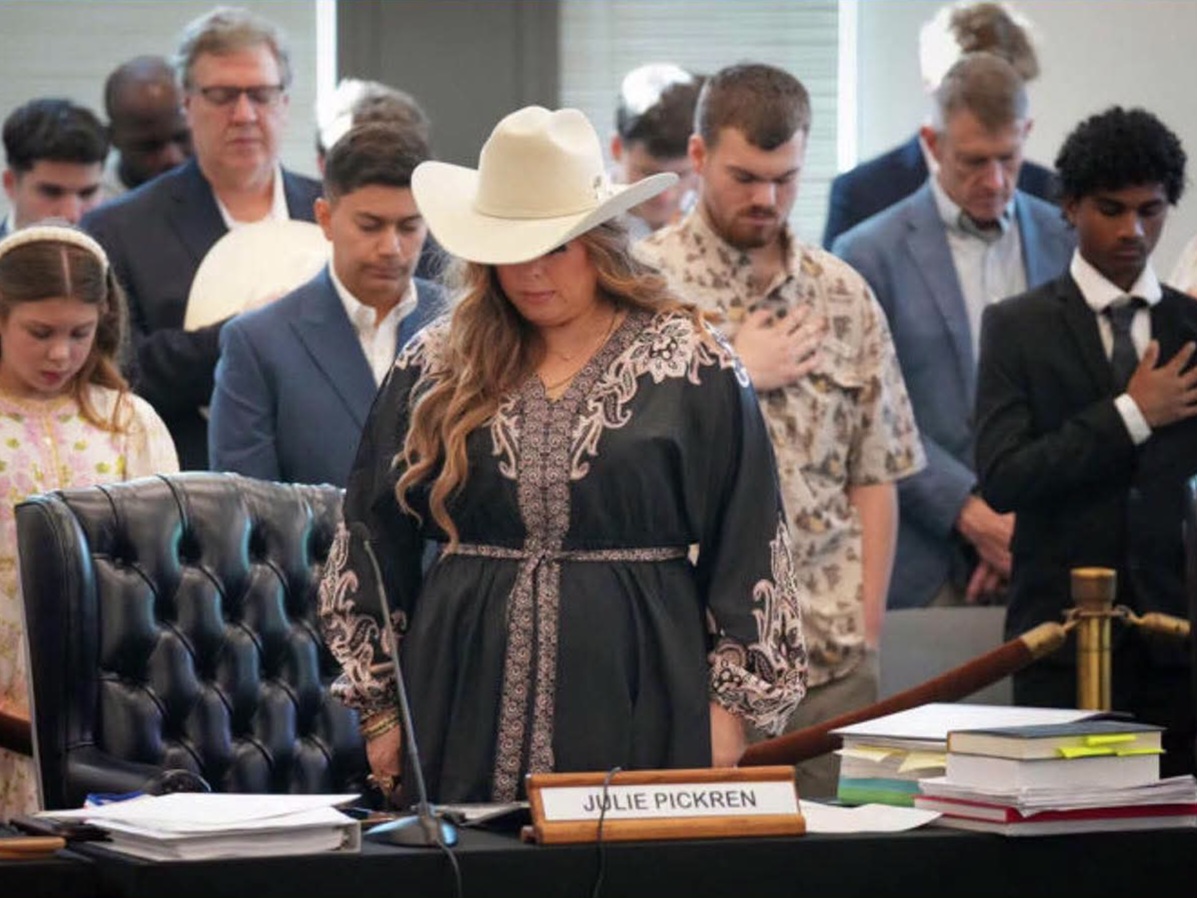
The Texas State Board of Education has approved a sweeping overhaul of its public school standards, mandating the integration of biblical teachings and Christian concepts into the curriculum for the state’s 5.5 million students.
Following months of intense public debate, the Republican-controlled board voted 9-5 to adopt a strict, mandatory reading list for all grade levels alongside revised social studies standards for kindergarten through eighth grade. The decision represents one of the most aggressive efforts in modern U.S. history to institutionalize Christian teachings within public education.
The new standards will heavily influence future textbooks and statewide standardized testing. The state plans to phase in the curriculum over the coming years, beginning with elementary schools in the 2030-2031 academic year.
Proponents See Historical, Moral Foundation
Supporters argue that the curriculum restructure is a necessary step to reinforce Judeo-Christian values and deepen students’ understanding of American history and Western moral foundations. The new guidelines require explicit lessons on foundational biblical figures, including Jesus, Abraham, and Moses.
”We are bringing the Bible back into schools this week for the first time in 60 years,” said board member Brandon Hall (R-Aledo) during a prayer session ahead of the vote.

However, the Republican voting bloc was not entirely unanimous. Board member Evelyn Brooks (R-Frisco) broke ranks to vote against the mandatory reading list, expressing concern that the rigid requirements would strip local teachers of their classroom autonomy.
Critics Warn of Constitutional Violations
Civil liberties advocates and religious minorities have fiercely condemned the board’s decision, arguing that the standards explicitly favor Christianity in violation of the First Amendment’s Establishment Clause.
”Texas is telling millions of children that one religion deserves the government’s seal of approval, while everyone else is an afterthought,” said Annie Laurie Gaylor, president of the Freedom From Religion Foundation. “That’s government-sponsored religious favoritism—and the First Amendment strictly forbids it.”
Beyond legal questions, educators and advocacy groups warn that the curriculum marginalizes minority faiths and whitewashes cultural diversity.
- Jewish Community Concerns: Jewish leaders raised alarms over the instructional framing, warning that pairing specific biblical texts with lessons on the Holocaust could inadvertently foster antisemitism.
- Muslim Community Concerns: Islamic advocacy groups criticized the curriculum for disproportionately linking Islam to historical and modern conflict while erasing its intellectual legacy.
”You have tied Muslim history to warfare, piracy, and radicalism, then voted on purpose to strip out the algebra and astronomy contributions Muslims have made,” said Amina Ishaq of the Fort Bend Coalition for Justice during public testimony. “You have decided which children inherit greatness and which only inherit suspicion.”
Centralized Reading Lists and Curriculum Shifts
The mandate signals a major shift in how Texas manages public education. Texas is now the only state in the nation to dictate a uniform, statewide literature reading list rather than leaving those decisions to local school districts and certified educators.
Depending on their grade level, students will be required to study up to 30 state-prescribed texts, including roughly a dozen specific biblical passages. Under the new framework, second graders will study the story of David and Goliath, while tenth graders will analyze the Book of Job.
Literacy advocates and educators have questioned the logistics of the rigid mandate. Diane Miller of the Texas Council of Teachers of English Language Arts warned that the exhaustive reading lists “will eat up weeks of valuable instructional time,” calling the policy “a bridge too far to cross.”
Accelerated History Timelines
The newly adopted social studies curriculum also pivots away from skills-based learning—such as mastering cardinal directions or building timelines—in favor of rote historical knowledge introduced at much earlier ages.
Under the revised benchmarks:
- First Grade: Students will be introduced to complex historical conflicts, including slavery and the American Civil War.
- Second Grade: The curriculum introduces the American Revolution and the War of 1812.
- Third Grade: Lessons will shift to ancient civilizations, focusing heavily on ancient Israel, Greece, Rome, and the Ten Commandments.
The decision builds upon previous efforts by Texas lawmakers to expand religion in schools, following controversial initiatives like the optional, Bible-infused “Bluebonnet” instructional series and laws requiring the display of the Ten Commandments. However, unlike prior voluntary programs, these new standards will be strictly compulsory for all Texas public and charter schools. Legal challenges from civil rights organizations are widely expected before the curriculum’s scheduled 2030 rollout.
Do you want to advertise with us?
Do you need publicity for a product, service, or event?
Contact us on WhatsApp +2348033617468, +234 816 612 1513, +234 703 010 7174
or Email: validviewnetwork@gmail.com
CLICK TO JOIN OUR WHATSAPP GROUP