



The Triumph of the Will
There are elections that change governments. Then there are elections that expose the limits of political power. Osun’s August 15 governorship election increasingly belongs to the second category.
Governor Ademola Adeleke’s victory was not merely the triumph of Accord over the APC. It was a demonstration of what happens when an electorate becomes convinced that its vote is the last piece of political property it truly owns.
For months, Osun voters were told, directly and indirectly, to consider the machinery behind the contest. They watched political heavyweights enter the race. They heard arguments about federal might. They witnessed the controversy surrounding the freezing of state government accounts. They watched the redeployment of the state Commissioner of Police after concerns were raised about his neutrality.They heard the rhetoric.
Then they voted.And the most powerful machinery on election day turned out to be the voter. ValidViewNetwork reports that Ademola Adeleke won 19 of Osun’s 30 local government areas, while APC candidate Bola Oyebamiji secured 11, according to the results announced during collation.
The numbers tell a compelling story.Adeleke dominated several areas that supplied the election’s biggest margins. Ede North gave him 35,427 votes against Oyebamiji’s 10,283. Ede South produced 26,188 against 6,219, while Osogbo gave Adeleke 36,480 against 30,474.
But this was not a political massacre.Oyebamiji won significant APC strongholds, including Ilesa East, Boripe, Irepodun, Obokun, Atakumosa West, Atakumosa East, Irewole, Isokan, Ola-Oluwa, Ife South and Olorunda.
That matters because it shows that Osun voters were not simply swept along by one political emotion.They made choices.
Adeleke courted voters. APC courted influence
Perhaps the most revealing difference between the two campaigns was strategic. Adeleke increasingly presented himself as a candidate whose strength came from the electorate. He kept returning to communities, leaning heavily on grassroots mobilisation and making the people’s mandate the centre of his campaign.APC, meanwhile, expended considerable political energy securing the support and endorsements of established political figures and influential personalities.
There is nothing inherently wrong with that. Endorsements matter when they can produce organisation, mobilisation, resources or actual votes.But there is a fundamental difference between political influence and transferable votes.
A political heavyweight can endorse a candidate before thousands of people.The voter still enters the polling booth alone.
That distinction became important in Osun. ValidViewNetwork reports that the election exposed the danger of confusing access to influential people with access to the people themselves.
A former governor can endorse you. A respected elder can stand beside you. A political heavyweight can publicly raise your hand.
But none of them enters the voting cubicle with the electorate. Adeleke was building a relationship with voters. APC was building a coalition of influential people.
The electorate listened to both and ultimately made its own calculation. That is a lesson Nigerian political parties should study carefully.
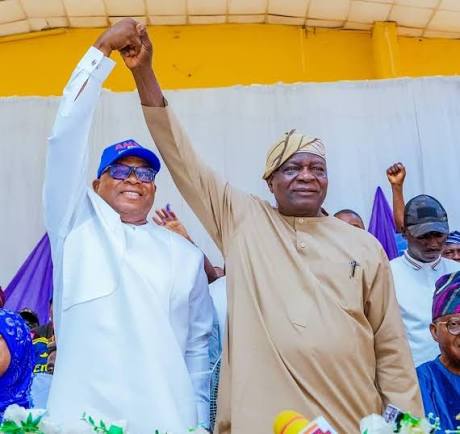
The election began long before August 15
The battle had been building for months. Adeleke repeatedly warned against attempts to use federal institutions or political influence to undermine the electorate’s choice.
APC rejected such allegations and campaigned on the argument that Adeleke’s administration had failed to deliver adequately.
Then came the controversy surrounding the freezing of Osun State Government accounts by the EFCC. President Bola Tinubu subsequently directed the EFCC to return to court and seek the lifting of the order.
That intervention became politically significant because Osun voters were watching the relationship between Abuja and Osogbo closely.
There was also the controversy over the deployment of the Commissioner of Police and the wider concerns surrounding security neutrality.
None of this, by itself, proves that the Federal Government plotted against Adeleke or attempted to manipulate the election.
But politics is also about perception. And the perception created by months of political confrontation mattered.
The rhetoric of federal power
The APC had something its opponents could not match: control of the federal government. That should have been an advantage. But political power becomes dangerous when voters begin to interpret it as a threat.
The repeated language around federal might allowed Adeleke to present the election as a struggle between the people’s choice and an establishment determined to reclaim Osun.
That framing was politically effective. It turned the APC’s greatest structural advantage into one of Adeleke’s strongest campaign arguments.
The question became less about which party had the bigger machinery and more about whether that machinery could override the wishes of the electorate. It could not.
Fadahunsi and the politics of intimidation
Senator Francis Fadahunsi became one of the most controversial voices in the campaign. His comments and the videos that circulated around the election became part of the broader atmosphere of political tension.
In a video circulated after he voted, Fadahunsi was heard telling people to monitor voters and establish which party each person supported, adding that anyone who did not vote APC was not a “true Ijesha” person.
If accurately represented, the statement captured precisely the kind of political thinking that can alienate an electorate.
A secret ballot is not a loyalty examination. An Ijesha person does not become less Ijesha because he votes Accord. An Osun citizen does not become less Osun because she votes APC.
The vote belongs to the voter. And when political rhetoric suggests otherwise, voters can respond in ways politicians do not anticipate.

Then the people stayed Awake
This may ultimately be the most important part of the Osun story. The electorate did not simply vote and go home.Citizens monitored polling units. They followed collation. They compared announced figures with results from polling units.
At various locations, voters and supporters remained around collation centres late into the night because they wanted to see their votes through the process.
When tension emerged, people demanded explanations. When irregularities were alleged, they demanded clarification. When results were being uploaded, citizens followed them in real time.
This does not mean every allegation made during the election was automatically true. It means something more profound happened. The electorate became a watchdog over its own election. The vote was cast at the polling unit. The second battle was ensuring that the vote survived the journey to collation.

That civic vigilance made it much harder for competing political interests to operate in darkness.

Olajengbesi understood the new political battlefield
Pelumi Olajengbesi, spokesperson of the Imole Campaign Council, became one of the most visible young voices in Adeleke’s campaign. His importance was not simply his defence of Adeleke.
He understood that the election was also being fought in the information space. When allegations emerged, the campaign needed an immediate response.
When narratives changed, somebody had to occupy the space before misinformation did.Olajengbesi did that relentlessly. He also publicly thanked President Tinubu for what he described as his fatherly support.
Whether that reflected information from private political channels or was simply strategic diplomacy cannot be established from the public record. But it was politically significant. It reinforced the unusual reality of Osun politics: Adeleke could campaign against the President’s party while simultaneously maintaining a political bridge to the President.
That bridge mattered.

Tinubu’s Osun calculation
There is no responsible basis for declaring that Tinubu secretly worked for Adeleke. But there is equally little sense in pretending Nigerian politics operates purely through party labels.
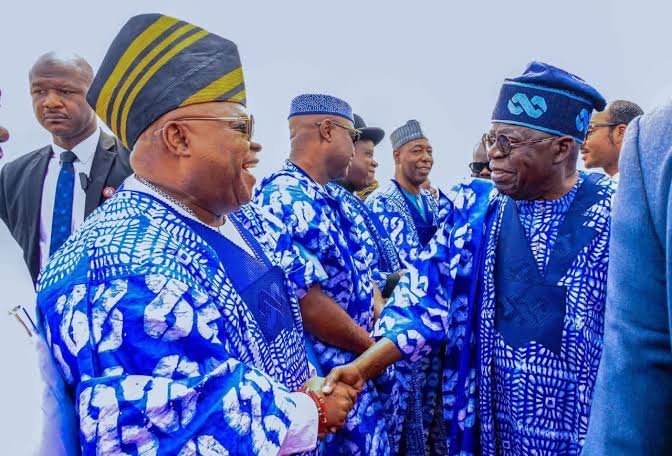
Adeleke had publicly supported Tinubu’s 2027 presidential ambition. The President intervened over the frozen Osun accounts.
There were also reports that Tinubu spoke with Adeleke during the tense election period, although some of the details surrounding those reports remain unconfirmed.
The political incentives are obvious. Tinubu needs goodwill beyond APC.Adeleke commands considerable support in Osun. Destroying a potentially useful political relationship would carry a cost. That does not prove that Tinubu abandoned APC.
It suggests something more sophisticated: a president can support his party while simultaneously protecting his broader political interests. And those interests extend beyond one state governorship.
“No More Baba Sope”
This is where the phrase acquires its deeper meaning.
“No More Baba Sope” is not merely a slogan against one individual. It is a rejection of the idea that political leaders can determine the future of a people without the people themselves.
It says:You may have your godfathers. We have our votes.It says: You may control the machinery. We control the ballot. And perhaps most importantly: We do not want a governor who is merely taking instructions from somewhere else.
That message should concern political establishments across Nigeria. Voters are becoming increasingly suspicious of politicians who campaign as representatives of the people but govern as representatives of political patrons.
They want governors who can negotiate with Abuja without becoming Abuja’s puppets.
They want leaders capable of disagreeing with their own political camp when the interests of their people demand it.
Davido kept the spotlight on
Davido’s role was different but equally significant. He was openly partisan. There is no need to disguise that. But his intervention demonstrated the changing nature of political accountability.
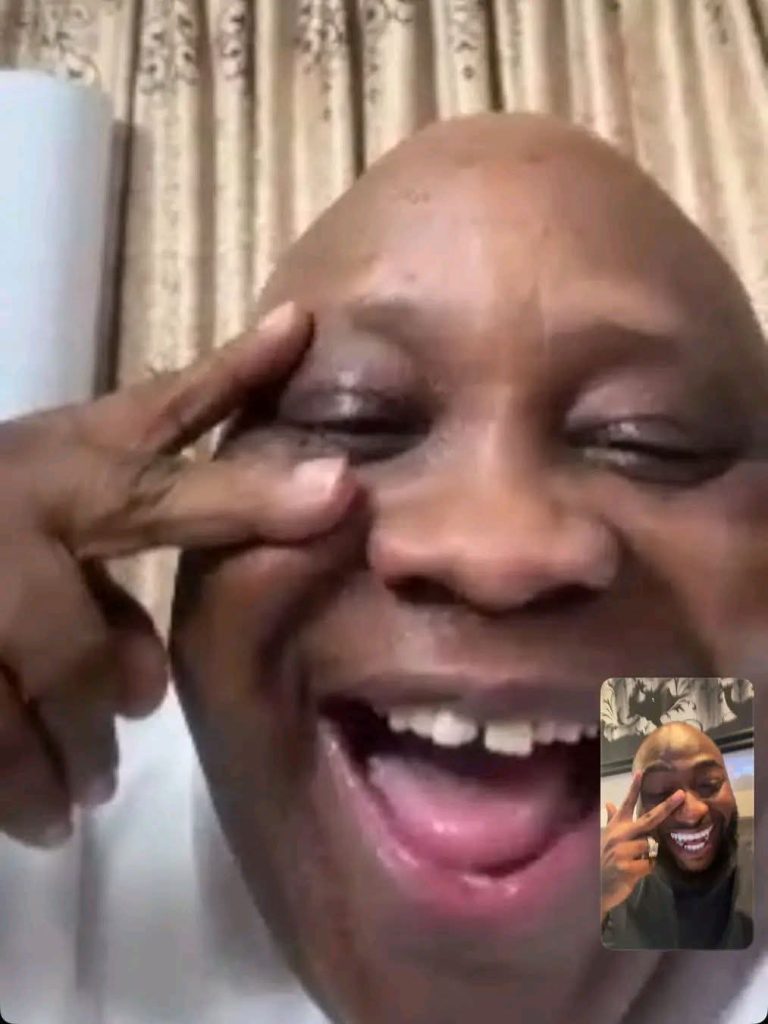
With millions of followers watching, he repeatedly drew attention to the election and the collation process. When tension rose around the counting and collation of results, his social media interventions helped ensure that developments in Osun remained under public scrutiny.
The old political structure had governors, senators, ministers and party leaders. The new one also has smartphones, influencers, lawyers, activists and ordinary citizens who can broadcast an event before an official statement is prepared. That changes the balance of power.
Davido kept the spotlight on
Davido’s role was different but equally significant. He was openly partisan. There is no need to disguise that.
But his intervention demonstrated the changing nature of political accountability.
With millions of followers watching, he repeatedly drew attention to the election and the collation process.
When tension rose around the counting and collation of results, his social media interventions helped ensure that developments in Osun remained under public scrutiny.
The old political structure had governors, senators, ministers and party leaders. The new one also has smartphones, influencers, lawyers, activists and ordinary citizens who can broadcast an event before an official statement is prepared.
That changes the balance of power.
The real winner is the voter
Osun has now produced a lesson that extends beyond Adeleke, Oyebamiji, APC or Accord. For years, Nigerians have been told that elections are decided by godfathers.
That political structures are too powerful. That federal influence is overwhelming. That ordinary people cannot compete.
Osun offered a different answer. They can.But only if they vote. Only if they watch. Only if they organise. Only if they document. Only if they refuse to disappear after voting.
The people of Osun did not possess a bigger political machine than APC. They simply demonstrated that a machine cannot vote. People do.
APC’s real task begins now
The easiest response would be to blame Adeleke’s popularity, Davido, social media or alleged sympathy from Abuja. That would be intellectual laziness.
APC needs to ask harder questions. Why did its considerable political structure fail to translate into statewide support? Why did endorsements from influential figures fail to produce enough votes? Why did federal power become part of the opposition’s campaign narrative? Why did its messaging sometimes sound more like a struggle for control than a programme for governance?
Do you want to advertise with us?
Do you need publicity for a product, service, or event?
Contact us on WhatsApp +2348033617468, +234 816 612 1513, +234 703 010 7174
or Email: validviewnetwork@gmail.com
CLICK TO JOIN OUR WHATSAPP GROUP
And most importantly :Why did enough Osun voters conclude that APC’s return to power was less desirable than Adeleke’s continuation?
Those are questions only APC can answer.Osun’s message to Nigeria
The greatest significance of Osun 2026 may therefore not be who won the Government House. It may be what the electorate demonstrated. To political parties, it says influence is not the same as votes. To godfathers, it says endorsements cannot replace grassroots legitimacy.
To security agencies, it says citizens are watching. To INEC, it says every unexplained discrepancy will be scrutinised. To politicians who have become accustomed to treating voters as political inventory, it says the relationship has changed.
And to Nigerians who have become cynical about elections, Osun offers something precious: Hope.
Power still resides with the people. But the people must be willing to use it. Osun voters did. They looked at political machinery, federal influence, powerful names and familiar structures. Then they entered the polling booths and made their own decisions.
Perhaps that is the real story of August 15. Not that one politician defeated another. But that ordinary people demonstrated what extraordinary political courage can look like when citizens decide that their votes belong to them.
ValidViewNetwork reports that the lesson from Osun should not be lost on political parties preparing for the elections ahead.
Political power is temporary.Political endorsements expire. Godfathers leave the stage.Governments change. But the people remain.
And when they finally decide to speak with their ballots, even the most intimidating political machinery can discover that it was never as powerful as it thought.
No more Baba Sope. Not because the people have become stronger than power. But because they have remembered where legitimate power comes from.