



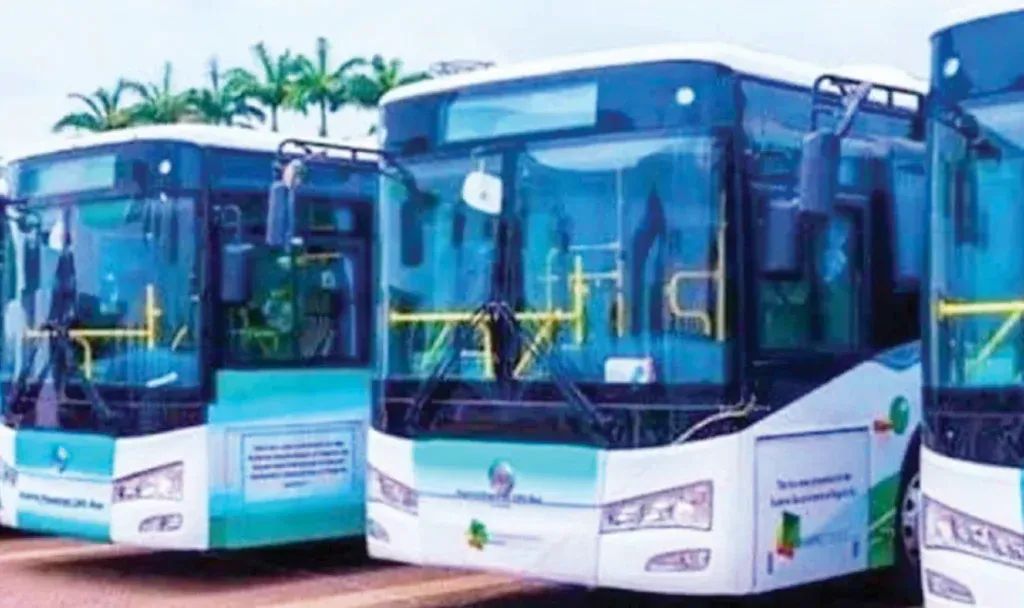
Public transport fares on participating routes under the Federal Government’s compressed natural gas (CNG) transition initiative have dropped by 15% to 50%, bringing much-needed relief to commuters grappling with high travel costs.
The Presidential Initiative on Compressed Natural Gas and Electric Vehicles (PI-CNG & EV) announced this milestone during a stakeholder and media engagement held in Kano on Thursday. The event was organized by the Decade of Gas Secretariat in collaboration with PI-CNG & EV to highlight progress in Nigeria’s cleaner energy and transportation sectors.
Expanding Infrastructure and Deployment
According to PI-CNG & EV Chief Operating Officer Tosin Coker, 670 CNG-powered buses have been deployed nationwide. Of this total:
- 285 buses are currently operating commercially across 13 states.
- 302 buses have been formally allocated to transport unions, student bodies, and government agencies.
Coker emphasized that while CNG plays a vital role in reducing transportation costs and advancing cleaner mobility, safety remains paramount. He urged vehicle owners to utilize certified conversion centres and approved equipment while ensuring proper vehicle maintenance. Furthermore, the initiative confirmed that hundreds of additional CNG buses and tricycles are already on order to scale up accessibility.

To support this expanding fleet, plans are underway to construct 127 new CNG refuelling stations across 31 states and the Federal Capital Territory. Kano State is emerging as a critical northern hub for cleaner mobility, currently hosting seven operational refuelling stations with 17 more nearing completion, alongside an additional deployment of 25 commercial buses.
Growth in Nigeria’s Gas Sector
Providing broader industry updates, Taofeek Balogun, Workstream Lead for Infrastructure and Demand at the Decade of Gas Secretariat, noted significant strides in the country’s gas reserves and production:
Do you want to advertise with us?
Do you need publicity for a product, service, or event?
Contact us on WhatsApp +2348033617468, +234 816 612 1513, +234 703 010 7174
or Email: validviewnetwork@gmail.com
CLICK TO JOIN OUR WHATSAPP GROUP
- Gas Reserves: Proven reserves grew from 208.83 trillion cubic feet in 2023 to 215.19 trillion cubic feet as of January 2026.
- Production: Average gas production climbed from 6.86 billion to 7.5 billion cubic feet per day, with domestic supply surpassing two billion cubic feet daily.
- Investments & Projects: Four major gas projects have secured $3.5 billion in committed investments. Additionally, the OB3 Gas Pipeline has been completed, and the Ajaokuta-Kaduna-Kano (AKK) Gas Pipeline stands at approximately 95% completion.
Stakeholders at the event commended the collaborative push toward sustainable energy, noting that public infrastructure funding of N671 billion has successfully attracted roughly N1.6 trillion in private investment as the government targets reaching five million households under its liquefied petroleum gas (LPG) programme by 2030.