



Why Dele Momodu says Adeleke is different
The political argument around Ademola Adeleke’s Osun victory has refused to disappear. Instead, it has moved beyond the ballot box into a broader debate about political strength, alliances and the influence of powerful actors.
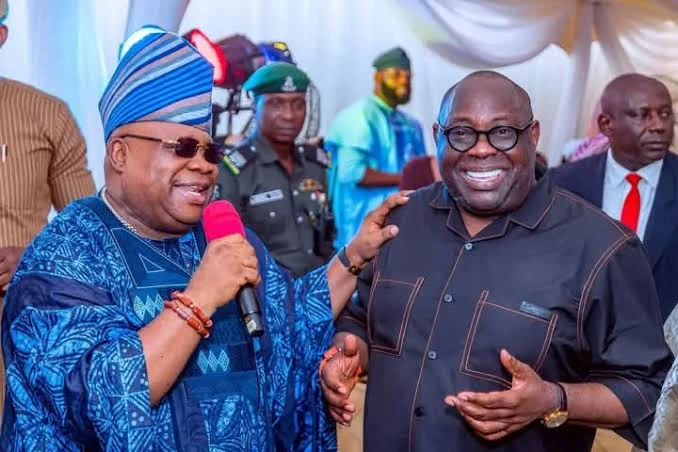
Former presidential aspirant Dele Momodu has now entered that debate. Momodu warned against comparing Adeleke with Rivers State Governor Siminalayi Fubara while responding to comments attributed to FCT Minister Nyesom Wike.
“Osun people would have demystified you mercilessly. Adeleke is not Fubara,” Momodu wrote on X.
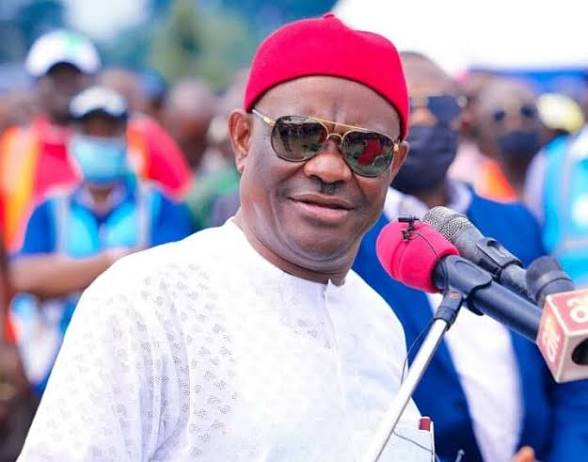
His intervention followed Wike’s claim that the APC could have won Osun if President Bola Tinubu had wanted the victory “at all costs.”
The Osun result behind the argument
Adeleke won the election on the Accord platform with 511,067 votes. APC candidate Bola Oyebamiji finished with 444,815 votes. The result gave Adeleke a second term after he defeated former Governor Gboyega Oyetola in the 2022 election.
The political significance goes beyond the figures. Adeleke had already survived a difficult political transition after leaving the PDP and moving to Accord.
He then faced the APC, which had presented Oyebamiji as its candidate after a high-profile primary process chaired by Edo Governor Monday Okpebholo. The election therefore became a test of whether political machinery could overcome incumbency, local sentiment and voter mobilisation.
Momodu’s unusual position

Momodu’s intervention is particularly interesting because he belongs to the ADC. Yet before the election, he openly urged opposition parties to support Adeleke. He argued that opposition parties needed to unite against the APC rather than allow their differences to divide the anti-APC vote.
That position placed him in an unusual political space. He belonged to one opposition party while supporting a candidate from another.
ValidViewNetwork reports that his latest comments therefore carry more weight than a routine congratulatory message..They reflect an argument about the character of political power in Nigeria.
Why the Fubara comparison matters
Fubara’s political experience has been shaped heavily by his long-running conflict with Wike. That conflict became one of Nigeria’s most dramatic political battles.
Rivers politics eventually involved disputes over the legislature, executive authority, local government administration and political succession.
Osun followed a different path. Adeleke’s contest centred more heavily on election machinery, party realignment, incumbency and the struggle over voter support.
Momodu’s point is therefore simple. Political situations cannot always be transferred from one state to another. What worked in Rivers may not work in Osun. What weakened one governor may strengthen another.
The larger lesson
Nigerian politics often encourages politicians to look for templates. That habit can be dangerous. States have different political histories, personalities, ethnic structures, party systems and voter behaviour.
Do you want to advertise with us?
Do you need publicity for a product, service, or event?
Contact us on WhatsApp +2348033617468, +234 816 612 1513, +234 703 010 7174
or Email: validviewnetwork@gmail.com
CLICK TO JOIN OUR WHATSAPP GROUP
Osun has now produced its own political lesson. A governor who entered office after defeating an incumbent has survived another major election and secured another term.
Whether Adeleke converts that victory into stronger governance remains the more important question. Political victory is temporary. Governance is the real test, ValidViewNetwork reports.