



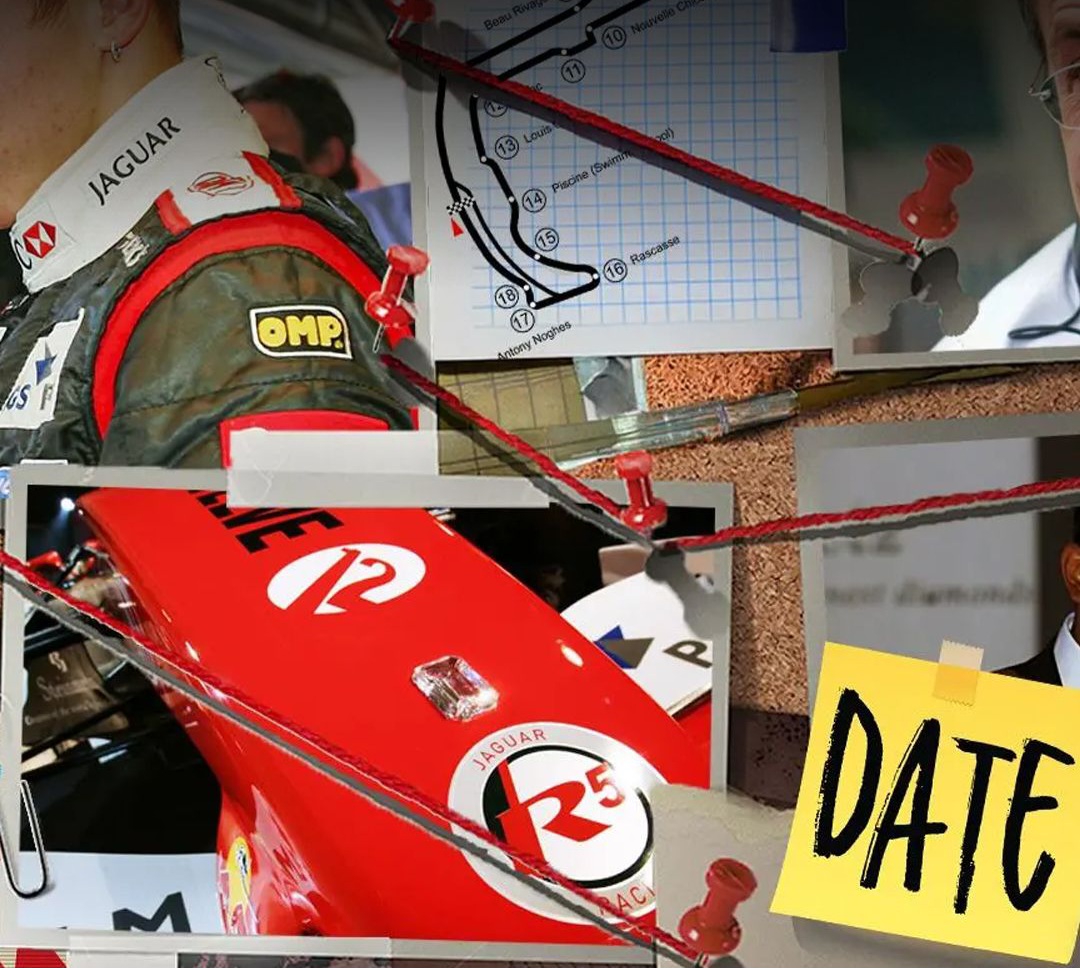
MONACO — More than twenty-two years after a $300,000 diamond vanished into thin air during the opening lap of the 2004 Monaco Grand Prix, the fate of the precious stone remains Formula 1’s most enduring unsolved mystery.
What began as an audacious Hollywood publicity stunt to save a struggling racing team quickly spiraled into a real-life whodunit worthy of the heist movie it was meant to promote.
A Desperate Gambit for Glamour
In early 2004, Jaguar Racing was in crisis. Following years of lackluster performances since entering the sport in 2000, parent company Ford had quietly decided to pull the plug on the team, leaving team principal Tony Purnell with the unenviable task of finding a buyer before the outfit was shut down entirely.
Desperate to generate positive headlines and distract sponsors from poor on-track results, Jaguar’s director of communications, Nav Sidhu, looked to Hollywood. Having previously orchestrated a successful Terminator 3 tie-in at Silverstone, Sidhu struck a deal with legendary producer Jerry Weintraub to promote the upcoming blockbuster Ocean’s Twelve, which was filming on location in Monte Carlo and starred George Clooney, Brad Pitt, and Matt Damon.
Because the movie’s plot centered on the theft of a diamond-encrusted Fabergé egg, Sidhu partnered with luxury jeweler Steinmetz to mount real, 1.4-carat diamonds—worth roughly $300,000 apiece at the time, or nearly $1 million combined in today’s market—directly onto the nose cones of Jaguar’s two race cars. Steinmetz actually supplied five button-sized stones to accommodate spare nose cones throughout the weekend, alongside a larger showcase gem reserved strictly for paddock photo ops.
Disaster at the Hairpin
On Sunday, May 23, 2004, experienced Australian driver Mark Webber lined up 11th on the grid, while 21-year-old Austrian rookie Christian Klien—competing in just his sixth Formula 1 race—started 14th.
Monaco’s narrow, barrier-lined street circuit is notoriously unforgiving. Within moments of the lights going out, chaos erupted. Exiting the Mirabeau corner on the very first lap, Klien tangled with a Jordan car, damaging the front end of his Jaguar—right where the steel-encased diamond was embedded—before sliding into the barriers at the famous Loews hairpin.
Klien walked away unhurt, and track marshals swiftly used a crane to hoist the crumpled car behind the safety barriers. However, strict race regulations prevented Jaguar personnel from accessing the track or retrieving the wreckage until the remaining 76 laps were completed.
For an agonizing ninety minutes, Sidhu fielded frantic phone calls from Steinmetz executives asking if their uninsured gem was safe. When the checkered flag finally fell and team members rushed to inspect the car, the steel casing was empty. Broadcast replays later revealed that Klien’s nose cone was already damaged coming out of Mirabeau, meaning the stone could have dislodged anywhere between the corner and the hairpin.
Theories, Rumors, and Accidental Genius
In the decades since, conspiracy theories have flourished. Skeptics have long claimed the stone was a cubic zirconia decoy, or that Klien crashed deliberately as part of an elaborate insurance scam.
Both Purnell and Sidhu firmly dismiss the rumors. Jaguar managing director David Pitchforth personally tested the gem before the race by scratching a glass office window with it, proving its authenticity. Furthermore, Sidhu notes that repairing the wrecked car cost far more than the diamond itself, and a rookie driver fighting for his career would never intentionally throw away a race.
What actually happened to the stone remains anyone’s guess:

- A Souvenir Hunter’s Jackpot: Within an hour of the race finishing, Monaco’s streets were reopened to the public. Spectators routinely scour the tarmac for scraps of shredded tire rubber as keepsakes; someone may have pocketed the stone without realizing what it was—or recognized it immediately and kept quiet.
- Shattered or Swept Away: Despite being the hardest natural substance on Earth, diamonds are brittle and can fracture upon sharp, high-velocity impact. Purnell has suggested the stone may have shattered at 100 mph or been swept into Monte Carlo’s storm drains by street-cleaning trucks.
Ironically, the missing jewel turned out to be the exact miracle Jaguar needed. Both Klien and Webber failed to finish the race, which would normally have triggered a crisis meeting with sponsors like HSBC. Instead, global media coverage completely ignored Jaguar’s dismal performance—and even Jarno Trulli’s race victory—to obsess over the missing diamond.
Do you want to advertise with us?
Do you need publicity for a product, service, or event?
Contact us on WhatsApp +2348033617468, +234 816 612 1513, +234 703 010 7174
or Email: validviewnetwork@gmail.com
CLICK TO JOIN OUR WHATSAPP GROUP
The worldwide publicity demonstrated the team’s massive commercial reach. Six months later, energy drink giant Red Bull purchased the team, transforming the outfit into a Formula 1 dynasty that has since captured eight drivers’ titles and six constructors’ championships. Somewhere out there, a piece of that dynasty’s origin story is still sitting in someone’s drawer.
For a quick visual breakdown of the incident and the missing gem, watch In 2004 an F1 car lost a diamond worth a reported $250,000 on lap 1 at Monaco, which summarizes Christian Klien’s opening-lap crash and how Jaguar’s promotional stunt turned into an unsolved mystery.