

A prominent Malian journalist has been sentenced to two years in prison after publicly discussing the jihadist control of a key northern city, in the latest escalation of the military junta’s crackdown on critical reporting.
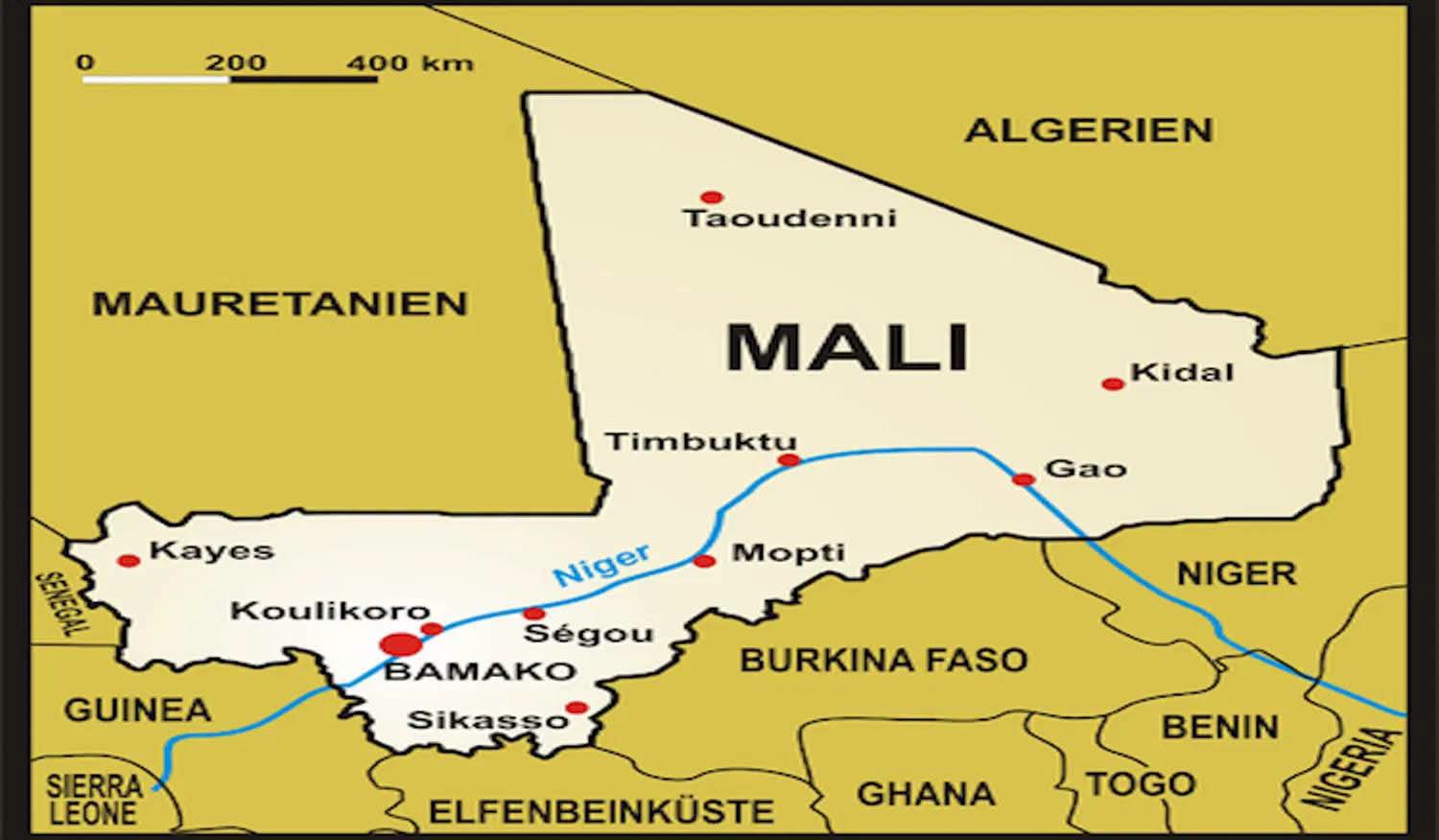
Abdrahamane Keïta, publishing director of the independent daily Le Témoin, was convicted on Monday by the specialised cybercrime court in Bamako. He was found guilty of a “regionalist offence tending to undermine national unity and the credibility of the state” and of “publishing and disseminating false or misleading information” through an information system.
The court also ordered him to pay one million CFA francs (about $1,760) in damages to the state.
Keïta has been held since his arrest on 9 June. His lawyer has confirmed that the defence will appeal the verdict.
The case stems from remarks Keïta made days earlier on the popular television debate programme Grand Jury on Renouveau TV.
Discussing the deteriorating security situation in northern Mali, he stated that the city of Kidal was being “administered” by the Al-Qaeda-linked Group for the Support of Islam and Muslims (JNIM), whose leader is Iyad Ag Ghaly. At his trial on 7 September, Keïta argued that he had merely repeated a term already used by another participant on the programme and denied personally spreading false information.
The comments came against a backdrop of dramatic losses by government forces. In late April, JNIM fighters and their Tuareg separatist allies from the Azawad Liberation Front (FLA) launched coordinated attacks that drove Malian troops and their Russian partners out of Kidal.
The offensive also claimed the life of the defence minister. Independent reports and conflict monitors have since described the city as under the de facto control of the jihadist coalition.

Reporters Without Borders (RSF) immediately denounced the conviction as “unjust” and a “new way of criminalising journalism.” Sadibou Marong, head of RSF’s sub-Saharan Africa bureau, said the ruling “sends out a particularly troubling signal to media professionals in Mali and the region.” The organisation urged the authorities to stop using the justice system against journalists.
Keïta’s prosecution forms part of a wider pattern. Mali’s military rulers, who seized power in successive coups in 2020 and 2021, have increasingly relied on the 2019 cybercrime law to target critical voices. The legislation’s broad provisions have been used against several other journalists in recent months, including Chahana Takiou of 22 Septembre and Youssouf Sissoko of L’Alternance, both of whom faced similar charges of undermining state credibility.
Political parties have been dissolved and civil-society groups restricted as the junta consolidates control amid a long-running security crisis driven by jihadist groups linked to Al-Qaeda and the Islamic State, as well as armed separatists and criminal gangs.
The conviction of a well-known editor for describing a military setback that is widely documented underscores the shrinking space for independent reporting in Mali. As the security situation remains precarious, the message to the press appears clear: acknowledging the limits of state control in the north carries a heavy personal price.
Do you want to advertise with us?
Do you need publicity for a product, service, or event?
Contact us on WhatsApp +2348033617468, +234 816 612 1513, +234 703 010 7174
or Email: validviewnetwork@gmail.com
CLICK TO JOIN OUR WHATSAPP GROUP