



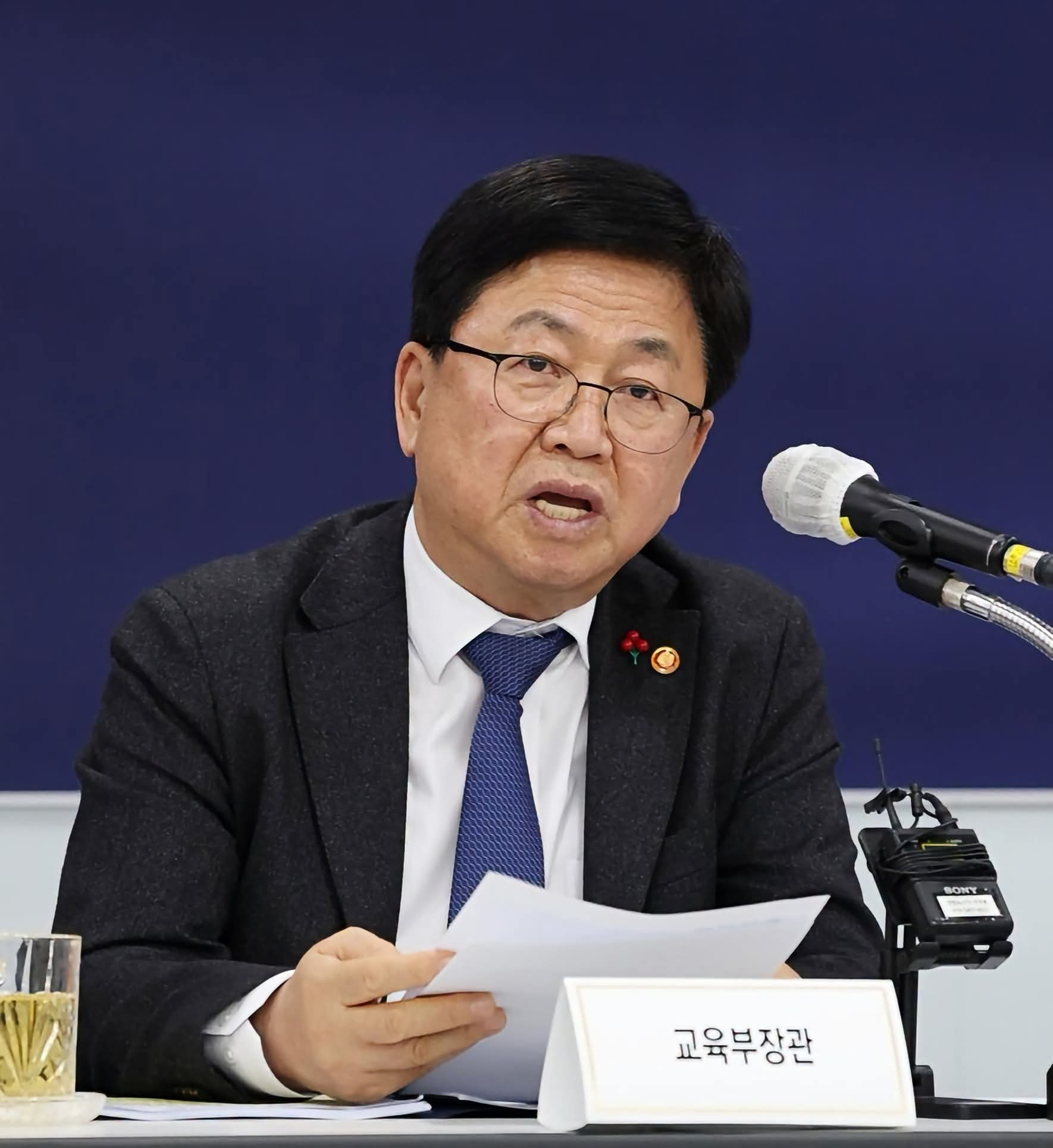
South Korea’s Education Minister Choi Kyo-jin resigned on Sunday after taking full responsibility for the confusion and anxiety caused by last-minute anti-cheating measures introduced ahead of last week’s high-stakes college entrance exam.
President Lee Jae Myung accepted the resignation within about an hour. The presidential office said Lee instructed Prime Minister Han Seong-sook to oversee all follow-up actions related to the test, known as the Suneung or College Scholastic Ability Test (CSAT). The search for a successor will begin immediately under standard procedures.
The drama unfolded after a 34-year-old top scorer in the national tax accountant certification exam admitted on November 15 that he had used a miniature camera to photograph questions, transmitted them to artificial intelligence systems, and checked answers on a smartphone. His near-perfect result—only one wrong answer out of 160 questions—had already raised suspicions.
The confession, coming just four days before the Suneung, triggered a scramble. Authorities rushed to tighten security for the roughly 500,000 students sitting the day-long exam on November 19. Measures announced in rapid succession included:
Deploying more than 8,000 extra personnel, including device detectors and hallway proctors
Ordering candidates to cover clothing buttons with stickers to block possible hidden cameras
Restricting writing instruments to plain pencils only and banning previously allowed items such as correction tape and mechanical pencil leads
Sending three nationwide emergency disaster alerts during the test to flush out any phones that had not been surrendered
Intensifying checks on glasses and other potential smart devices
Education officials later reported that 111 candidates were found in possession of unauthorised electronic devices. Roughly half of those cases were detected through the emergency alerts.
The late changes drew sharp criticism from students, teachers and parents, who said the shifting rules heightened stress around an already pressure-filled exam that largely determines university admission and future career paths. Choi himself faced backlash after telling a parliamentary committee days earlier that he could not guarantee 100 per cent detection of AI-assisted cheating, adding that his age made him less confident.
In his resignation statement, Choi acknowledged the shortcomings. “Various changes arose with the exam just ahead, causing inconvenience to the public, including test-takers,” he said. “As the minister in charge, I believe I cannot escape criticism that we failed to prepare in advance. Now that the exam has concluded, I feel a deep sense of responsibility and am offering my resignation.”

The ministry’s examination misconduct committee is reviewing the 111 cases and will decide penalties before scores are released on December 11. President Lee has stressed that exam fairness remains non-negotiable and has ordered a broader review of how national tests and school assessments guard against AI-enabled cheating.
Choi’s departure marks the latest high-profile political cost of South Korea’s struggle to keep its intensely competitive education system secure in the age of generative artificial intelligence.
Do you want to advertise with us?
Do you need publicity for a product, service, or event?
Contact us on WhatsApp +2348033617468, +234 816 612 1513, +234 703 010 7174
or Email: validviewnetwork@gmail.com
CLICK TO JOIN OUR WHATSAPP GROUP