



By Kayode Ogunjobi
From Abidagba in Ogun to Tapa in Oyo, clandestine drug factories expose dangerous gaps in forest governance, public health protection and national security. With investigations extending to Ebonyi and Enugu, questions mount over institutional silence, community vigilance and the future of Nigeria’s forests.
A forest should be a sanctuary for life, not a factory for addiction. It should protect biodiversity, regulate the climate, preserve water resources and sustain livelihoods. It should never become a concealed industrial facility where criminal syndicates manufacture substances capable of destroying human lives and threatening national security.
Yet, Nigeria is confronting this disturbing reality.
The discovery of industrial scale methamphetamine laboratories hidden in forests in Ogun and Oyo States has exposed a dangerous intersection of international drug trafficking, environmental degradation, public health risks and organised crime. Subsequent investigations in Ebonyi and Enugu States have further widened the geographical scope of concern.
What makes these discoveries particularly alarming is the apparent sophistication of the operations and the involvement of foreign technical specialists working with Nigerian collaborators.
When forests become laboratories for meth, the consequences extend far beyond the people who consume the drugs. They threaten surrounding communities, water sources, vegetation, wildlife and the security of the nation.
ValidViewNetwork reports that these discoveries should not be celebrated merely as successful drug enforcement operations. They should trigger a comprehensive investigation into how criminal organisations gained access to such locations and established sophisticated production facilities.
FROM OGUN TO OYO: THE DISTURBING DISCOVERIES
The National Drug Law Enforcement Agency (NDLEA) uncovered a major clandestine methamphetamine laboratory in Abidagba Forest, Ijebu East Local Government Area of Ogun State, on 16 May 2026.
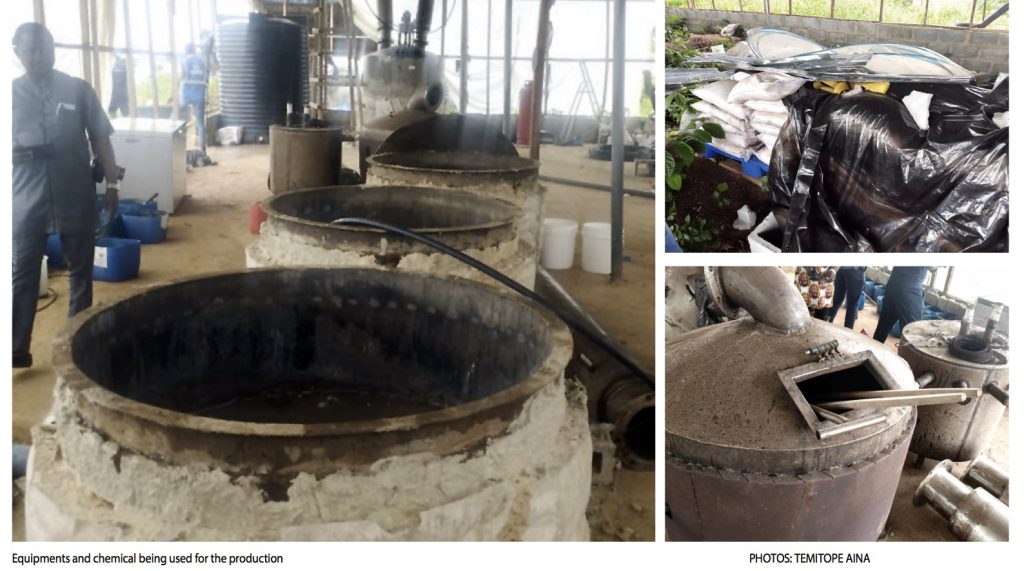
The operation led to the arrest of seven suspects at the facility, comprising three Mexican nationals and four Nigerians. Subsequent coordinated arrests in Lagos brought the number of suspects apprehended in the operation to ten.
The agency recovered 2,419.48 kilogrammes of methamphetamine, precursor chemicals and other materials. Their estimated international market value was approximately ₦480 billion.
Barely a month later, on 17 June 2026, another industrial scale methamphetamine laboratory was discovered in a forest at Tapa Village, Ibarapa North Local Government Area of Oyo State.
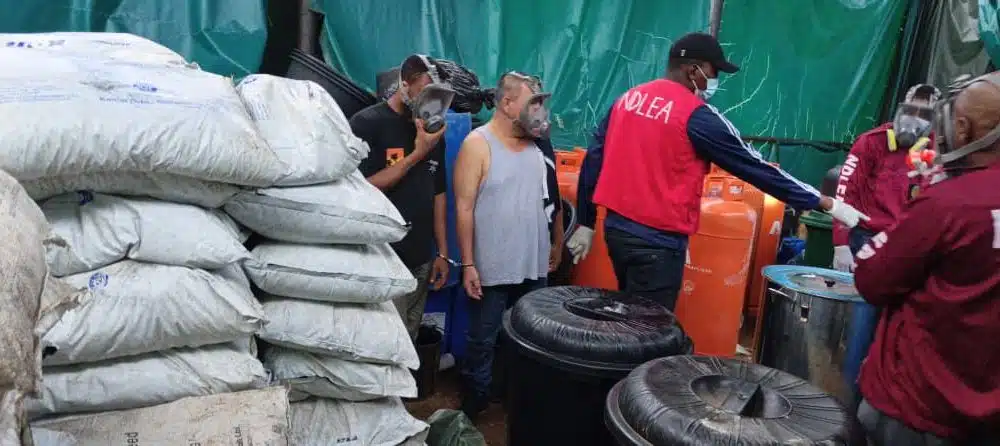
Five suspects were arrested at the facility. They included Mexican national Jose Villa Ochoa and four Nigerians: Maxwell Uche Nevoh, Olatunji Yusuf, Bankole Akeem Owolabi and Ganiu Monsiu.
A further Mexican suspect, Arturo Carrera Loaiza, was arrested at Lagos airport on 19 August 2026 in connection with the wider investigation.
On 6 November 2026, six defendants linked to the Oyo operation were arraigned before the Federal High Court in Ibadan. They pleaded not guilty and were remanded pending trial.
Investigations also extended to Isiata Ugoni Okposi in Ebonyi State, where NDLEA operatives traced suspicious chemical activities and relocated laboratory equipment to an isolated property. This was an associated investigative location, not a separately confirmed forest laboratory.
In Enugu State, the agency disclosed the discovery of another clandestine methamphetamine laboratory at Eziama community, Obeagu, Awgu Local Government Area. Surveillance conducted between 1 and 4 December 2025 led to the operation, although the discovery was publicly announced in September 2026.
Two Nigerians, Chukwu Obumneme Christopher and Chukwu Georginus Monday, were arrested. Three additional Nigerian suspects and a Mexican national were reportedly being sought.
These developments reveal the international dimension of the criminal networks and the need for more comprehensive intelligence gathering.
The disturbing question is how many other forest locations have become concealed operational bases for criminal enterprises without the knowledge of relevant authorities.
BEYOND DRUGS: A HUMAN HEALTH CATASTROPHE
Methamphetamine, popularly called meth, crystal meth or ice, is a powerful and highly addictive synthetic stimulant.
Its consumption can result in severe cardiovascular complications, neurological damage, paranoia, hallucinations, psychosis and other serious health conditions.
However, the danger is not restricted to eventual consumers.
The production process involves hazardous chemicals that can expose workers and surrounding communities to toxic substances. Poorly managed chemical waste can enter soil, streams and groundwater.
Farmers, hunters, children, livestock and forest dependent households could become victims of environmental exposure.
A particularly disturbing possibility is that communities may unknowingly encounter contaminated water sources or agricultural environments.
A farmer should not become an unwitting victim of a criminal enterprise simply because a clandestine factory operates somewhere within the forest surrounding his community.
The government must therefore look beyond the quantity of drugs recovered and investigate potential exposure among surrounding populations.
Such investigations must be guided by toxicological evidence rather than assumptions.
WHEN CHEMICALS ATTACK THE FOREST
Perhaps the most overlooked dimension of these discoveries is the potential ecological damage.
Forests are complex biological systems. Their survival depends on relationships among vegetation, soil organisms, insects, birds, mammals, aquatic organisms and water resources.
The introduction of hazardous industrial substances into these environments could disrupt these relationships.
Improper disposal of chemical residues can alter soil chemistry, damage beneficial microorganisms and interfere with nutrient cycling.
Certain chemicals can damage plant roots and leaves, inhibit seed germination and compromise natural forest regeneration.
Where waste enters streams and groundwater, aquatic organisms, livestock and communities dependent on these resources may be exposed.
Contamination may also affect insects, amphibians, birds and mammals, with wider consequences for biodiversity.
Some chemical contaminants can persist in the environment long after the production facilities have been dismantled.
It is important to establish that laboratory discoveries do not automatically prove environmental contamination. Only independent sampling and scientific analysis can establish the extent of damage.
Nevertheless, waiting for visible ecological destruction before investigating would be irresponsible.
The National Environmental Standards and Regulations Enforcement Agency and relevant state authorities should commission comprehensive environmental assessments of all affected locations.
These assessments should examine soil, surface water, groundwater, vegetation, wildlife and hazardous waste.
Where contamination is established, qualified environmental specialists must undertake remediation and long term monitoring.
Dismantling a laboratory without restoring its damaged environment is an incomplete victory. This is havoc waiting to occur.
FORESTS AS NEW OPERATIONAL TERRITORIES FOR CRIMINAL NETWORKS
The security implications are equally troubling.

Nigeria has spent years confronting banditry, kidnapping, terrorism, illegal mining and other criminal activities associated with poorly governed forest landscapes.
The emergence of sophisticated drug manufacturing facilities adds another dangerous dimension.
The forests that should provide ecological protection and economic benefits must not become alternative territories for criminal governance.
Industrial scale drug production generates substantial illicit revenue. Such proceeds could strengthen criminal networks, finance logistics and potentially support other illegal activities.
The involvement of foreign technical specialists also demonstrates the need for international intelligence cooperation.
Investigators must establish whether the networks have connections with other criminal enterprises. However, such links should not be presumed without evidence.
The vulnerability of surrounding communities is another concern. Residents could face intimidation, coercion, recruitment or financial inducements.
Ultimately, the presence of sophisticated criminal facilities in remote forest locations raises serious questions about the effectiveness of forest surveillance, forest governance, intelligence gathering and institutional coordination.
WHO KNEW? CONDEMNING THE SILENCE
One of the most disturbing questions arising from these discoveries is how such sophisticated facilities could have been established without earlier intervention.
These were not ordinary temporary shelters. They were not shanties.
The operations reportedly involved industrial equipment, chemical supplies, storage arrangements, transportation and human collaboration.
Who noticed the unusual movement of vehicles and materials?
Who observed suspicious construction or occupation of forest locations?
Were community leaders informed?
Do you want to advertise with us?
Do you need publicity for a product, service, or event?
Contact us on WhatsApp +2348033617468, +234 816 612 1513, +234 703 010 7174
or Email: validviewnetwork@gmail.com
CLICK TO JOIN OUR WHATSAPP GROUP
Did forest guards or local authorities notice unusual activities?
Were complaints made and ignored?
ValidViewNetwork strongly condemns the silence, indifference and institutional complacency of anyone who knowingly allowed these criminal operations to flourish.
Where public officials neglected their statutory responsibilities, accountability must follow.
Where community gatekeepers knowingly facilitated criminal activities, they must be investigated.
Where security institutions ignored credible intelligence, independent scrutiny is necessary.
However, accusations must be evidence based. Entire communities and individual officials should not be blamed without establishing what they knew and what action they could reasonably have taken.
The government must investigate not only those operating the laboratories but also the circumstances that enabled them to establish the facilities.
A society cannot successfully fight criminality when silence becomes more convenient than civic responsibility.
THE VALIDVIEWNETWORK SOLUTION: LESSONS FROM THE MAIDEN GLOBAL DISCOURSE
The current crisis reinforces the relevance of the maiden edition of the ValidViewNetwork Monthly Global Discourse, held on Sunday, 28 June 2026.
The programme examined the theme:
NIGERIA’S FORESTS UNDER SIEGE: CHARTING A PATH TO SAFETY, STABILITY, AND SUSTAINABLE DEVELOPMENT.
The discourse featured Professor Labode Popoola, Executive Director and Chief Executive Officer of the African Forest Forum, Kenya, former President of the Forestry Association of Nigeria and former Vice Chancellor of Osun State University.

Prof. Labode Popoola, Distinguished Discussant at the maiden edition of the ValidViewNetwork Monthly Global Discourse, delivered a damning assessment of Nigeria’s forest governance system. He identified institutional neglect, corruption and the absence of effective management structures as major reasons criminals have gained access to forest reserves. He disclosed that no forest reserve in Nigeria had a management plan within the preceding 15 to 20 years. In a striking analogy, he declared: “Having a forest without a Management Plan is like having a Church without a Bible or a Mosque without a Quran.”
He further challenged the competence and commitment of forestry authorities, declaring that “State Forestry Directors cannot manage what they do not know.” According to him, some directors had never visited the forests under their supervision but continued to administer them from city offices. Popoola also criticised corrupt forestry officials who allegedly colluded in the degradation of forest estates. He called on state governors to accept responsibility for the forests under their jurisdiction and warned against treating protected forest lands merely as revenue generating assets. His central message was unequivocal: “Forest governance must be treated as a national emergency.” The observations are particularly significant in the face of reports that criminal networks have established clandestine drug laboratories in Nigerian forest environments.
The methamphetamine discoveries demonstrate why the issues raised during that engagement require urgent national attention.
ValidViewNetwork proposes ten practical interventions:
1. National forest intelligence framework: Establish coordinated surveillance involving environmental agencies, NDLEA, police, intelligence services and state forestry departments.
2. Technology driven surveillance: Deploy drones, satellite imagery, geospatial mapping and digital monitoring to identify suspicious activities in remote forests.
3. Community intelligence networks: Engage traditional rulers, farmers, hunters and forest dependent communities in reporting suspicious activities through protected channels.
4. Strengthened forest guards: Recruit, train, equip and adequately remunerate forest guards to improve monitoring and reporting.
5. Environmental forensic investigations: Assess soil, water, vegetation and wildlife at every affected location. Establish the actual extent of contamination.
6. Chemical supply chain regulation: Strengthen monitoring of industrial chemicals and precursor substances without obstructing legitimate industrial activities.
7. International cooperation: Deepen intelligence sharing and investigative collaboration to dismantle transnational drug trafficking networks.
8. Forest restoration: Establish a national programme for environmental remediation and ecological recovery at affected sites.
9. Public enlightenment: Educate communities about forest protection, chemical hazards, drug abuse and the importance of reporting suspicious activities.
10. Institutional accountability: Publish periodic forest security reports and assess government agencies against measurable performance indicators.
The central lesson from the maiden ValidViewNetwork Global Discourse is that forest security cannot be separated from environmental governance, community participation and sustainable development.
NIGERIA MUST MOVE FROM REACTIVE ENFORCEMENT TO PREVENTIVE GOVERNANCE
The NDLEA deserves commendation for uncovering and dismantling these facilities.
However, Nigeria must avoid a situation in which government agencies repeatedly celebrate successful raids without addressing the institutional weaknesses that allowed criminal organisations to establish the facilities.
The real measure of success should not be the number of laboratories dismantled.
It should be the ability to prevent new ones from emerging.
The Federal and State Governments must invest in forest protection as a strategic national responsibility.
Forestry departments should not remain underfunded institutions whose responsibilities are restricted to collecting revenue from forest resources.
They are critical components of the country’s environmental and security architecture.
Environmental regulators and security agencies must also work together because a drug laboratory in a forest is simultaneously a law enforcement concern, an environmental hazard and a public health threat.
LET THE FOREST BREATHE AGAIN
Nigeria’s forests are too valuable to be surrendered to criminal enterprises.
They protect watersheds, conserve biodiversity, support livelihoods, regulate local climates and contribute to national development.
Their destruction or contamination will impose costs on generations yet unborn.
The discovery of methamphetamine laboratories should therefore represent a turning point in Nigeria’s approach to environmental protection and national security.
The country needs stronger forest governance, better intelligence, effective environmental monitoring, community participation, international cooperation and sustained investment in ecological restoration.
The silence of those who knowingly allowed these activities to flourish must be condemned. Institutions that failed to identify or prevent suspicious activities must also be subjected to appropriate scrutiny.
Our forests should produce oxygen, protect biodiversity, sustain livelihoods and preserve the future. They must never become factories for addiction, environmental poisoning and organised criminality.
The time to reclaim Nigeria’s forests is now.